

Is Affordable Tankless Water Heater Installation in Bergen County, NJ Worth It?
Affordable tankless water heater installation in Bergen County, NJ is one of the smartest upgrades a homeowner can make — but knowing what to expect before you commit makes all the difference. If your current water heater is aging, inefficient, or simply can’t keep up with your household’s hot water demand, switching to a tankless system could reduce your water-heating energy use and give you hot water on demand without the waste of constantly reheating a full tank.
Here’s a quick look at what Bergen County homeowners should know upfront:
| Factor | Traditional Tank Heater | Tankless Water Heater |
|---|---|---|
| Lifespan | 10–15 years | 20+ years |
| Energy Use | Heats water continuously | Heats only on demand |
| Space Required | Large footprint | Wall-mounted, compact |
| Maintenance | Periodic | Annual service recommended (especially in hard water areas) |
| Hot Water Supply | Limited by tank size | Continuous flow (2–5 GPM) |
Bergen County winters push cold inlet water temperatures down to around 40–45°F, which means your unit has to work harder to reach comfortable temperatures. That makes proper sizing and professional installation especially important here — not just for comfort, but for efficiency and code compliance under New Jersey’s Uniform Construction Code.
Whether you’re replacing an old tank or installing a system for the first time, this guide walks you through everything you need to make a confident decision.
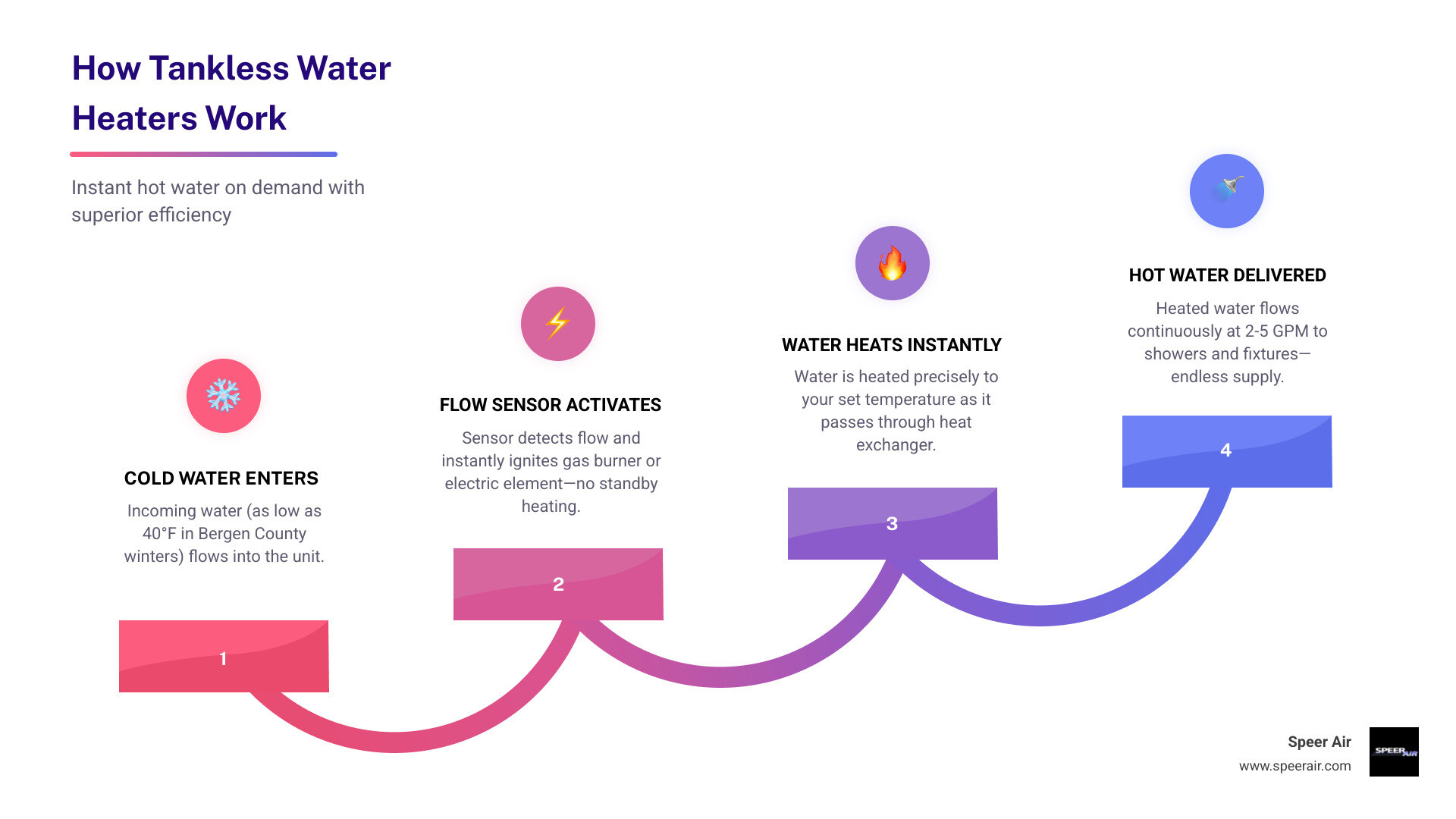
Benefits of affordable tankless water heater installation in bergen county, nj
When we talk to homeowners from Paramus to Mahwah, the first question is usually about the “why.” Beyond just getting rid of that bulky metal eyesore in the basement, there are several transformative tankless water heaters and their benefits that make this an ideal choice for New Jersey lifestyles.
Space-Saving Design
In many older Bergen County homes, every square foot counts. Traditional water heaters take up a significant amount of floor space. A tankless unit is about the size of a carry-on suitcase and mounts directly to the wall. This opens up room for storage, a workbench, or simply a cleaner-looking utility room.
Endless Hot Water
We’ve all been there: you’re the third person in line for the shower, and by the time it’s your turn, the water is lukewarm at best. Because tankless systems heat water as it flows through the unit, you never “run out.” As long as the unit is sized correctly for your home’s flow rate, you can enjoy back-to-back showers without the dreaded cold spike.
Lower Energy Bills
Traditional tanks suffer from “standby heat loss.” They spend all day and night heating 40 to 50 gallons of water just in case you need it. It’s like leaving your car idling in the driveway 24/7. An affordable tankless water heater installation in bergen county, nj ensures you only use energy when you actually need hot water.
System Longevity and Safety
While a standard tank might last 10 to 12 years before the bottom rusts out, a well-maintained tankless unit can exceed 20 years. Furthermore, without dozens of gallons of stored water sitting in a tank, the risk of a major leak or flood in your basement is reduced. If you are looking to upgrade your home with tankless water heater technology, the peace of mind regarding water damage is a major selling point.
Key Factors That Influence Installation Requirements
Installing a tankless unit isn’t a simple “plug and play” job. Because these systems are high-powered, they require specific infrastructure to operate safely and efficiently. If you are considering service in Bergen County, several technical factors come into play.
Unit Sizing and BTU Output
In Northern NJ, our ground temperature drops significantly in the winter. When the water entering your home is 40°F and you want it to be 120°F at the tap, the heater has to perform an “80-degree rise.” This requires sufficient BTU (British Thermal Unit) capacity so the unit can keep up with demand during cold-weather months.
Fuel Source and Gas Lines
Many tankless units in Bergen County run on natural gas. Because they heat water so quickly, they may require a higher gas volume than a standard tank. In some homes, existing gas piping may need to be evaluated and upgraded to ensure proper flow.
Venting Systems
Venting is a critical safety and performance factor. Modern condensing tankless units are highly efficient and can often be vented through a side wall using approved materials. Non-condensing units produce hotter exhaust and require specialized venting.
| Feature | Condensing Units | Non-Condensing Units |
|---|---|---|
| Energy Efficiency | Higher | Standard |
| Venting Material | PVC or Polypropylene (as approved) | Category III Stainless Steel |
| Installation Complexity | Moderate (requires condensate drain) | Higher (due to venting requirements) |
Local Building Permits and Regulations
Bergen County municipalities follow the Uniform Construction Code (UCC). Any affordable tankless water heater installation in bergen county, nj should be permitted and inspected. This helps confirm gas connections are secure, venting is placed correctly, and electrical components meet code requirements.
Choosing the Right Affordable Tankless Water Heater Installation in Bergen County, NJ for Your Home
Selecting the right unit involves more than choosing a model. You need to map out your household’s “peak demand” and usage patterns:
- Fixture Count: How many showers, dishwashers, and washing machines might run at the same time?
- Flow Rate (GPM): A standard shower head uses about 2.0 to 2.5 gallons per minute (GPM). If you want to run two showers simultaneously, you need a unit that can support that combined flow at your desired temperature rise.
- Inlet Temperature: NJ water is cold in winter, and that affects real-world output.
- Modulation: Units with strong modulation can adjust output based on demand, improving comfort and efficiency across different usage scenarios.
Maintenance and Performance in Northern NJ
One of the biggest myths about tankless heaters is that they are “maintenance-free.” In reality, because they use high heat to flash-heat water, they are susceptible to mineral buildup, especially in areas with hard water.
The Hard Water Challenge
Bergen County is known for having moderately hard water. Over time, calcium and magnesium can build up on the heat exchanger inside your unit. This creates an insulating layer that forces the unit to work harder and may eventually lead to performance issues or system shutdowns.
Annual Maintenance Tasks
To keep your system running at peak efficiency, we recommend the following tankless-water-heater-services-rockaway-nj:
- Annual Descaling: Flushing the unit with a manufacturer-approved solution to remove mineral scale.
- Filter Cleaning: Most units have a small screen filter to catch sediment before it enters the heat exchanger.
- Sensor Inspection: Dust or debris can interfere with flow sensors and ignition components.
If you notice your water taking longer to heat up or the unit making unusual noises, it might be time for a tankless-water-heater-repair-maplewood-nj. Regular servicing helps protect performance and supports warranty requirements.
Long-Term Value with Affordable Tankless Water Heater Installation in Bergen County, NJ
While the initial setup for a tankless system involves more technical work than a standard tank, many homeowners choose tankless for the long service life, reduced standby energy waste, and the comfort of on-demand hot water. High-efficiency, ENERGY STAR® certified options may also qualify for rebates or incentives depending on the current programs available through local utilities or other organizations.
Frequently Asked Questions
How long do tankless water heaters last compared to traditional tanks?
A traditional tank water heater generally lasts between 10 and 15 years. In contrast, a tankless water heater is designed to last 20 years or more. Because parts are easily replaceable (unlike a tank, which must be tossed if it leaks), the system’s lifespan is much longer, provided you stay on top of annual maintenance.
Can a tankless unit handle multiple showers at once in a large NJ home?
Yes, but sizing is critical. A whole-home unit producing 5 to 9 GPM can typically handle two showers and a faucet simultaneously. If you have a very large home with high demand (like a multi-generational household), we sometimes recommend installing two units in parallel or utilizing a recirculation system to ensure instant hot water at every tap.
What maintenance is required for tankless systems in Bergen County?
The primary requirement is an annual flush to remove mineral buildup (descaling). We also recommend checking the air intake and exhaust vents for obstructions (like bird nests or debris) and cleaning the water inlet filter. In Bergen County, where hard water is common, pairing your heater with a water conditioner can further extend its life.
Conclusion
Making the switch to a tankless system is a significant step toward a more comfortable, energy-efficient home. However, the quality of the installation is just as important as the unit itself. At Speer Air, we’ve been serving Northern New Jersey since 1900. Our team ensures that your affordable tankless water heater installation in bergen county, nj is handled with care—from proper sizing considerations and gas line evaluation to permit coordination and safe venting.
We’re proud to provide reliable residential HVAC and plumbing solutions built around workmanship, safety, and long-term performance. Schedule your Bergen County water heater service today to get expert help selecting, installing, and maintaining the right tankless system for your home.