

Emergency Heating Installation in Bergen County, NJ 24 Fast
When Every Minute Counts: Understanding Emergency Heating Situations in Bergen County
Emergency heating installation in bergen county, nj is a critical service when your heating system fails during freezing weather. Here’s what you need to know right away:
Who to Call for Emergency Heating Installation:
- Licensed, NATE-certified contractors with 24/7 availability
- Local Bergen County providers for faster response times
- Companies that handle permits, diagnostics, and full installations
Response Time: Most emergency services respond within 30-60 minutes
What’s Included: Safety inspection, old system removal, new unit installation, ductwork connection, thermostat setup, and system testing
When temperatures drop below freezing in Bergen County—which happens 30-40 days per year—a heating system failure isn’t just uncomfortable. It’s dangerous. Indoor temperatures can plummet quickly, putting vulnerable family members at risk and threatening your home with frozen pipes and water damage. Whether it’s 3 AM or a holiday weekend, you need immediate help from professionals who understand the urgency.
If you’re experiencing a heating emergency or want to ensure your system is ready for winter, learn more about professional heating services or contact Speer Air for 24/7 emergency assistance.
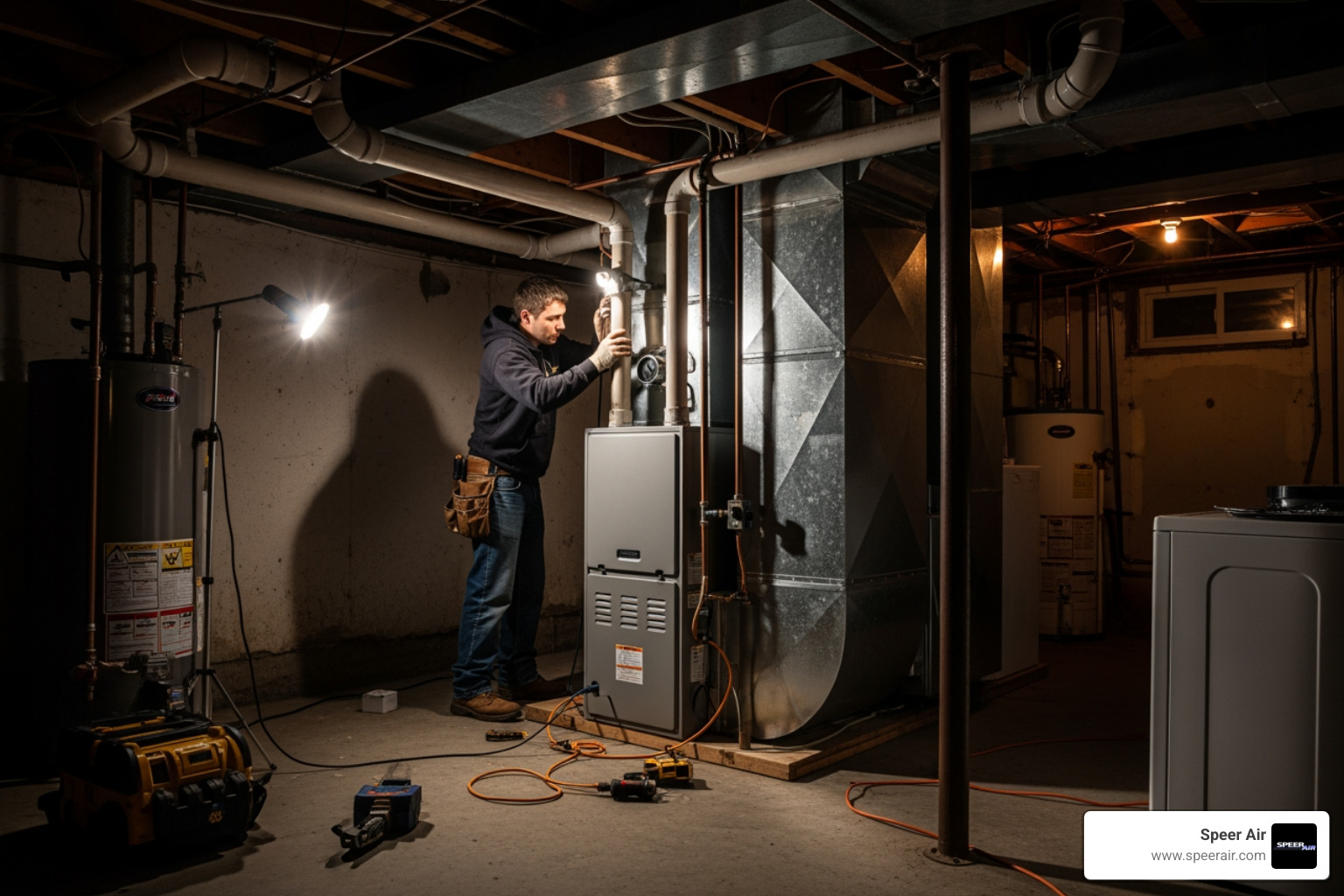
What Constitutes a Heating Emergency?
A heating emergency is more than just a minor inconvenience; it’s a situation that poses an immediate threat to your safety, health, or property. In Bergen County, where winters can be quite harsh, understanding what constitutes a true emergency is crucial for knowing when to call for immediate professional help.
Here’s what we consider a heating emergency:
- Complete Loss of Heat: This is the most obvious sign. If your furnace, boiler, or heat pump simply isn’t producing any warmth, especially when outdoor temperatures are freezing or below, it’s an emergency. Bergen County experiences an average of 30-40 days per year with temperatures below freezing, making a sudden loss of heat a serious concern.
- Freezing Outdoor Temperatures: Even if your system is still limping along, if it can’t keep up with dangerously cold weather, it’s an emergency. The risk of pipes freezing and bursting increases significantly when your home’s interior temperature drops too low.
- Gas or Burning Smells: Any unusual odors coming from your heating system, particularly the smell of natural gas (like rotten eggs or sulfur) or a distinct burning odor, demands immediate attention. If you smell gas, evacuate your home immediately and contact your gas provider and then Speer Air. A burning smell could indicate an electrical issue or an overheating component, which can be a fire hazard.
- Carbon Monoxide Detector Alarm: Carbon monoxide (CO) is an odorless, colorless, and deadly gas. If your CO detector goes off, it’s a critical emergency. This often indicates a faulty heating appliance. Evacuate everyone from the home and call emergency services.
- Frozen Pipes: While often a consequence of a heating failure, frozen pipes themselves can be an emergency. If you notice a significant drop in water pressure or no water at all from your faucets in cold weather, you might have frozen pipes, which are at high risk of bursting and causing extensive water damage.
When any of these situations arise, waiting is not an option. Speer Air is here to provide swift, expert assistance for emergency heating installation in bergen county, nj.
Immediate Risks of a No-Heat Situation
The immediate risks associated with a heating system failure during cold weather are significant and can impact both your family’s well-being and your home’s structural integrity.
- Health Risks: For vulnerable populations, such as the elderly, infants, and those with pre-existing health conditions, a cold home can quickly lead to serious health issues. Hypothermia is a real danger, occurring when the body loses heat faster than it can produce it. Prolonged exposure to cold can also exacerbate respiratory problems and other illnesses.
- Discomfort and Stress: Beyond the severe health risks, living in a cold home is simply miserable. The discomfort and stress of a malfunctioning heating system can disrupt daily life, affect sleep, and create an unhealthy living environment.
- Property Damage: Perhaps the most common and costly consequence of a no-heat situation is property damage, particularly from burst pipes. As water freezes, it expands, putting immense pressure on your plumbing. When these pipes thaw, they often burst, leading to extensive water damage to walls, floors, ceilings, and personal belongings. This can result in costly repairs and the potential for mold growth.
- Appliance Damage: Other systems in your home, like water heaters or even electronics, can also be negatively impacted by extreme cold, potentially leading to additional repair or replacement costs.
Because of these immediate and severe risks, Speer Air understands that a heating emergency requires a rapid and professional response. The priority is to restore warmth and safety to your Bergen County home as quickly as possible.
Signs Your Heating System Needs Emergency Replacement
Sometimes, a heating emergency isn’t just a simple repair; it’s a clear signal that your system is nearing the end of its life and needs an emergency replacement. Ignoring these signs can lead to repeated breakdowns, higher energy bills, and even safety hazards.
Here are the key indicators that your heating system might require an emergency replacement:
- System Age: The average age of a residential heating system in the US is 15-20 years. Many homes in older parts of Bergen County might have systems that exceed this lifespan. If your furnace or boiler is past its prime, it’s more prone to sudden, catastrophic failure.
- Frequent, Costly Repairs: Are you calling for repairs every winter, or even multiple times a season? If the repair costs are starting to add up, or if a single repair is more than 50% of the cost of a new system, it’s likely more economical and reliable to replace it.
- Loud Noises (Banging, Rattling, Squealing): While some noises are normal, persistent loud banging, rattling, squealing, or grinding sounds often indicate serious mechanical problems, such as a failing motor, a cracked heat exchanger, or loose components. These issues can be expensive to fix and may signal impending system failure.
- Yellow Pilot Light: For gas furnaces, the pilot light should be a strong blue flame. A yellow or flickering pilot light can indicate incomplete combustion, which might produce carbon monoxide. This is a serious safety concern and warrants immediate attention.
- Poor Indoor Air Quality: An aging system can contribute to dry air, excessive dust, or even the circulation of mold spores if components are dirty or damaged. If you’re experiencing a noticeable decline in indoor air quality or unusual odors (other than gas/burning), it might be linked to your heating system.
- Inconsistent Heating: If some rooms are warm while others remain cold, or if your system struggles to maintain a consistent temperature throughout your home, it could be a sign of an undersized, inefficient, or failing unit that needs to be replaced.
Critical Warning Signs
Beyond the general indicators, certain critical warning signs scream “emergency replacement NOW!” Don’t delay if you notice any of these:
- Sudden Spike in Energy Bills: If your heating bills have unexpectedly soared without a change in usage or weather, it’s a strong sign that your system has become incredibly inefficient. An older, struggling system works harder to produce less heat, burning more fuel in the process.
- Visible Rust or Cracks: Inspect your furnace or boiler for any visible rust on the unit itself or cracks in the heat exchanger. A cracked heat exchanger is extremely dangerous as it can allow carbon monoxide to leak into your home. Rust can indicate water leaks or corrosion, signaling significant internal damage.
- Constant Cycling On and Off: If your heating system is turning on and off more frequently than usual (short cycling), it might be struggling to maintain temperature, or it could indicate an issue with the thermostat or internal components. This puts undue stress on the system and reduces its lifespan.
- Musty or Burning Odors: While a slight burning smell when you first turn on your furnace is normal (as dust burns off), persistent musty or burning odors are not. Musty smells can indicate mold growth, while a continuous burning smell could signal an electrical problem or overheating parts.
If you observe any of these critical warning signs, especially during the colder months, it’s time to call us. We can assess your system and provide expert guidance on whether an emergency heating installation is the safest and most efficient path forward for your Bergen County home.
What to Expect from an Emergency Heating Installation in Bergen County, NJ
When faced with a heating emergency, you need clear expectations about the services you’ll receive. Our goal is to make the process of emergency heating installation in bergen county, nj, as smooth and stress-free as possible, even under urgent circumstances.
You can expect:
- 24/7 Availability: Heating emergencies don’t stick to business hours. We provide round-the-clock service, including weekends and holidays, because your comfort and safety are our top priority, no matter when disaster strikes.
- Rapid Response: We understand the urgency. Our local teams are strategically located to ensure a rapid response, often arriving within 30-60 minutes in most areas. We aim to get to your Bergen County home quickly to assess the situation.
- Professional Diagnosis: Upon arrival, our NATE-certified technicians will conduct a thorough diagnostic assessment of your current heating system. We use advanced tools and our deep expertise to accurately pinpoint the problem.
- Repair vs. Replacement Assessment: Our technicians will provide an honest evaluation of whether a repair is feasible and cost-effective, or if an emergency replacement is the better long-term solution. We’ll explain the pros and cons of each option, empowering you to make an informed decision.
- System Options: Should a replacement be necessary, we offer a range of high-efficiency heating systems suitable for Bergen County homes, including furnaces, boilers, heat pumps, and even ductless mini-splits. We offer a selection of trusted brands known for their reliability and efficiency.
- Guidance on Choosing the Right System: Our experts will guide you through the selection process, considering your home’s size, your budget, energy efficiency goals, and specific comfort needs. We’ll help you choose a system that will keep your family warm and save you money in the long run.
The Process for an Emergency Heating Installation in Bergen County, NJ
Once the decision for an emergency heating installation is made, our team follows a structured process to ensure a safe, efficient, and compliant setup.
- Safety Inspection: Before any work begins, our technicians perform a comprehensive safety inspection of your home and existing heating setup to identify any immediate hazards and ensure a safe working environment.
- Old System Removal: We carefully disconnect and remove your old, malfunctioning heating unit. We handle the disposal responsibly, adhering to all environmental regulations.
- New Unit Installation: Our NATE-certified professionals expertly install your new furnace, boiler, or heat pump. This includes precise placement, secure mounting, and careful connection of all gas, electrical, and water lines according to manufacturer specifications and local codes.
- Ductwork Connection: For forced-air systems like furnaces and heat pumps, we ensure seamless connection to your existing ductwork, checking for leaks and optimizing airflow for maximum efficiency and comfort. If a boiler is being installed, we ensure proper connection to your hot water or steam distribution system.
- Thermostat Integration: We integrate your new system with a compatible thermostat, which could be a traditional model or a smart, Wi-Fi-enabled thermostat for precise temperature control and energy management.
- System Testing: After installation, we rigorously test the entire system to ensure it’s operating safely, efficiently, and effectively. This includes checking for proper heating output, verifying safety controls, and calibrating settings for optimal performance.
- Handling of town permits: We understand that navigating local regulations can be daunting. We will handle all necessary town permits and ensure your new installation complies with all Bergen County and New Jersey building codes. We also assist with paperwork for available rebates and contact utility companies as needed.
Our comprehensive approach ensures that your emergency heating installation is not just a quick fix, but a lasting, reliable solution for your Bergen County home.
How to Prepare for and Prevent a Heating Emergency
While Speer Air is always ready to assist with emergency heating installation in bergen county, nj, the best emergency is the one that never happens. Taking proactive steps can significantly reduce your chances of experiencing a sudden heating system breakdown.
Here’s how you can prepare for potential heating emergencies and actively prevent them:
- Annual Maintenance: This is perhaps the most crucial step. Schedule professional heating system maintenance every year, ideally before the cold season sets in. A thorough tune-up allows technicians to catch minor issues before they escalate into major, costly breakdowns. Regular maintenance helps support optimal performance, improves safety, and extends the lifespan of your system.
- Professional Tune-Ups: During a tune-up, Speer Air’s NATE-certified technicians will inspect, clean, and adjust critical components of your heating system. This includes checking the heat exchanger, burners, igniters, electrical connections, and safety controls. This proactive service helps prevent unexpected failures and supports safe, efficient operation.
- Programmable and Smart Thermostats: Consider upgrading to a programmable or smart thermostat. These devices allow you to set schedules and even control your heating remotely, supporting efficient energy usage and reducing unnecessary wear and tear on your system. By maintaining consistent temperatures and avoiding sudden spikes, you can contribute to your system’s longevity.
- Checking Air Filters Monthly: A clogged air filter is one of the most common causes of heating system inefficiency and breakdown. It restricts airflow, making your system work harder and potentially leading to overheating or component failure. Check your air filter monthly and replace or clean it every 1-3 months, or more frequently if you have pets or allergies.
- Clear Outdoor Units: If you have a heat pump, ensure the outdoor unit is clear of snow, ice, leaves, and debris. Maintain at least a two-foot clearance around the unit to support proper airflow.
- Insulate Your Home: Proper home insulation reduces the workload on your heating system, making it more efficient and less prone to breakdowns. Check for drafts around windows and doors and consider adding insulation to your attic or walls.
- Know Your System: Familiarize yourself with your heating system’s basics, including the location of the emergency shut-off switch or valve. In a gas leak emergency, for example, knowing how to turn off the gas supply can be critical.
The Value of Regular Professional Maintenance
Think of regular professional maintenance as a health check-up for your heating system. Just like you wouldn’t skip your annual doctor’s visit, your heating system needs its routine inspection to stay in top shape.
- Improved Efficiency: A well-maintained heating system can run more efficiently, consuming less energy to produce the same amount of heat. This often translates into lower utility bills for your Bergen County home.
- Improved Safety: During maintenance, technicians check for potential hazards like carbon monoxide issues, gas line concerns, and faulty electrical connections. Catching these problems early can help prevent dangerous situations.
- Extended System Lifespan: By keeping components clean, lubricated, and properly adjusted, maintenance reduces wear and tear, helping your heating system last longer.
- Prevention of Major Breakdowns: Many emergency repairs and installations could be avoided with routine maintenance. Technicians can identify worn parts or minor issues and address them before they cause a complete system failure, saving you from the stress of an emergency situation.
- Peace of Mind: Knowing that your heating system has been professionally inspected and serviced provides invaluable peace of mind, especially as the cold Bergen County winter approaches. You can relax, confident that your home will stay warm and safe.
Choosing a Qualified Emergency Heating Contractor
When your heat goes out in the dead of winter, you don’t just need any contractor; you need a qualified, trustworthy expert who can respond swiftly and effectively. Choosing the right partner for emergency heating installation in bergen county, nj, is crucial.
Here’s what to look for:
- Local Bergen County Provider: Prioritize contractors who are based in or have a strong presence in Bergen County. This ensures faster response times and a better understanding of local climate challenges and building codes.
- Licensed and Insured: Always verify that the contractor is fully licensed to operate in New Jersey and carries adequate insurance. This protects you from liability in case of accidents or damage during the installation process.
- NATE Certification: Ensure the contractor employs NATE-certified technicians. NATE (North American Technician Excellence) certification is a key indicator of a technician’s expertise and professionalism. We are proud to have NATE-certified technicians on our team, ready to provide top-quality service.
- Positive Reviews and Reputation: Check online reviews and ask for references. A reputable company will have a history of satisfied customers and transparent feedback.
- 24/7 Availability: For emergency services, 24/7 availability is non-negotiable. Ensure the company you choose can truly respond at any time, day or night, including weekends and holidays.
- Manufacturer Affiliations: Affiliations like being a Carrier Factory Authorized Dealer (which we are) demonstrate a deep partnership with leading manufacturers. This ensures your installation is performed to the highest standards using the best equipment. Our status as a Generac Dealer also reflects our expertise in providing reliable home solutions.
Why a Local Provider for Emergency Heating Installation in Bergen County, NJ Matters
Choosing a local Bergen County-based emergency heating service provider offers distinct advantages that can make all the difference during a crisis:
- Faster Response Times: This is perhaps the most significant benefit. A local company can dispatch technicians to your home much more quickly than one coming from a distant location. In a heating emergency, every minute counts when temperatures are dropping.
- Familiarity with Local Homes and Systems: Local contractors are often intimately familiar with the types of homes and heating systems common in Bergen County. Whether it’s an older boiler system prevalent in some neighborhoods or specific types of furnaces, their experience with local architecture and infrastructure can lead to more efficient diagnoses and solutions.
- Knowledge of Bergen County Codes and Regulations: Building codes and permit requirements can vary by municipality. A local provider will have up-to-date knowledge of all Bergen County and New Jersey regulations, ensuring that your emergency heating installation is compliant and hassle-free. This includes handling all necessary town permits and coordinating with utility companies.
- Community Reputation and Accountability: Local businesses often have a stronger connection to the community and a greater stake in maintaining a positive reputation. Their business relies on local trust and word-of-mouth, which often translates into higher standards of service and accountability.
- Personalized Service: You’re not just another number to a local provider. We understand the unique needs and challenges faced by homeowners in Bergen County and strive to provide personalized, attentive service.
When you’re facing a heating emergency, you need a partner who understands your specific needs and can act quickly and competently. Choosing a local, qualified expert for your emergency heating installation in bergen county, nj, is the smartest decision you can make.
Conclusion
Winter in Bergen County, New Jersey, is no stranger to blistering cold, making a reliable heating system an absolute necessity, not a luxury. When your heating system falters, especially during freezing temperatures, it can quickly escalate from an inconvenience to a dangerous situation for your family and your home.
Preparedness is key. By understanding what constitutes a heating emergency and recognizing the warning signs that your system might be failing, you can act quickly to protect your loved ones and your property. Furthermore, regular professional maintenance is your best defense against unexpected breakdowns, helping to improve efficiency, improve safety, and extend the life of your heating equipment.
However, even the most diligent preparation can’t prevent every emergency. When disaster strikes, you need a qualified 24/7 contractor you can trust for emergency heating installation in bergen county, nj. Look for local providers with NATE-certified technicians, proper licensing and insurance, and a commitment to rapid response and customer satisfaction.
As a company deeply rooted in Northern New Jersey since 1900, we understand the unique challenges of keeping homes warm in our region. Our NATE-certified technicians and status as a Carrier Factory Authorized Dealer mean we bring unparalleled expertise and quality to every job.
Don’t let a heating emergency leave you in the cold. Be prepared, maintain your system, and know that when you need us most, we’ll be there.