

Heat pump replacement in Middlesex County NJ 2025: Best
Why Heat Pump Replacement Matters for Middlesex County Homeowners
Heat pump replacement in Middlesex County NJ offers homeowners a modern solution for year-round comfort, energy savings, and improved indoor air quality. If you’re dealing with an aging HVAC system, rising energy bills, or frequent repair calls, upgrading to a modern heat pump can transform your home’s heating and cooling while reducing your monthly utility costs. Heat pumps work by transferring heat rather than generating it, making them far more efficient than traditional furnaces and air conditioners—especially important in New Jersey’s climate with hot summers and cold winters.
Quick Overview: What to Know About Heat Pump Replacement
- All-in-One Solution: A single system provides both heating and cooling, eliminating the need for separate furnace and AC units
- Energy Efficiency: Heat pumps transfer heat instead of creating it, using significantly less electricity than conventional systems
- Long Lifespan: With proper maintenance, modern heat pumps last 15+ years
- Financial Incentives: Federal tax credits and New Jersey’s Clean Energy Program offer valuable rebates for qualifying systems
- Professional Installation: Typical replacement takes 1-2 days with a licensed contractor
For professional guidance on upgrading your home comfort system, explore our understanding heat pumps guide, or contact us directly for a free consultation and expert installation.
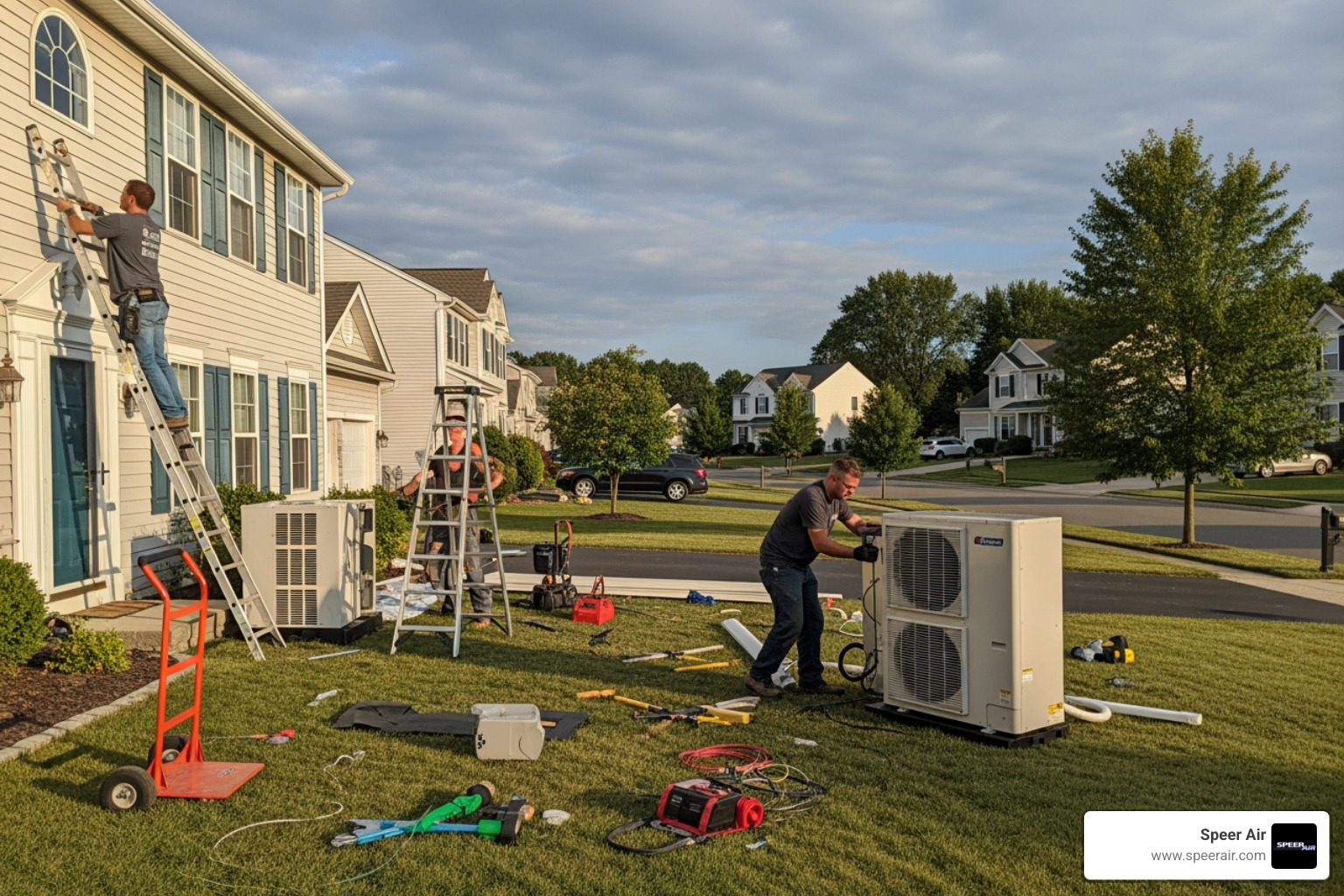
The All-in-One Advantage: Benefits of a Modern Heat Pump
When considering heat pump replacement in Middlesex County NJ, homeowners often look for a solution that simplifies their home comfort while delivering superior performance. A modern heat pump offers just that—an all-in-one system designed to keep your home perfectly comfortable, no matter the season. Unlike traditional setups that require separate furnaces and air conditioners for cooling, a heat pump handles both with impressive efficiency. This integrated approach not only streamlines your HVAC system but also brings a host of benefits, from significant energy savings to improved indoor air quality and a reduced carbon footprint. We believe in providing solutions that make your life easier and your home more enjoyable.
To dive deeper into how these remarkable systems work, check out our comprehensive understanding heat pumps a guide.
Superior Energy Efficiency
One of the most compelling reasons for heat pump replacement in Middlesex County NJ is the dramatic improvement in energy efficiency. Heat pumps are fundamentally different from conventional heating and cooling systems because they don’t generate heat by burning fuel or using electric resistance. Instead, they transfer heat. In the colder months, they extract heat from the outside air (even when it’s chilly!) and move it indoors. When summer arrives, they reverse the process, pulling heat from inside your home and releasing it outside.
This heat transfer mechanism makes heat pumps incredibly energy-efficient, consuming significantly less electricity than traditional furnaces and air conditioners. This translates directly into lower energy bills for you, making your investment in a new system pay off over time. Heat pumps also excel at maintaining consistent temperatures, avoiding the uncomfortable hot and cold spots often associated with older systems. When paired with a smart thermostat, their performance can be further optimized, ensuring your home is always comfortable without wasting energy.
Improved Indoor Air Quality
Beyond energy savings, a modern heat pump can significantly improve the indoor air quality of your Middlesex County home. Because heat pumps don’t rely on burning fossil fuels for heating, they don’t produce combustion byproducts like carbon monoxide, a common concern with gas furnaces. This eliminates a potential source of indoor air pollution.
Furthermore, heat pumps are excellent at managing humidity levels. During the warm, humid summers in New Jersey, they actively dehumidify your home as part of their cooling process, making the air feel fresher and more comfortable. Many modern heat pump systems also incorporate advanced filtration systems, capable of capturing more dust, allergens, and airborne pollutants than older HVAC units. The result is cleaner, healthier air circulating throughout your home, which can be a real breath of fresh air for all.
Year-Round Convenience and Comfort
Imagine a single system that effortlessly transitions between keeping you warm in winter and cool in summer. That’s the year-round convenience a heat pump offers. By replacing both your separate furnace and air conditioner, a heat pump simplifies your home’s HVAC infrastructure. This often means a simplified maintenance schedule, as you’re only servicing one primary system instead of two.
Modern heat pumps are also known for their quiet operation, providing comfort without the distracting noise of older, less efficient units. They consistently deliver conditioned air, eliminating the temperature fluctuations that can make a home feel less inviting. With a heat pump, you’re not just upgrading your HVAC; you’re changing your entire home environment into a haven of consistent, quiet comfort. It’s truly a smart way to transform your home with heat pump technology.
Key Signs Your HVAC System Needs an Upgrade
Knowing when to consider heat pump replacement in Middlesex County NJ can save you a lot of headaches and money in the long run. While your existing heating and cooling system might still be chugging along, there are clear indicators that it’s time for an upgrade. We’ve seen it all, and these signs usually point towards an inefficient, unreliable, and costly future if left unaddressed.
Here are the key signs that your current HVAC system might be waving a white flag:
- System Age Over 10-15 Years: Most traditional HVAC systems, and even older heat pumps, begin to lose efficiency and become more prone to breakdowns after 10-15 years. If your system is approaching or past this age, a replacement is likely a more economical choice than continued repairs.
- Rising Energy Bills: Are your utility bills steadily climbing, even when your usage habits haven’t changed? An aging or inefficient system has to work harder to maintain your desired temperature, consuming more energy in the process.
- Frequent or Costly Repairs: If you’re constantly calling for repairs, or if the cost of a single repair is approaching half the price of a new system, it’s time to seriously consider a replacement. We understand that sometimes, it’s just not worth throwing good money after bad. For common issues we can fix, check our guide on common heat pump repair issues we can fix.
- Inconsistent Heating and Cooling: Do some rooms feel like a sauna while others are an icebox? Inconsistent temperatures throughout your home often signal that your system is struggling to distribute air effectively, or that its capacity is no longer adequate.
- Excessive Dust: While some dust is normal, an unusual increase in dust buildup can indicate issues with your ductwork or an inefficient filtration system within your HVAC unit.
Recognizing Unusual Heat Pump Sounds
Your heat pump should generally operate quietly. When it starts making strange noises, it’s usually trying to tell you something. Ignoring these sounds can lead to more serious and expensive problems down the road.
Keep an ear out for:
- Grinding or Squealing Noises: These often indicate issues with motors, bearings, or other moving parts that are wearing out or need lubrication. It’s like your system is groaning under the strain.
- Loud Banging or Clanking: This could point to loose components, a failing fan, or even a problem with the compressor. These louder noises are usually red flags that require immediate attention.
- Constant Cycling On and Off: If your heat pump is turning on and off more frequently than usual (short-cycling), it could be improperly sized for your home, experiencing electrical issues, or suffering from a significant internal problem.
If you hear any of these unusual sounds, it’s best to have a professional diagnose the issue. Our guide on how to resolve unusual heat pump sounds can provide more insights.
Maximizing Lifespan with Proper Maintenance
Just like a car, your heat pump needs regular care to perform its best and last as long as possible. The expected lifespan of a heat pump generally ranges from 15 to 20 years, often outlasting traditional furnaces and AC units, especially with diligent maintenance. However, the unique climate of Middlesex County, with its hot, humid summers and cold winters, means your system works hard year-round.
Here’s how to maximize its lifespan and efficiency:
- Importance of Annual Tune-Ups: We can’t stress this enough. Professional annual maintenance is crucial. During these visits, our technicians clean coils, check refrigerant levels, inspect electrical components, and assess overall system performance. This helps prevent unexpected failures, promotes optimum efficiency, and catches small issues before they become costly repairs.
- Regular Filter Changes: This is a simple but vital task you can do yourself. Check and replace your air filters every one to three months, or more frequently if you have pets or allergies. A clogged filter restricts airflow, making your system work harder and reducing its efficiency.
- Keeping Outdoor Unit Clear of Debris: Your outdoor unit (the condenser) needs clear space to function properly. Ensure it’s free from leaves, grass clippings, dirt, and other obstructions. Trim back any shrubs or plants that are too close, allowing for adequate airflow around the unit.
By following these maintenance best practices, you’re not just extending the life of your heat pump; you’re also ensuring it runs efficiently, which saves you money and keeps your home comfortable for years to come.
Your Guide to Heat Pump Replacement in Middlesex County NJ
Starting on a heat pump replacement in Middlesex County NJ is a significant home improvement that promises improved comfort and efficiency. Speer Air focuses on making this process as smooth and transparent as possible for local homeowners. From initial consultation to final testing, the goal is to ensure you receive a system custom-custom to your needs.
The journey typically involves several key steps:
- Professional Consultation: It all starts with understanding your home and your comfort needs. A technician will assess your current system, discuss your energy goals, and answer your questions.
- System Selection: Based on the assessment, you will get help choosing the right type and size of heat pump that best fits your home and budget.
- Installation Process: NATE-certified technicians carefully install your new system, ensuring every component is properly fitted and connected.
- Final Testing: Before the job is considered complete, thorough testing is performed to verify that your new heat pump is operating at peak performance and efficiency.
Understanding why professional installation is essential for homes can provide further insight into this process.
Choosing the Right Type of Heat Pump
When considering heat pump replacement in Middlesex County NJ, you’ll find a variety of options, each with unique advantages. Selecting the right type depends on your home’s structure, existing ductwork, and specific comfort requirements.
Here’s a comparison of common heat pump types:
| Heat Pump Type | Description |
|---|---|
| Air-Source Heat Pump | Efficiently transfers heat between your home and the outdoor air, providing both heating and cooling. Modern variable-speed models are highly efficient even in colder New Jersey winters. |
| Ductless Mini-Split | Ideal for homes without existing ductwork or for additions. Provides targeted heating and cooling to specific rooms or zones, making it a flexible option for older homes or spaces that are difficult to condition. |
| Hybrid (Dual-Fuel) System | Combines a heat pump with a traditional furnace. The heat pump handles most heating and cooling, while the furnace provides supplemental heat during extreme cold, helping maintain comfort and efficiency across all seasons. |
Key Factors for Your Heat Pump Replacement in Middlesex County NJ
Several home-specific factors influence which heat pump is best for you:
- Home Size and Layout: Larger or multi-story homes may require systems with higher capacity or zoned setups.
- Insulation Quality: Well-insulated homes retain conditioned air better, allowing your heat pump to work more efficiently.
- Window Efficiency: Older or leaky windows can impact heating and cooling loads.
- Existing Ductwork Condition: Ducts should be properly sized, sealed, and insulated to support a new system.
- SEER & HSPF Ratings: These ratings indicate cooling and heating efficiency; higher ratings typically mean better performance.
To learn more about selecting the right capacity, explore what size system is recommended in the guide on what size heat pump does maplewood home need.