

Are Heat Pumps Efficient in Cold Humid Climates? Here’s What Northern NJ Homeowners Need to Know
Are heat pumps efficient in cold humid climates? Yes — modern cold-climate heat pumps are genuinely efficient in cold, humid regions like Northern New Jersey. Here’s the short answer:
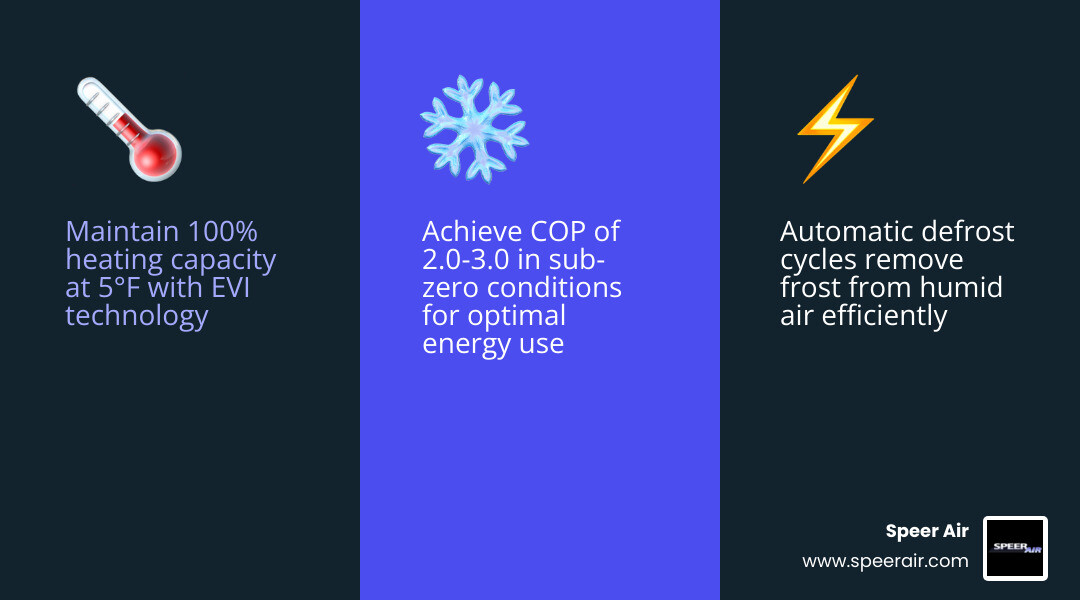
- Modern cold-climate heat pumps maintain 100% heating capacity at 5°F and continue operating down to -13°F or lower using Enhanced Vapor Injection (EVI) technology
- They deliver a seasonal COP of 2.0 to 3.0 in sub-zero conditions, meaning you get 2 to 3 units of heat for every unit of electricity consumed
- They handle humidity too — running defrost cycles automatically to prevent frost buildup on the outdoor coil
- Backup heat is rarely needed — studies from Maine (one of the coldest U.S. states) show backup costs just $1.50 per year on average for the coldest hours
- Proper sizing and installation matter enormously — a well-installed cold-climate unit can meet close to 100% of a home’s heating needs even through harsh Northeast winters
That said, cold, humid climates do present unique challenges that standard heat pumps aren’t always built for. Moisture in the air accelerates frost formation on the outdoor coil. Defrost cycles consume energy. And older or undersized systems may lean on electric resistance backup more than they should — driving up your bills.
The good news is that today’s cold-climate heat pump technology has largely solved these problems. If you’re a homeowner in Northern New Jersey — dealing with Morris County winters, damp air off the reservoirs, and the occasional deep freeze — there’s never been a better time to understand exactly how these systems perform in your specific conditions.
The Definitive Verdict: Are Heat Pumps Efficient in Cold Humid Climates?
When we look at the data for April 2026, the verdict is clearer than ever: the “old rules” about heat pumps failing in the cold no longer apply. However, we have to be honest about the “triple penalty” that cold, humid climates like ours in Northern New Jersey or Easton, PA, impose on HVAC systems.
The triple penalty consists of:
- Reduced Efficiency from Low Temperatures: As the air gets colder, there is less ambient heat to extract.
- Defrost Energy Consumption: In humid conditions, moisture in the air turns to frost on the outdoor coils. The system must periodically reverse itself to melt that ice, which uses energy.
- Supplemental Heat Reliance: If a system isn’t specifically rated for cold climates, it may switch to expensive electric “heat strips” too early.
Despite these hurdles, modern air-source heat pumps are designed to thrive here. In a Understanding Heat Pumps A Guide, we explain that these units don’t create heat; they move it. Even at 0°F, there is still a massive amount of heat energy in the air.
Performance Comparison: Standard vs. Cold-Climate Heat Pumps
To see why are heat pumps efficient in cold humid climates, look at how capacity holds up when the mercury drops.
| Outdoor Temperature | Standard Heat Pump Capacity | Cold-Climate Heat Pump (CCHP) Capacity |
|---|---|---|
| 47°F | 100% | 100% |
| 17°F | 50% – 60% | 100% |
| 5°F | 30% – 40% | 100% |
| -13°F | Operates poorly or shuts down | 70% – 80% |
As shown, a CCHP maintains its full heating “punch” even when it’s 5°F outside. This means your home stays at 70°F without the system breaking a sweat or begging for backup.
Advanced Technologies for Sub-Zero Performance
How do these machines pull off such a feat? It isn’t magic; it’s advanced engineering. Two specific technologies have changed the game for homeowners from Morristown to Milford.
Enhanced Vapor Injection (EVI)
Think of EVI like a turbocharger for your heating system. In standard systems, the refrigerant can get too hot or lose pressure when trying to extract heat from sub-zero air. EVI injects a small amount of vapor back into the compressor. This cools the compressor and allows it to work harder and faster without overheating, significantly boosting heating capacity in extreme cold.
Inverter Technology
Older systems were either “on” or “off.” They were like a car that only had two speeds: parked and 100 mph. Modern units use inverter-driven variable-speed compressors. They can ramp up or down in tiny increments (1% at a time) to match the exact heating load of your home.

In a Transform Your Home With Heat Pump Technology, we highlight how this “cruise control” for your home keeps temperatures steady and prevents the inefficient “start-stop” cycles that waste electricity.
How Variable-Speed Tech Proves Heat Pumps Are Efficient in Cold Humid Climates
In humid climates, variable-speed technology is a double win. During our muggy New Jersey summers, these units run at lower speeds for longer periods. This allows the cooling coils to stay at a consistent temperature, pulling significantly more moisture out of the air than a standard AC.
If your basement in Rockaway feels like a swamp in July, a heat pump with advanced latent capacity (moisture removal) can often do the work of a dedicated Dehumidifier Rockaway Nj. By maintaining a Sensible-to-Total (S/T) ratio that prioritizes dehumidification, these systems ensure you aren’t just cool, but crisp and comfortable.
Strategic Installation for Northeast Winters
You could buy the most advanced heat pump in the world, but if it’s installed incorrectly, it will struggle in a humid, snowy winter. In the Northeast, we have to account for “snow loading” and ice dams.
Unit Elevation and Snow Stands
We never install a heat pump directly on a concrete pad on the ground in places like Sussex County or Warren County. Why? Because when the unit goes into its defrost cycle, the melted frost needs somewhere to go. If the unit is sitting in the snow, that water will freeze at the base, eventually creating a block of ice that can damage the fan or the coils.
We recommend elevating the outdoor unit at least 18 inches above the ground using a specialized snow stand. This ensures that even during a heavy Nor’easter, the unit stays clear of accumulation and can drain freely.
Drainage and Wind Protection
In cold, humid climates, the placement of the unit relative to prevailing winds is crucial. If the wind blows directly into the coil, it can “trick” the sensors and trigger unnecessary defrost cycles. We look for the gabled side of the home or use wind baffles to protect the unit’s efficiency. Before the first frost hits, it’s always wise to ask, Is Your Heating System Ready For Winter?
Why Expert Sizing Confirms Heat Pumps Are Efficient in Cold Humid Climates
The biggest mistake we see is “rule of thumb” sizing. A contractor might look at your square footage and guess what you need. That doesn’t work for heat pumps. We use Manual J Load Calculations.
This scientific method accounts for:
- The exact R-value of your insulation.
- The age and type of your windows.
- The “air leakage” of your home.
- Local climate data for Northern NJ and Bangor, PA.
If a unit is oversized, it will “short-cycle” in the summer, leaving your home humid. If it’s undersized, it will rely on backup heat too often in the winter. Getting the sizing right is the difference between a system that pays for itself and one that causes headaches. For example, knowing What Size Heat Pump Does Maplewood Home Need requires a detailed look at that specific home’s envelope.
Hybrid Solutions and Humidity Management
Sometimes, the best way to answer are heat pumps efficient in cold humid climates is to look at a “Hybrid” or “Dual-Fuel” system.
A hybrid system combines an electric heat pump with a gas or oil furnace.
- The Heat Pump handles the heating for about 85% to 95% of the year (usually down to about 20°F or 30°F).
- The Furnace kicks in only during those rare “polar vortex” nights when temperatures drop well below zero.
This “crossover” technology is fantastic for older homes in historic districts like those in Essex or Hudson County that might not have the best insulation yet. It gives you the efficiency of electric heating most of the time, with the high-intensity “blast” of a furnace for emergencies. This flexibility is one reason Why Heat Pump Installation Is Essential For Homes in our changing climate.
Maintenance for Long-Term Efficiency
Humidity is the enemy of efficiency if your system isn’t maintained. In a damp climate, dust and pollen can turn into a “blanket” on your outdoor coils, trapping moisture and encouraging ice buildup.
The Maintenance Checklist:
- Filter Changes: Check them every 30 days. A clogged filter restricts airflow, which is the #1 cause of heat pumps “freezing up” even in the summer.
- Coil Cleaning: We use specialized, non-corrosive cleaners to keep the aluminum fins pristine.
- Debris Removal: Keep at least two feet of clearance around your outdoor unit. Leaves, tall grass, and snow drifts block the air the system needs to “breathe.”
- Professional Tune-Ups: Once a year, we check refrigerant levels. If your system is even slightly low on refrigerant, its ability to handle cold temperatures drops off a cliff.
Many Common Heat Pump Repair Issues We Can Fix are actually preventable through basic seasonal care. If you hear unusual grinding or clicking, it’s better to call us early than to wait for a total breakdown in January.
Frequently Asked Questions
Do heat pumps work efficiently below zero?
Yes! Modern cold-climate models (like those from Carrier) are rated to provide effective heat down to -15°F or even -22°F. While their efficiency (COP) drops slightly at these extremes, they are still significantly more efficient than electric baseboard heaters or old-fashioned furnaces.
How does high humidity affect the defrost cycle?
High humidity means there is more water vapor in the air to turn into frost. In a humid NJ winter, your heat pump will enter “defrost mode” more frequently. However, modern systems use “Demand Defrost” rather than a timer. This means the system only defrosts when it actually detects ice, saving you a significant amount of energy compared to older units that defrosted every 30, 60, or 90 minutes regardless of ice levels.
Is a backup heating system necessary in New Jersey?
For most modern, properly sized cold-climate installations, a full backup furnace isn’t strictly necessary for survival, but many homeowners prefer a hybrid setup for “peace of mind.” In well-insulated homes, the built-in electric backup (heat strips) is more than enough to handle the few hours a year when temperatures bottom out.
Conclusion: Trust the Experts at Speer Air
Since 1900, our family has been keeping Northern New Jersey comfortable. We’ve seen the industry transition from coal and oil to the high-efficiency electric heat pumps of today. We aren’t just technicians; we are neighbors who understand the specific challenges of living in Morris County, Sussex County, and across the Delaware in Easton and Stroudsburg.
As a Carrier Factory Authorized Dealer with NATE-certified technicians, we have the specialized training to ensure your heat pump is sized correctly, elevated properly, and maintained for a 15-to-20-year lifespan. Whether you need a full system replacement or a quick repair in Denville, we bring over a century of expertise to every job.
If you’re ready to stop wondering are heat pumps efficient in cold humid climates and start experiencing the savings and comfort for yourself, we’re here to help. From Rockaway to Somerset, we provide the reliable, factory-authorized service your home deserves.