

Why Getting the Right Size HVAC for Northern New Jersey Homes Is More Complex Than You Think
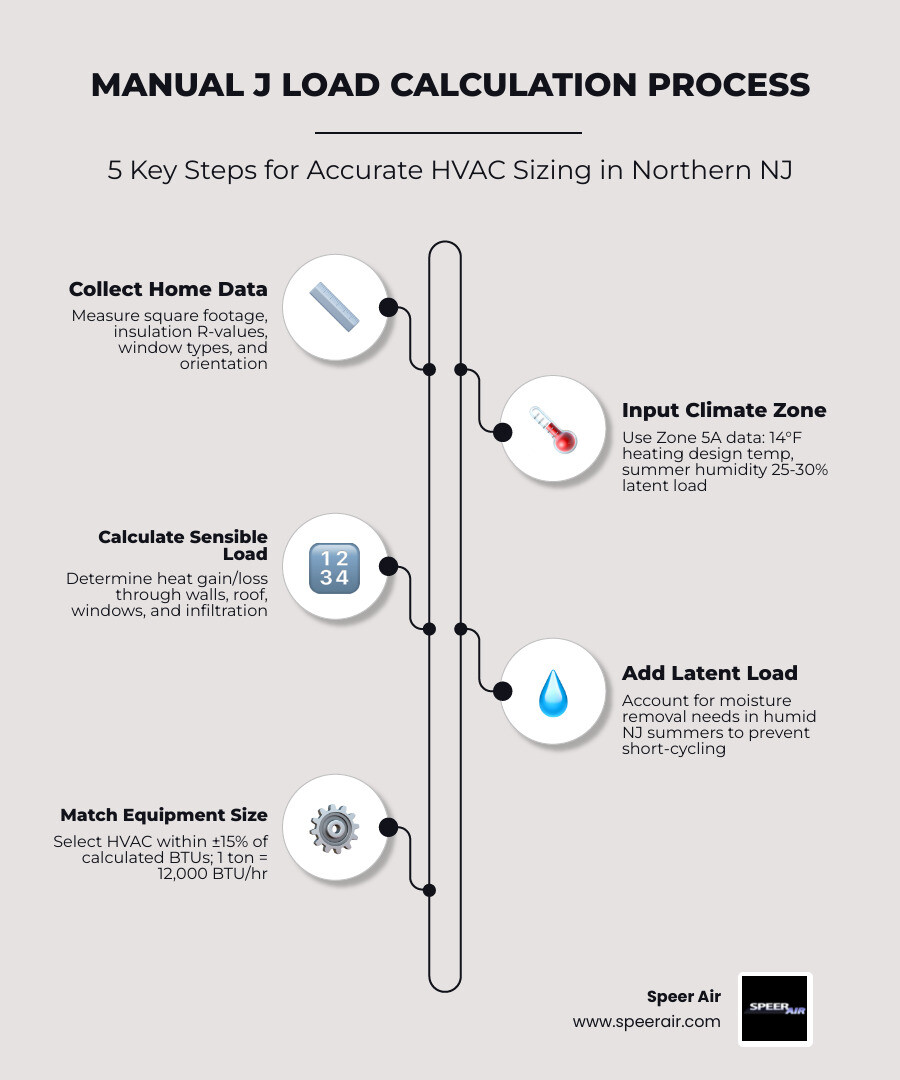
Getting the right size HVAC for Northern New Jersey homes starts with one non-negotiable step: a Manual J load calculation performed by a qualified professional. Here’s a quick-reference summary of what that means for most NJ homeowners:
Quick Answer: How to Size an HVAC System for Northern NJ
- Get a Manual J calculation – This is required by New Jersey’s State Building Code and is the only accurate sizing method
- Know your climate zone – Northern NJ sits in ASHRAE Climate Zone 5A, with heating design temperatures around 14°F (Morris and Passaic counties)
- Account for your home’s envelope – Insulation levels, window quality, air sealing, and home orientation all shift the numbers significantly
- Factor in humidity – Latent cooling loads make up 25-30% of your total cooling load in summer
- Don’t copy your old unit’s size – Your previous system may have been wrong from day one
- Select equipment within ±15% of your calculated cooling load – Bigger is not better in HVAC
Walk outside on a February morning in Rockaway or Morristown and the air bites hard. Come August, it’s a different kind of miserable – thick, sticky, and relentless. Northern New Jersey doesn’t give your HVAC system a break, and that’s exactly why sizing it correctly matters so much.
Here’s the problem most homeowners run into: they assume the right HVAC size is just a function of square footage. Plug your home’s area into a chart into a chart and pick the closest number, right? Unfortunately, that approach produces errors of 20 to 50 percent, according to industry data. Two homes with identical square footage in the same NJ town can have cooling loads that differ by 30 percent or more – just because of window placement, insulation quality, or which direction the house faces.
Get the size wrong, and you’re not just uncomfortable. You’re paying more every month, wearing out equipment faster, and fighting humidity you can never quite win against.
This guide breaks down exactly how proper HVAC sizing works in Northern New Jersey – from the Manual J calculation process to heat pump balance points to duct design – so you can ask the right questions and make a confident decision.
The Science of Getting the Right Size HVAC for Northern New Jersey Homes
In the HVAC world, “sizing” doesn’t mean measuring the physical dimensions of the unit with a tape measure. It refers to the capacity of the system to add or remove heat, measured in BTUs (British Thermal Units) or tons. One ton of cooling capacity equals 12,000 BTUs per hour.
To determine how many BTUs your specific home needs, we use the Manual J Residential Load Calculation. This is the gold standard developed by the Air Conditioning Contractors of America (ACCA). Unlike a “rule-of-thumb” guess, which often suggests one ton of cooling for every 400 to 600 square feet, Manual J is a mathematical deep dive into your home’s thermal characteristics.
Northern New Jersey primarily falls into ASHRAE Climate Zone 5A. This means we deal with “cool-humid” conditions. In areas like Morris or Passaic County, our winter design temperature is roughly 14°F. A proper load calculation accounts for both “sensible heat” (the temperature you see on the thermometer) and “latent heat” (the moisture in the air).
| Feature | Rule-of-Thumb Estimate | Manual J Load Calculation |
|---|---|---|
| Accuracy | Often 20-50% off | Highly Precise |
| Factors Considered | Square footage only | Insulation, windows, orientation, occupancy, etc. |
| NJ Code Compliance | Not compliant | Required by NJ State Building Code |
| Comfort Level | High risk of hot/cold spots | Balanced, consistent comfort |
| Humidity Control | Poor (often leads to “clammy” air) | Excellent (properly sized for latent loads) |
When Choosing The Right Ac System Factors To Consider, it is vital to remember that New Jersey’s building code mandates this calculation for a reason. It protects you from the long-term costs of improper installation.
Critical Factors Influencing Your NJ Load Calculation
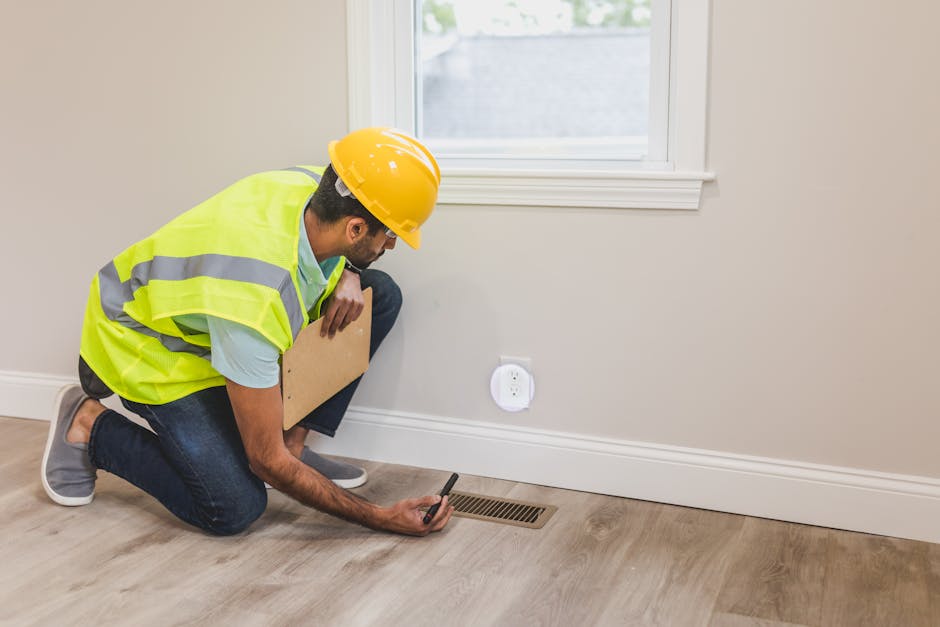
A Manual J calculation is only as good as the data fed into it. When we visit a home in Bergen or Essex County, we aren’t just looking at the floor plan; we are inspecting the “building envelope.”
Insulation and Air Sealing
The R-value of your insulation determines how much heat leaks out in January and creeps in in July. For New Jersey homes, the IRC code minimums for Zone 5A are R49 for attics and R20 for 2×6 walls. If your home has R19 walls or R30 attics, your HVAC system will need to be larger to compensate for the heat loss—or better yet, you can upgrade your insulation to allow for a smaller, more efficient HVAC unit.
Window Orientation and Quality
The number, size, and type of windows in your home are massive variables. A large, west-facing window in the summer can act like a space heater. We look at the Solar Heat Gain Coefficient (SHGC) and U-factor of your glass. Modern double or triple-pane windows significantly reduce the required BTU capacity of your system.
Occupancy and Internal Gains
How many people live in the home? Do you have high-end, heat-generating appliances? Even the direction your home faces impacts the “sun load” on your roof and walls. Before we begin the install, we help you Prepare Home For New Hvac System Setup by verifying these details to ensure the math is perfect.
Impact of Building Age on Getting the Right Size HVAC for Northern New Jersey Homes
Many of the 3.7 million housing units in New Jersey were built before 1980. These older homes often lack modern air sealing and high-performance insulation. In a pre-1980 home, thermal leakage is often significantly higher.
If you live in an older Victorian in Maplewood or a mid-century ranch in Rockaway, a “like-for-like” replacement of your old unit is risky. Modernizing your home’s envelope (through better windows or spray foam) might mean you can drop down a half-ton in system size, saving you money on the equipment and your monthly bills. Recognize the Signs Hvac System Is Ready For An Upgrade early to avoid emergency replacements that bypass these critical calculations.
Managing Humidity and Latent Loads in Zone 5A
In Northern New Jersey, the humidity is often the real enemy. Latent cooling loads—the energy required to remove moisture from the air—typically constitute 25% to 30% of the total cooling load during a Jersey summer.
If your system is oversized, it will “short-cycle.” This means it cools the air so quickly that the thermostat reaches its target temperature and shuts the system off before the air conditioner has had enough time to pull the humidity out. You’ll end up with a home that is 72 degrees but feels like a swamp. A correctly sized unit runs longer, lower-intensity cycles that effectively dehumidify your living space.
Sizing Heat Pumps and Dual-Fuel Systems for NJ Winters
Heat pumps have become incredibly popular in Northern New Jersey, but they require even more precise sizing than a traditional furnace.
In Climate Zone 5A, a standard heat pump’s heating capacity drops as the outdoor temperature falls. At our 14°F design temperature, a unit sized perfectly for summer cooling might only provide 60% to 70% of the heat you need. This is where cold-climate heat pumps or dual-fuel systems come in.
- Cold-Climate Heat Pumps: These use variable-speed inverters to maintain high heating capacity even when it’s well below freezing.
- Dual-Fuel Systems: This combines an electric heat pump with a high-efficiency gas furnace. The heat pump handles the “shoulder seasons” (spring and fall), and the gas furnace kicks in as “supplemental heat” when the temperature hits a specific “balance point.”
Wondering What Size Heat Pump Does Maplewood Home Need? It depends on your home’s specific balance point—the temperature at which the heat pump can no longer keep up with the heat loss of the building.
Efficiency Standards and Getting the Right Size HVAC for Northern New Jersey Homes
As of April 2026, we are operating under the DOE 2023 standards. In the North region, which includes New Jersey, the minimum efficiency for central air conditioners is 14.3 SEER2.
When sizing, we also look at:
- HSPF2 (Heating Seasonal Performance Factor): Measures heat pump heating efficiency.
- AFUE (Annual Fuel Utilization Efficiency): Measures furnace gas-to-heat conversion.
Higher efficiency ratings often go hand-in-hand with variable-speed technology. These systems can “scale down” their capacity, making them much more forgiving if the load calculation falls between two standard unit sizes. You can use our Seer Calculator to see how different efficiency levels impact your long-term energy usage.
The Role of Ductwork and Manual D in System Performance
You can have the most perfectly sized, high-tech Carrier unit in the world, but if your ducts are too small, it won’t matter. This is where Manual D (Duct Design) comes in.
Ductwork must be sized to handle the “static pressure” or resistance that the system’s blower can overcome. In many older NJ homes, the existing ducts were designed for heating only. When central AC was added later, the ducts were often undersized for the higher airflow requirements of cooling.
If your vents are noisy, or if some rooms stay hot while others are freezing, you likely have a duct sizing issue. We use our Hvac Troubleshooter to identify if the problem lies with the unit’s capacity or the ductwork’s ability to deliver that air. Proper sealing with mastic is also essential to ensure you aren’t losing 20% of your conditioned air to your attic or crawlspace.
Frequently Asked Questions about NJ HVAC Sizing
Should I just replace my old unit with the same size?
In almost every case, the answer is no—at least not without a fresh calculation. Over the last 10-15 years, you may have added new windows, upgraded your attic insulation, or even added a room. These changes alter your home’s heat load. Furthermore, older systems were notoriously oversized by contractors who wanted to avoid “not cold enough” complaints, leading to decades of inefficient short-cycling.
Check out our Hvac Learning Center for more details on why modern sizing methods are superior to the “same-as-the-old-one” approach.
What size unit is typical for a 2,500 sq ft NJ home?
While every home is unique, a 2,500 sq ft home in Northern NJ typically requires between 3.5 and 4 tons of cooling capacity. However, a highly energy-efficient new build might only need 3 tons, while a drafty 1920s colonial might require 5 tons.
For more localized context, see our Hvac Resources Rockaway Nj page to see what types of systems are common in your specific neighborhood.
What are the risks of an oversized HVAC system?
Bigger is definitely not better. An oversized system will:
- Short-cycle: Turn on and off constantly, which is the most energy-intensive part of operation.
- Leave you humid: It won’t run long enough to remove moisture.
- Break down early: The frequent starts and stops put massive strain on the compressor and blower motor.
- Create hot/cold spots: The air doesn’t circulate long enough to reach the far corners of your home.
Conclusion
Getting the right size HVAC for Northern New Jersey homes is a blend of engineering and local expertise. Since 1900, Speer Air has been helping our neighbors across Bergen, Essex, Morris, and Passaic counties stay comfortable regardless of what the Jersey weather throws at us.
As a Carrier Factory Authorized Dealer with NATE-certified technicians, we don’t guess—we calculate. Whether you need a Hvac Installation Maplewood Nj or are looking for Hvac Installation Services Available In Rockaway, we ensure your system is sized perfectly for your home’s unique footprint.
Don’t settle for a “rule-of-thumb” guess that leaves you with high bills and clammy air. Trust the experts who have been serving New Jersey for over a century. Ready to find your perfect fit? Contact us today to schedule your professional Manual J load calculation.