

When Your Heater Fails: A Bergen County Homeowner’s Guide
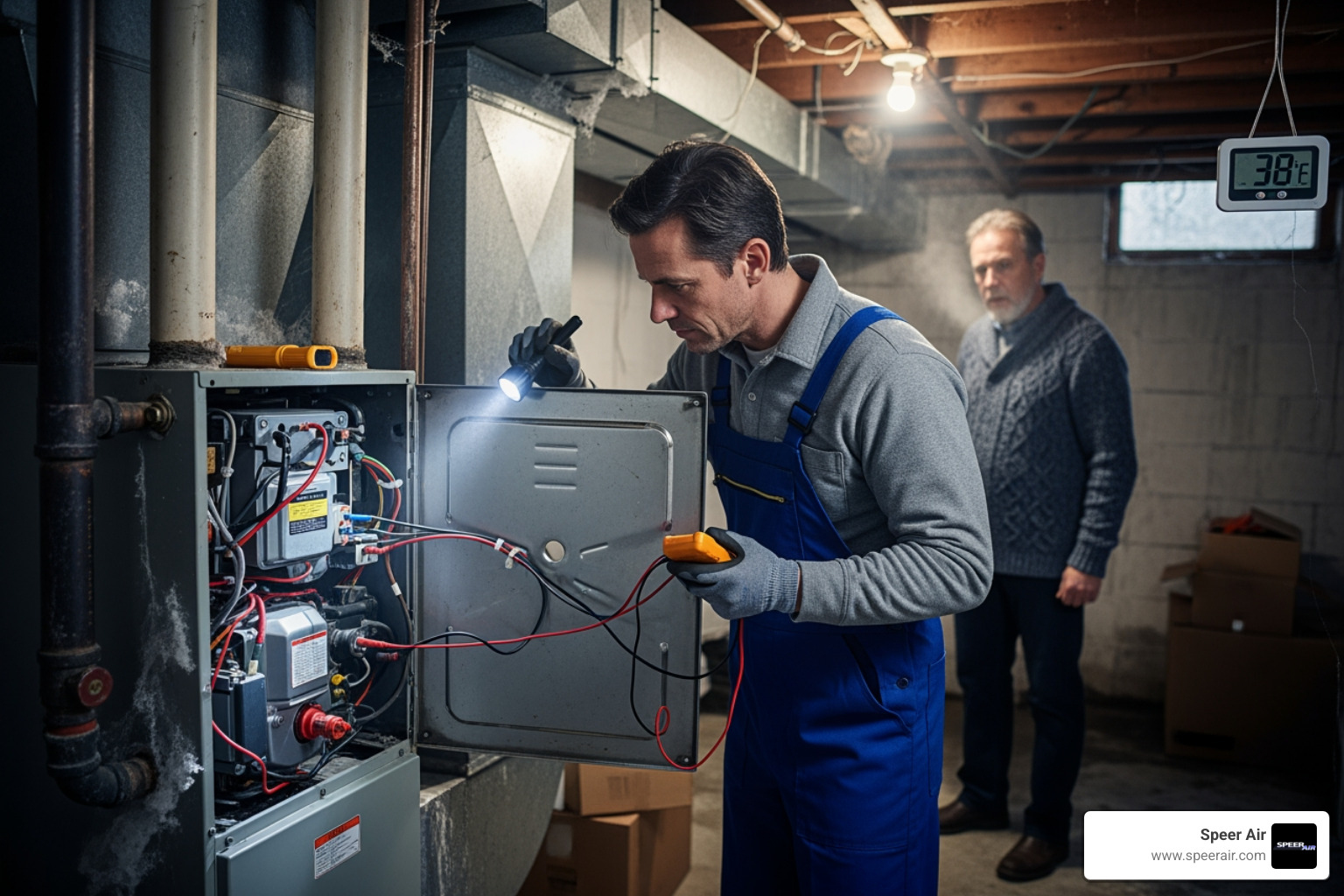
Emergency heating replacement in bergen county, nj becomes a critical need when your heating system fails completely during the coldest months of the year. Bergen County winters bring average temperatures in the low 20s to mid-30s Fahrenheit, and when your furnace or boiler stops working, indoor temperatures can drop dangerously within hours. Whether you’re dealing with a complete system failure, strange burning smells, or alarming noises from your heating unit, knowing what constitutes a true emergency and how to respond quickly can protect your family’s health and safety.
If you’re experiencing a heating crisis right now, learn more about our comprehensive heating services, or contact Speer Air immediately for emergency heating replacement.
When You Need Emergency Heating Replacement:
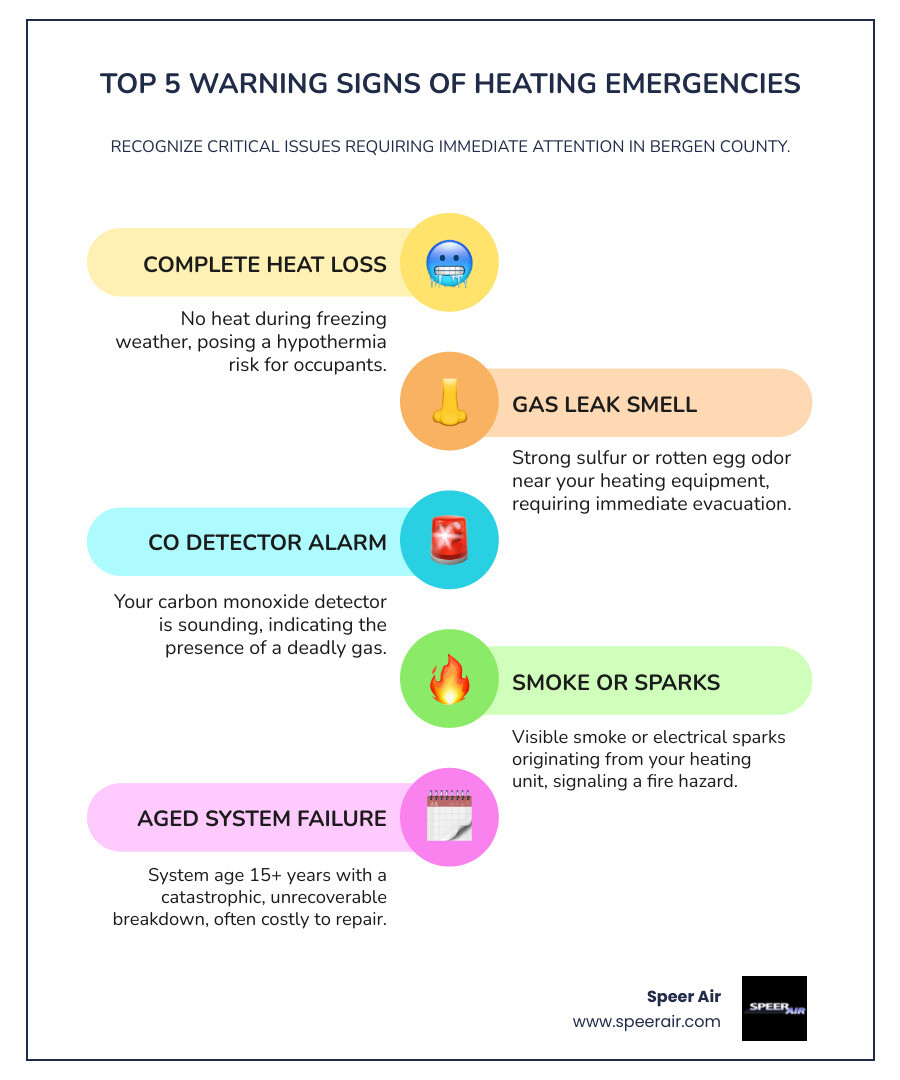
- Complete heat loss during freezing weather (poses hypothermia risk)
- Gas leak smell (sulfur or rotten egg odor requires immediate evacuation)
- Carbon monoxide alarm activation (deadly gas emergency)
- Smoke or sparks from your heating unit (fire hazard)
- Frozen pipe risk when indoor temperatures drop below 55°F
- System age 15+ years with catastrophic failure (repair may not be a practical solution)
A sudden heating failure isn’t just uncomfortable—it’s potentially dangerous. Without heat, your home can become unsafe for children, elderly family members, and pets within hours. Pipes can freeze and burst, causing extensive water damage. The good news is that qualified emergency heating professionals in Bergen County offer 24/7 service to restore warmth to your home quickly and safely.
What Constitutes a Heating Emergency?
It’s easy to wonder if a heating issue truly warrants an emergency call, or if it can wait until morning. However, in Bergen County, with our brisk winters, waiting can sometimes be a significant, or even dangerous, mistake. We define a heating emergency as any situation where your heating system’s failure poses an immediate risk to safety, health, or property.
Here are the critical situations that constitute an emergency and demand immediate attention:
- Complete Loss of Heat: If your heating system completely stops working during cold weather, especially when temperatures are at or below freezing, this is a clear emergency. Bergen County experiences average winter temperatures ranging from the low 20s to mid-30s Fahrenheit. A sudden heating system failure in these conditions can lead to indoor temperatures dropping significantly within hours, posing health risks such as hypothermia, particularly for the elderly, infants, or those with health conditions. It also increases the risk of pipes freezing and bursting.
- Gas Leak Smells (Rotten Eggs): If you detect a strong odor of rotten eggs or sulfur near your heating unit, it could indicate a natural gas leak. Natural gas is highly flammable and poses a severe explosion risk. This is an immediate hazard.
- Carbon Monoxide Detector Alarm: Carbon monoxide (CO) is an odorless, colorless, and deadly gas produced by faulty fuel-burning appliances. If your carbon monoxide detector goes off, it signals a potentially life-threatening situation. Evacuate immediately and call for professional help.
- Electrical Issues (Sparks, Smoke, Burning Smells): Any visible sparks, smoke, or a burning smell coming from your furnace, boiler, or electrical panel associated with your heating system indicates a serious electrical problem or potential fire hazard. These situations require immediate shutdown of the system and a call to emergency services.
- Unsafe Living Conditions: If the lack of heat makes your home unsafe, such as leading to extremely cold temperatures that could impact health, it’s an emergency. This can also include situations where a heating system is creating excessive noise that disrupts sleep or daily life due to a severe malfunction.
- Frozen Pipe Risk: As mentioned, when indoor temperatures fall below 55°F, especially in uninsulated areas, pipes can freeze and burst. This can cause extensive water damage and lead to more complex issues. Preventing this is a critical reason for emergency heating replacement.
There are situations in your everyday life when you simply can’t wait a few days for a heating repair company to call you back. When your system is making strange noises, emitting unusual smoke, or frequently breaking down, these are all signs that you need immediate emergency HVAC repair.
For more information on identifying and addressing heating system problems, you can explore our guide on common heating repair issues.
First Steps: What to Do Immediately When Your Heat Goes Out
Finding your heating system has failed, especially during a cold Bergen County night, can be alarming. However, taking a few immediate steps can ensure safety and potentially help us diagnose the issue more quickly when we arrive. Don’t panic; we’re here to guide you through the initial response.
A Quick Safety and Systems Check
Before calling for emergency service, we recommend performing a few basic checks. These actions are primarily for safety and to gather information, not to attempt a complex repair yourself.
-
Check the Thermostat:
- Ensure your thermostat is set to “Heat” and the temperature setting is higher than the current room temperature.
- Check the batteries if it’s a digital thermostat. Sometimes, a simple battery change is all that’s needed!
- Make sure the fan setting is on “Auto” rather than “On” unless you specifically want continuous airflow.
-
Inspect the Circuit Breaker:
- Go to your electrical panel and look for the circuit breaker labeled for your furnace or boiler.
- If it’s tripped (usually in the middle position), flip it firmly to the “Off” position, then back to “On.” If it trips again immediately, do not reset it; this indicates an electrical problem that requires professional attention.
-
Verify Fuel Supply (Oil or Gas):
- For Gas Furnaces/Boilers: Check if the gas valve to your furnace or boiler is open. If other gas appliances (like a stove or water heater) are working, it’s likely not a main gas supply issue. If no gas appliances are working, contact your gas utility company immediately, as there might be a neighborhood outage or a main line issue.
- For Oil Furnaces/Boilers: Check your oil tank gauge to ensure you haven’t run out of fuel.
-
Ensure Air Vents are Unblocked:
- Walk around your home and make sure all heating vents are open and not blocked by furniture, curtains, or rugs. Restricted airflow can sometimes cause a system to shut down.
-
Turn Off the System if You Smell Gas or See Smoke:
- This is paramount: If you detect a rotten egg smell (gas leak) or see smoke or sparks, immediately turn off your heating system at the thermostat and the main power switch if safe to do so.
- Evacuate your home and call 911 from a safe distance, then contact us. Do not re-enter your home until emergency services declare it safe.
Taking these initial steps can provide valuable information for our technicians and ensure your safety while we’re on our way. For more detailed troubleshooting specific to furnaces, you can also refer to our guide on how to fix a furnace that won’t start.
The Emergency Heating Replacement Process in Bergen County, NJ
When faced with an emergency heating failure, the thought of a complete system replacement can be daunting. However, sometimes it’s the most efficient, practical, and safest long-term solution. Our goal is to make this process as smooth and stress-free as possible for Bergen County homeowners. We understand the urgency, especially when temperatures plummet.
The average age of a heating system in the US is 15-20 years. After this point, efficiency drops significantly, and breakdowns become more common. If your system is in this age range, or if a major repair is needed, replacement often makes more sense than repeated repairs. Our focus is always on providing the best value and longest-lasting solution. This investment brings improved efficiency and reliability.
From Your Call to a Warm Home: What to Expect
When you contact us for an emergency heating replacement in Bergen County, NJ, we pride ourselves on a rapid and organized response:
- 24/7 Dispatch: Our emergency hotline is always active. When you call, you’ll speak with a live operator who understands the urgency of your situation. We’re available 24 hours a day, 7 days a week, because emergencies don’t stick to business hours.
- On-Site Assessment: Our NATE-certified technicians will arrive promptly at your Bergen County home. We conduct a thorough inspection of your existing system to accurately diagnose the problem. We’ll assess the age, condition, and repair history of your unit.
- Repair vs. Replacement Criteria: Based on our assessment, we’ll clearly explain whether a repair is feasible and practical, or if replacement is the better option. Factors like the system’s age (systems over 15 years old are often candidates for replacement), the severity of the malfunction, the availability of parts, and the long-term reliability of a repair versus a replacement will guide our recommendation. If your unit is frequently breaking down or requires significant repairs, a replacement is often the most reliable choice in the long run.
- System Recommendations: If a replacement is necessary, we’ll discuss your options. We offer a full range of top-quality solutions, including high-efficiency furnaces and boilers from trusted brands like Carrier and Payne. We’ll help you choose a system that fits your home’s needs, ensuring it provides superior comfort and energy savings.
- Efficient Installation Process: Once a decision is made, our experienced team will work quickly and efficiently to remove your old system and install the new one. We coordinate our services to minimize installation time and inconvenience, understanding that every minute without heat counts.
- Handling of Local Town Permits: We handle all necessary town permits and will even contact your utility company and submit paperwork for all available rebates. We ensure that your new system is installed safely and in full compliance with local codes.
- Final System Testing: After installation, we carefully test the new system to ensure it’s operating perfectly, providing consistent warmth throughout your home. We’ll walk you through its operation and answer any questions you may have.
For more insights into our installation processes, you can visit our page on heating installation.
Common Systems Requiring Emergency Heating Replacement in Bergen County, NJ
In Bergen County, we encounter a variety of heating systems that may require emergency replacement. Our technicians are experts in handling all major types, ensuring we can restore warmth to your home no matter what system you have.
Here are the most common types of heating systems we replace in emergency situations:
- Furnaces: These are forced-air systems that heat air and distribute it through ductwork. Furnaces are very common in residential homes. We proudly offer Carrier and Payne furnaces, known for their high efficiency and reliability.
- Boilers: Boilers heat water to produce steam or hot water that is then circulated through radiators, baseboard heaters, or radiant floor systems. As boiler systems age, they can lose efficiency or stop working entirely. We can install a full range of top-quality boiler solutions.
- Heat Pumps: Heat pumps can both heat and cool your home. They work by transferring heat rather than generating it. Air-source heat pump technology has advanced significantly, offering a legitimate and efficient heating alternative.
- Ductless Mini-Split Systems: These systems are excellent solutions for homes or specific zones within homes that have challenging or uncommon spaces where traditional ductwork is impossible or too expensive. We can install a variety of ductless systems to work around these issues.
Beyond the core heating unit, we also facilitate upgrades to high-efficiency models and integration with smart thermostat technologies. For instance, we can offer a full line of Carrier and Honeywell thermostats, including touchscreen, smart, and WiFi-capable models that can set multiple temperature zones in your house. Our smart thermostats can even be remotely accessed, allowing you to adjust settings from anywhere!
If you’re wondering whether your current system is due for an upgrade or replacement, our guide on when to replace your furnace or boiler provides valuable information.
Key Factors Influencing Your Replacement
Choosing the right emergency heating replacement involves more than just picking a new unit. Several factors come into play that influence the type of system we recommend and the overall complexity of the installation:
- System Type and Size: The type of heating system (furnace, boiler, heat pump) and its appropriate size (measured in BTUs) must match your home’s square footage, insulation, and layout. An undersized system won’t heat effectively, while an oversized one will cycle too frequently, leading to inefficiency and premature wear.
- AFUE Efficiency Rating: The Annual Fuel Utilization Efficiency (AFUE) rating indicates how efficiently a furnace converts fuel into heat. Higher AFUE ratings mean greater energy savings. We offer high-efficiency models to improve your home’s performance.
- Home Layout and Size: The architectural design and size of your Bergen County home directly impact heating requirements. Larger homes or those with high ceilings may require more powerful systems or multi-zone solutions for optimal comfort.
- Ductwork Condition: For forced-air systems like furnaces and heat pumps, the condition of your existing ductwork is crucial. Leaky or poorly designed ducts can negate the efficiency of a new system. We’ll inspect your ductwork and recommend necessary repairs or upgrades.
- Installation Complexity: The ease or difficulty of removing the old unit and installing the new one can vary. Factors like accessibility to the heating unit, the need for new venting, electrical upgrades, or modifications to gas lines can all affect the installation timeline and scope.
Upgrading your heating system is a great way to increase efficiency. If you’re noticing that your current system is struggling to keep up, or if you notice a drop in performance, it might be time to consider an upgrade. Our article on signs your HVAC system is ready for an upgrade offers more insights.
Finding a Trusted Pro and Preventing Future Crises
When your heat goes out unexpectedly, you need more than just a quick fix; you need a reliable partner who can provide lasting solutions. Choosing the right emergency heating replacement company in Bergen County, NJ, is crucial for your comfort and safety. Furthermore, understanding how to prevent future emergencies can save you significant stress and disruption.
The Benefits of Choosing a Local Bergen County Company
When you need emergency service, opting for a local company for your emergency heating replacement in Bergen County, NJ, offers distinct advantages:
- Faster Response Times: Being local means we can reach your home more quickly in an emergency. Our proximity allows for rapid dispatch, minimizing the time your family spends without heat.
- Familiarity with Local Building Codes: As a local company, we are intimately familiar with Bergen County’s specific building codes and permit requirements. This ensures that your new heating system is installed correctly and legally, avoiding future complications. We handle all town permits and necessary paperwork.
- Established Community Reputation: We have a vested interest in maintaining a good reputation within the community we serve. We rely on the trust and satisfaction of our Bergen County neighbors.
- Professional and Certified Technicians: Our team consists of highly skilled, NATE-certified technicians who are fully licensed and insured. This commitment to expertise ensures your heating system is handled with the highest level of professionalism and safety.
- Quick Access to Parts and Equipment: Our established relationships with local suppliers allow for faster access to necessary parts and new equipment, which is crucial during an emergency replacement.
We are proud to serve Bergen County and surrounding areas. You can see all the locations we cover on our service areas page.
Proactive Steps to Avoid an Emergency Heating Replacement in Bergen County, NJ
The best way to deal with an emergency heating replacement is to avoid it altogether! While some failures are unavoidable, many can be prevented with consistent, proactive care.
- Annual Professional Maintenance: This is the single most important step. Schedule professional heating maintenance every fall before the cold weather sets in. During these tune-ups, our technicians inspect, clean, and test all components of your system, identifying potential issues before they escalate into emergencies. This also ensures optimal performance and energy efficiency.
- Regular Filter Changes: A clogged air filter restricts airflow, forcing your system to work harder and potentially leading to breakdowns. Check your furnace filter monthly and change it every 1-3 months, or more frequently if you have pets or allergies.
- Keeping Outdoor Units Clear of Debris: If you have a heat pump, ensure the outdoor unit is kept clear of leaves, snow, ice, and other debris. Proper airflow around the unit is essential for its efficient operation.
- Monitoring System Performance: Pay attention to any changes in your heating system’s behavior. Unusual noises (squealing, rattling, banging), strange smells (musty, burning), inconsistent heating, or a noticeable change in performance can all be early warning signs of a problem. Addressing these promptly can prevent a full system failure.
Preparing your heating system for winter is crucial for avoiding unexpected breakdowns. Our guide on preparing your heating system for winter offers comprehensive advice. Don’t wait for an emergency; schedule heating service with us today to keep your system running smoothly.
Restoring Your Home’s Comfort and Safety
A heating emergency in Bergen County requires a swift, safe, and professional response. By recognizing the warning signs, taking immediate safety precautions, and partnering with a qualified local expert like us, you can quickly restore warmth and peace of mind to your home. Investing in regular maintenance is the best way to prevent future emergencies and ensure your system runs reliably all winter long. For expert guidance and dependable service, contact us for your heating replacement needs.