

Your Guide to Commercial Heat Pump Replacement in Middlesex County
Middlesex County businesses need reliable heating and cooling. When your current system falters, investing in commercial heat pump replacement in Middlesex County, NJ becomes crucial. An efficient heat pump ensures operational efficiency, keeps employees comfortable, and satisfies customers. Old systems waste energy and lead to costly repairs. Upgrading to a modern, energy-efficient heat pump provides long-term reliability and significant savings. It is a smart choice for any commercial property looking to improve its HVAC infrastructure and bottom line.
Looking for comprehensive commercial HVAC solutions? Visit our Commercial HVAC Services page or get a free estimate for your heat pump replacement today.
What to consider for commercial heat pump replacement in Middlesex County, NJ:
- System Age: Most commercial heat pumps last 15-20 years. Older units may need replacement.
- Rising Costs: Higher energy bills or frequent repairs signal inefficiency.
- Comfort Issues: Inconsistent temperatures or poor airflow affect business.
- Efficiency: New heat pumps offer 20-40% energy savings.
- Local Expertise: Choose a contractor familiar with Middlesex County regulations.
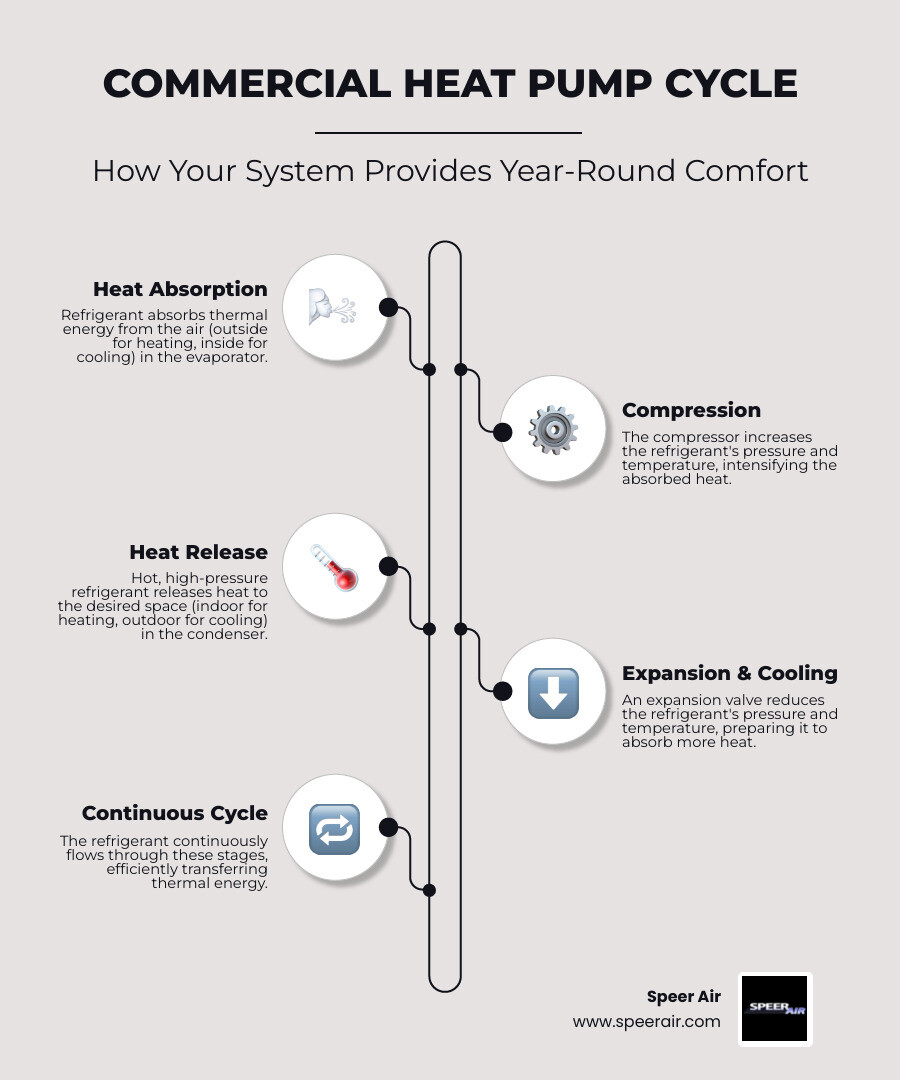
Commercial heat pump replacement in middlesex county, nj further reading:
- emergency heat pump replacement in middlesex county, nj
- heat pump replacement in middlesex county nj
Key Indicators Your Middlesex County Commercial Heat Pump Needs Replacement
Even the most robust commercial HVAC systems eventually show their age. Knowing when to consider a commercial heat pump replacement in Middlesex County, NJ can save your business from unexpected breakdowns, costly emergency repairs, and uncomfortable working conditions. We’ve seen it all, and these are the primary indicators that your commercial heat pump system might be waving a white flag.
One of the most straightforward signs is the system age. Commercial heat pumps typically have a lifespan of 15-20 years. If your unit is approaching or has exceeded this range, it’s likely operating less efficiently and becoming more prone to issues. Just like a trusty old car, it might get you from point A to point B, but it’s doing so with a lot more effort and expense.
Another glaring signal is rising energy bills. Are you noticing that your heating and cooling costs are creeping upwards, even when your usage hasn’t significantly changed? This is a classic sign of an inefficient system. Older heat pumps struggle to maintain desired temperatures, working harder and consuming more energy to achieve the same results as they once did. This increased energy consumption can quickly eat into your operational budget.
Frequent breakdowns are not just an inconvenience; they’re a red flag. If your commercial heat pump requires constant repairs, it’s telling you that its components are failing. While occasional maintenance and minor repairs are normal, a system that frequently calls for professional attention is likely nearing the end of its functional life. Think of it as a series of small heart attacks – eventually, a major replacement might be the only viable solution. This can also lead to unexpected downtime for your business, impacting productivity and customer satisfaction. If you’re experiencing common issues, we can help. For more information, check out our guide on common heat pump repair issues we can fix.
Inconsistent heating and cooling throughout your commercial property points to a system struggling to distribute conditioned air evenly. You might have hot spots in one area and cold drafts in another, leading to discomfort for employees and customers alike. This can be caused by issues like failing compressors, ductwork problems, or an improperly sized unit that’s no longer up to the task.
Finally, pay attention to unusual noises emanating from your heat pump. While HVAC systems aren’t silent, grinding, squealing, banging, or persistent rattling sounds are indicators of mechanical problems. These noises often suggest worn-out bearings, loose components, or a failing motor. Ignoring them can lead to more severe damage and potential safety hazards. Poor indoor air quality, such as persistent stuffiness, unusual odors, or increased dust, can also point to a system that’s no longer effectively filtering or conditioning the air. High humidity levels, common in Middlesex County summers, can strain air conditioners and promote mold growth in ductwork if not properly managed by your HVAC system.
If your commercial heat pump is exhibiting one or more of these symptoms, it’s time to consider a professional assessment for commercial heat pump replacement in Middlesex County, NJ. Proactive replacement can prevent an emergency situation and allow for a planned, strategic upgrade that benefits your business in the long run.
The Long-Term Advantages of Upgrading Your Commercial HVAC System
Deciding on a commercial heat pump replacement in Middlesex County, NJ is more than just fixing a problem; it’s a strategic investment in your business’s future. The long-term advantages of upgrading your commercial HVAC system to a modern, energy-efficient heat pump are substantial, impacting your bottom line, environmental footprint, and the overall comfort and productivity of your commercial space.
One of the most compelling benefits is significant energy savings. Upgrading to a high-efficiency commercial heat pump can lead to energy savings of 20-40% on heating and cooling costs. Modern heat pumps are engineered with advanced technology that allows them to transfer heat much more efficiently than older models or traditional heating and cooling systems. This translates directly into lower utility bills month after month, freeing up capital that can be reinvested into your business.
Beyond savings, you’ll experience improved comfort and productivity. A new heat pump provides consistent temperature control throughout your commercial property, eliminating those frustrating hot and cold spots. When employees and customers are comfortable, productivity naturally rises, and satisfaction improves. No more shivering in the office in winter or sweating through summer meetings!
Improved indoor air quality is another crucial advantage. New heat pump systems are often equipped with improved filtration capabilities, effectively reducing allergens, pollutants, and humidity levels. Heat pumps improve indoor air quality by reducing humidity and filtering out airborne particles. This creates a healthier environment for everyone, which can reduce sick days and improve overall well-being.
Upgrading also contributes to a reduced environmental footprint. Heat pumps are known for their eco-friendly operation. By transferring heat rather than generating it from fossil fuels, they significantly lower greenhouse gas emissions. Newer heat pumps often use more eco-friendly refrigerants, further minimizing their environmental impact. This aligns with growing corporate social responsibility goals and can appeal to environmentally conscious customers.
Furthermore, a modern heat pump can lead to increased property value. Energy-efficient HVAC systems are a highly desirable feature for commercial properties, signaling lower operating costs and a well-maintained building to potential buyers or tenants. It’s an asset that pays dividends.
Finally, you gain tremendous operational reliability and experience fewer emergency repairs. A new system means you start with a clean slate, reducing the likelihood of unexpected breakdowns and the associated disruptions. This peace of mind allows you to focus on your core business operations without worrying about your HVAC system. Regular maintenance on a new, high-quality system will ensure it operates smoothly for years to come. For more insights on the benefits of heat pump installation, even for homes, you can read our guide on why heat pump installation is essential for homes.
Choosing the Right System: A Guide to Commercial Heat Pump Replacement in Middlesex County, NJ
Navigating the options for commercial heat pump replacement in Middlesex County, NJ can feel overwhelming, but with the right information, we can help you make an informed decision. Selecting the appropriate system involves understanding the different types available, key factors for your specific commercial property, and any local regulations or incentives that might apply.
Types of Commercial Heat Pumps for the NJ Climate
Heat pumps are versatile HVAC systems that efficiently heat and cool commercial spaces, making them an excellent choice for Middlesex County’s variable weather, which experiences both hot, humid summers and cold winters.
- Air-Source Heat Pumps: These are the most common type. They work by extracting heat from the outdoor air in winter and transferring it indoors, and reversing the process in summer to cool your property. Modern air-source heat pumps are designed to operate efficiently even in low temperatures, making them suitable for the New Jersey climate. They are relatively straightforward to install and offer a balance of efficiency and cost.
- Geothermal Systems (Ground-Source Heat Pumps): These systems use the stable temperatures found underground. A network of pipes buried beneath the property exchanges heat with the earth. Geothermal systems offer exceptional energy efficiency and can significantly reduce long-term operating costs, as ground temperatures are more consistent than air temperatures. While the initial investment is higher, the long-term savings and environmental benefits are substantial.
- Water-Source Units: Less common for typical commercial buildings, water-source heat pumps use a nearby body of water (like a pond or lake) as a heat exchange medium. These are highly efficient but require a suitable water source on or near the property.
- Ductless Mini-Splits for Zoning: For commercial properties without existing ductwork, or for those requiring precise temperature control in different zones, ductless mini-split systems are an excellent solution. These can be ducted or ductless, offering flexibility. They allow you to heat or cool individual rooms or areas independently, saving energy by not conditioning unoccupied spaces.
Understanding the fundamental principles of how these systems work can help you appreciate their efficiency. For a deeper dive, explore our guide on understanding heat pumps-a-guide.
Key Factors for Your Commercial Heat Pump Replacement in Middlesex County, NJ
Once you understand the types of heat pumps, several factors will guide your decision for the optimal commercial heat pump replacement in Middlesex County, NJ.
- Proper System Sizing: This is perhaps the most critical factor. An undersized system will struggle to heat or cool your property, leading to constant operation, higher energy bills, and premature wear. An oversized system will cycle on and off too frequently (short-cycling), which also wastes energy, causes uneven temperatures, and reduces the system’s lifespan. We use detailed Manual J load calculations to accurately determine your building’s specific heating and cooling requirements, accounting for factors like insulation, windows, occupancy, and internal heat gains. A common guideline for heat pump sizing is around 20 BTUs per square foot, but precise calculations are always necessary for commercial applications. For more information on sizing, you can refer to our article on what size heat pump does maplewood home need.
- Energy Efficiency Ratings (SEER, HSPF, EER): These ratings indicate how efficiently a heat pump converts energy into heating or cooling.
- SEER (Seasonal Energy Efficiency Ratio) measures cooling efficiency. Higher SEER numbers mean greater efficiency.
- HSPF (Heating Seasonal Performance Factor) measures heating efficiency. Higher HSPF numbers mean greater efficiency.
- EER (Energy Efficiency Ratio) measures cooling efficiency at a specific outdoor temperature. Investing in an Energy Star-rated heat pump is a smart choice, as these models are designed for optimal efficiency, leading to improved savings.
- Smart Thermostat Integration: Modern heat pumps pair seamlessly with smart thermostats, allowing for precise control, scheduling, and remote access. This can significantly improve comfort and further reduce energy costs by optimizing system operation based on occupancy and real-time conditions.
- Building Requirements: The nature of your commercial property (e.g., office space, retail store, warehouse, restaurant) will dictate specific HVAC needs. Different businesses have varying occupancy levels, equipment heat loads, and air quality requirements that must be factored into system design.
Local Regulations and Incentives
When planning a commercial heat pump replacement in Middlesex County, NJ, be aware of local regulations and potential financial incentives.
- Middlesex County Building Permits: Any significant HVAC installation or replacement project will require appropriate building permits from your local municipality within Middlesex County. This ensures that the installation adheres to safety codes and construction standards. If your installation involves electrical or plumbing work, you may also need to acquire respective electrical or plumbing permits.
- New Jersey Energy Codes: The state of New Jersey has specific energy codes that all new HVAC installations must meet. These codes are designed to ensure energy efficiency and environmental responsibility.
- Utility Company Rebates: The demand for heat pump installations in New Jersey is increasing due to state and federal incentives promoting energy efficiency and electrification. Commercial properties in Middlesex County may benefit from specific local or utility rebates for installing energy-efficient heat pump systems, potentially reducing upfront costs. Programs like NJNG’s SAVEGREEN Project offer rebates for high-efficiency HVAC equipment.
- Federal Tax Credits: The federal government also offers tax credits for qualified high-efficiency heat pump systems, providing further financial relief. These incentives can make the upfront cost of a new, high-efficiency system much more manageable.
- Importance of Licensed Installation: To ensure compliance with all local codes, safety standards, and to qualify for any rebates or warranties, it is paramount to hire licensed professionals for your heat pump installation. Our NATE-certified technicians are well-versed in these requirements. For more on professional HVAC installation, consider our services outlined in hvac installation-maplewood-nj.
We are committed to helping you steer these requirements, ensuring your commercial heat pump replacement in Middlesex County, NJ is fully compliant and takes advantage of all available savings.
The Professional Replacement Process and Long-Term Care
Undertaking a commercial heat pump replacement in Middlesex County, NJ is a significant project that demands careful planning and expert execution. With our team, you can expect a streamlined process, followed by comprehensive maintenance that ensures your new system delivers optimal performance for years to come.
What to Expect During Your Commercial Heat Pump Replacement in Middlesex County, NJ
Our professional replacement process is designed to minimize disruption to your business operations while ensuring a high-quality installation.
- Initial Site Assessment: We begin with a thorough evaluation of your existing HVAC system and commercial property. This includes assessing your current heat load, ductwork integrity, electrical capacity, and any specific operational requirements your business may have.
- System Design and Selection: Based on the assessment, we will recommend the optimal heat pump system for your needs, considering factors like efficiency ratings, system type (air-source, geothermal, etc.), and budget. We ensure the new system is properly sized using Manual J load calculations.
- Permit Acquisition: We handle all necessary paperwork for obtaining building permits from your local Middlesex County municipality. This critical step ensures your installation complies with all local codes and regulations, preventing future headaches.
- Professional Installation: Our NATE-certified technicians will carefully remove your old system and install the new commercial heat pump. Proper installation is crucial for system performance, efficiency, and longevity. We take pride in our precision and attention to detail. Typically, a heat pump installation takes about one to two days, depending on the complexity of the system.
- System Commissioning and Testing: Once installed, we rigorously test the entire system to ensure all components are functioning correctly and efficiently. This includes checking refrigerant levels, electrical connections, airflow, and thermostat controls.
- Final Walkthrough and Inspection: We’ll walk you through the new system’s operation, explain its features, and answer any questions you may have. We ensure you are completely satisfied with the installation and understand how to maximize your new heat pump’s performance. For a broader look at our commercial HVAC expertise, visit our commercial-hvac-services-rockaway-nj page.
Selecting a Qualified and Reputable HVAC Contractor
Choosing the right HVAC contractor for your commercial heat pump replacement in Middlesex County, NJ is as important as choosing the right equipment. Here’s what to look for:
- NATE-Certified Technicians: This certification signifies that technicians have passed rigorous exams demonstrating their knowledge and expertise in HVAC systems. Our team is NATE-certified, ensuring top-tier service.
- Licensed and Insured: Always ensure your contractor is fully licensed to operate in New Jersey and carries comprehensive insurance. This protects your business from liability in case of accidents or property damage during the installation.
- Extensive Commercial Experience: Commercial HVAC systems are more complex than residential ones. Choose a contractor with a proven track record in commercial installations and replacements. We have deep industry roots dating back to 1900.
- Knowledge of Local Middlesex County Codes: A reputable contractor will be intimately familiar with all local building codes, permitting requirements, and energy efficiency standards specific to Middlesex County.
- Positive Customer Reviews: Look for contractors with strong reputations and positive feedback from other commercial clients. This indicates reliability, quality workmanship, and good customer service.
- Factory Authorizations: Being a Carrier Factory Authorized Dealer, like us, means we meet strict standards for technical expertise, business practices, and customer satisfaction set by leading manufacturers.
The Role of Post-Replacement Maintenance
Once your new commercial heat pump is installed, its long-term performance, efficiency, and lifespan largely depend on consistent, professional maintenance. Regular maintenance is key to preserving your system’s performance and energy efficiency.
- Maximizing System Lifespan: Just like a car, regular tune-ups extend the life of your heat pump. Maintenance helps identify and address minor issues before they escalate into major, costly repairs.
- Ensuring Peak Efficiency: Over time, components can accumulate dirt and wear, reducing efficiency. Scheduled maintenance, including tasks like coil cleaning and refrigerant checks, keeps your system operating at its optimal efficiency, ensuring those energy savings continue.
- Preventing Costly Downtime: Proactive maintenance helps prevent unexpected breakdowns, which can disrupt your business, impact productivity, and lead to emergency service calls. It’s about finding hidden problems before they become critical.
- Scheduled Filter Changes: Clean air filters are essential for efficient operation and good indoor air quality. We schedule regular filter replacements to maintain airflow and prevent strain on your system.
- Coil and Drain Line Cleaning: Evaporator and condenser coils can get dirty, impeding heat transfer. Drain lines can become clogged, leading to water damage. Our maintenance includes thorough cleaning of these critical components.
- Professional Maintenance Agreements: We offer custom maintenance agreements designed for commercial properties, providing scheduled visits, priority service, and often discounts on parts or repairs. This ensures your investment is protected and your system runs smoothly year-round. To learn more about how we can keep your heat pump running perfectly, explore our heat-pump-services-rockaway-nj offerings.
Partner with Middlesex County’s Commercial HVAC Experts
Upgrading your commercial heat pump is a significant investment in your business’s future comfort, efficiency, and reliability. By understanding the signs of a failing system, the benefits of modern technology, and the importance of a professional installation, you can make a confident decision that benefits your bottom line. For expert guidance and flawless execution on your next commercial HVAC project, trust the certified professionals at Speer Air. Contact us today to learn more about our commercial heat pump services.