

Mini Split Installation Denville: 120+ Years Expert
Why Mini Split Installation Denville is the Smart Choice for Your Home
Mini split installation Denville offers homeowners a flexible, efficient solution for heating and cooling spaces where traditional ductwork isn’t practical or cost-effective. Whether you’re dealing with an older home without existing ducts, planning a room addition, or looking to improve comfort in specific areas of your house, ductless mini-split systems provide targeted climate control without the energy losses associated with conventional HVAC systems. These systems are up to 40% more efficient than traditional forced-air systems and can last 15 to 20 years with proper installation and maintenance.
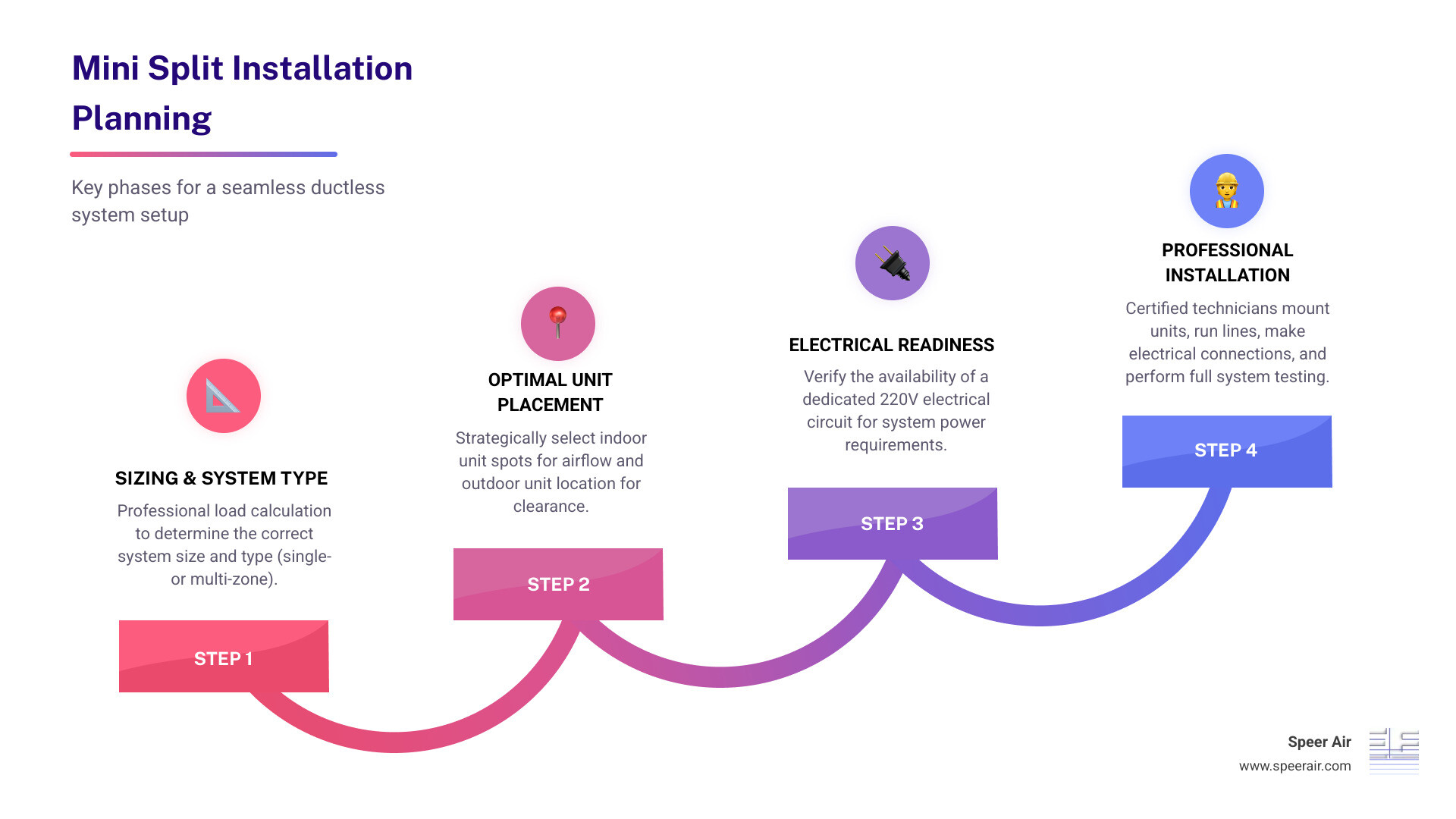
Key steps for planning your mini split installation in Denville:
- Assess your needs – Determine which rooms need heating and cooling
- Size it right – Have a professional perform a Manual J load calculation based on your home’s insulation, windows, and room usage
- Choose your system type – Select between single-zone (one indoor unit) or multi-zone (multiple indoor units connected to one outdoor compressor)
- Plan unit locations – Indoor units should be mounted about seven feet high with clear airflow; outdoor units need stable placement with adequate clearance
- Verify electrical requirements – Most systems need a dedicated 220V circuit
- Hire certified professionals – Professional installation ensures proper refrigerant handling, protects your warranty, and guarantees optimal performance
Looking for comprehensive HVAC solutions? Explore our complete heating and cooling services, or schedule your mini split consultation today.
The installation process typically involves mounting indoor and outdoor units, drilling a small three-inch hole through an exterior wall, running refrigerant lines and electrical connections, and thoroughly testing the system. Unlike conventional HVAC installations that can take days and require extensive ductwork modifications, professional mini split installation usually completes in a single day with minimal disruption to your home.
Easy mini split installation denville word list:
- Ductless Heat Pump Northern NJ
- Ductless HVAC Contractor Northern NJ
- Ductless HVAC Installation Rockaway
Why Denville Homeowners are Choosing Ductless Mini-Splits
Denville’s mix of charming historic homes and modern developments creates some interesting challenges when it comes to heating and cooling. Walk through some of the older neighborhoods, and you’ll find beautiful homes that were built long before central air conditioning became standard—which means no existing ductwork. Installing traditional ducts in these homes would mean tearing into walls and ceilings, disrupting your life for weeks, and spending a small fortune.
That’s where mini split installation Denville becomes such a smart solution.
Homeowners are finding that ductless mini-splits provide targeted comfort without the hassle of traditional HVAC. Key benefits include:
Energy savings are a major draw, as ductless systems are up to 40% more efficient than older systems. This translates to lower utility bills, especially during New Jersey’s hot summers and cold winters.
Improved indoor air quality is another advantage. Since there’s no ductwork to collect dust and allergens, the air is cleaner. Advanced filtration in each unit is a significant benefit for families with allergies.
The flexibility of these systems makes them ideal for Denville’s varied housing stock. Whether it’s a historic property that can’t accommodate ductwork, a finished basement, or a new room addition, they deliver heating and cooling precisely where needed.
You’ll also appreciate how quiet these systems operate. The indoor units run so quietly you might forget they’re there.
Perhaps the most appealing feature is zone control. Each indoor unit operates independently with its own thermostat, so you can customize temperatures by room. This means you only heat or cool the spaces you’re using, saving energy and ending thermostat disputes.
Understanding System Efficiency
When shopping for a system, you’ll see a SEER rating, or Seasonal Energy Efficiency Ratio. Like MPG for a car, a higher SEER means less energy use. This impacts your utility bills over the system’s 15- to 20-year lifespan. Our NATE-certified technicians help you find the right balance of upfront investment and long-term savings.
Modern ductless systems are also powerful heaters. Advanced inverter technology allows them to continuously adjust their compressor speed to match the exact heating or cooling demand. Instead of cycling on and off, they run smoothly and efficiently, saving significant energy. Today’s models can even heat your home in temperatures as low as -13°F, making them a reliable year-round solution for New Jersey winters.
Types of Ductless Systems
Ductless systems come in single-zone and multi-zone configurations.
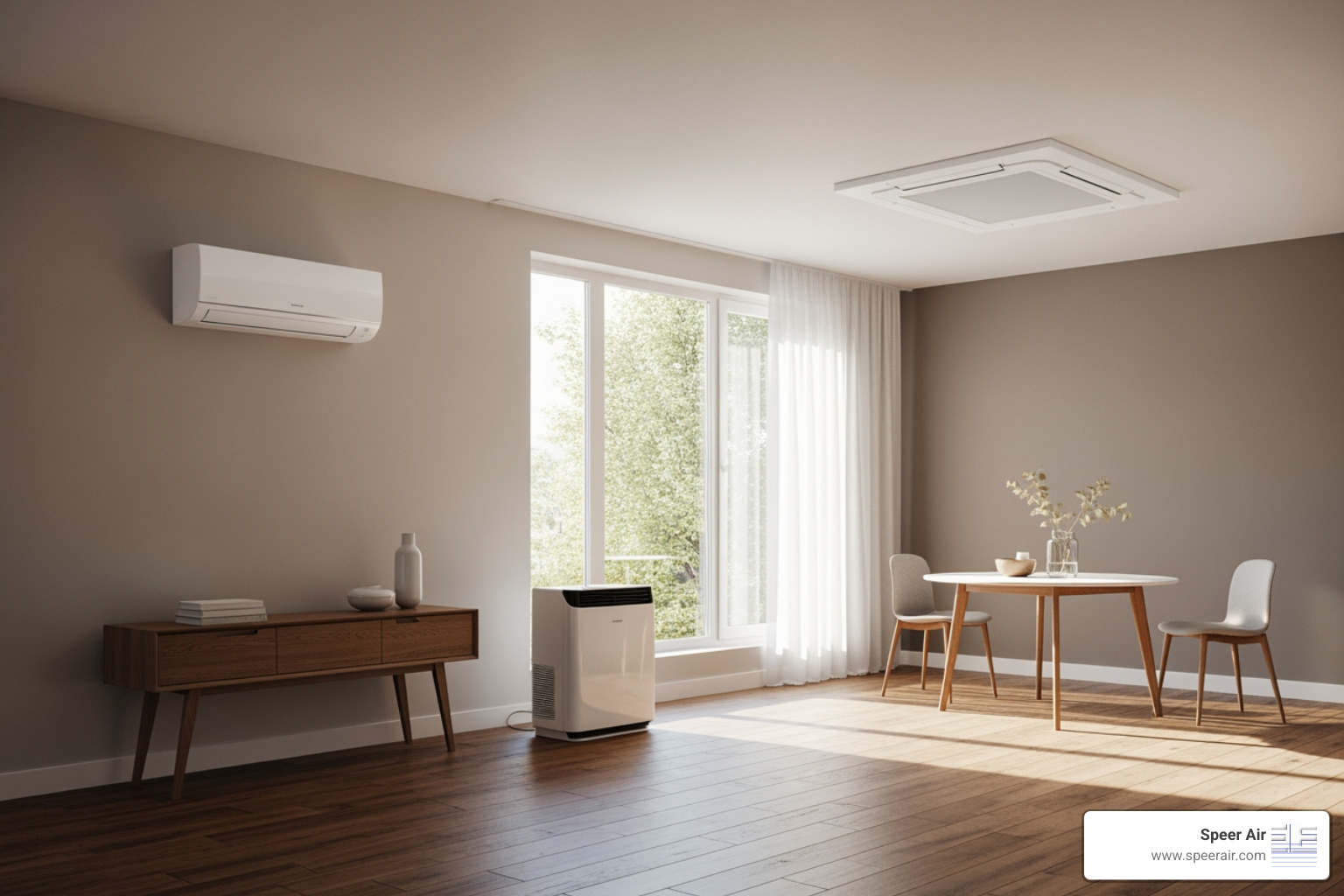
Single-zone systems pair one outdoor unit with one indoor unit. They’re perfect for conditioning a specific area like a master bedroom, home office, or a new room addition.
Multi-zone systems connect a single outdoor unit to multiple indoor units—often up to eight. Each indoor unit operates independently, giving you customized comfort in every room with just one outdoor compressor.
Here’s how they compare:
| Feature | Single-Zone Ductless System | Multi-Zone Ductless System |
|---|---|---|
| Indoor Units | 1 | 2 to 8 (typically) |
| Outdoor Units | 1 | 1 |
| Control | Heats/cools one specific area | Independent temperature control for each indoor unit (zone control) |
| Best For | Single rooms, additions, garages, small apartments | Whole-home conditioning, multiple rooms, larger spaces |
| Installation | Simpler, often quicker | More complex due to multiple indoor units, but still ductless |
The indoor units are designed to blend into your home. Wall-mounted units are the most popular choice. Floor-mounted units are ideal for spaces with limited wall space. For maximum discretion, ceiling cassettes fit flush with your ceiling. A professional assessment helps you choose the best configuration for your home.
Planning Your Mini Split Installation in Denville
A successful mini split installation Denville project starts with careful planning. This foundational step ensures your system works perfectly, provides year-round comfort, and avoids any unexpected issues.
The first and most important decision is choosing the right size system. An undersized unit will run constantly without properly heating or cooling, while an oversized unit will “short-cycle” (turn on and off too frequently). This causes premature wear, reduces efficiency, and fails to dehumidify properly. To get it right, we perform a “Manual J load calculation.” This precise assessment considers your home’s square footage, layout, insulation, and windows to select a system with the perfect amount of heating and cooling power (BTUs) for your space.
Once we know the right size, we’ll also chat about your home’s electrical requirements. Mini-split systems, especially if you’re looking at a multi-zone setup, need a dedicated electrical circuit to handle their power needs. Most units use 220V wiring, though some smaller, single-zone systems might work with 110-120V. Our professional assessment includes checking your home’s current electrical capacity and planning for any necessary upgrades to keep everything running safely and reliably.
Choosing the Right Location for Your Units
Unit placement is important for performance and aesthetics. For indoor units, we focus on optimal air distribution, usually mounting them about seven feet high on a wall with clear airflow, away from heat sources or direct sun.
The outdoor compressor needs a sturdy, level spot like a concrete pad to minimize vibration. We also ensure at least two feet of airflow clearance around it to prevent overheating and simplify maintenance. Finally, we ensure the condensate drain path directs water safely away from your home’s foundation.
The Importance of Professional Mini Split Installation in Denville
Homeowners often wonder about DIY installation. While some kits are marketed as “DIY-friendly,” we strongly advise against it. Installing a ductless system involves specialized tools and skills. Professional installation by NATE-certified technicians is crucial for your system’s longevity and your peace of mind.
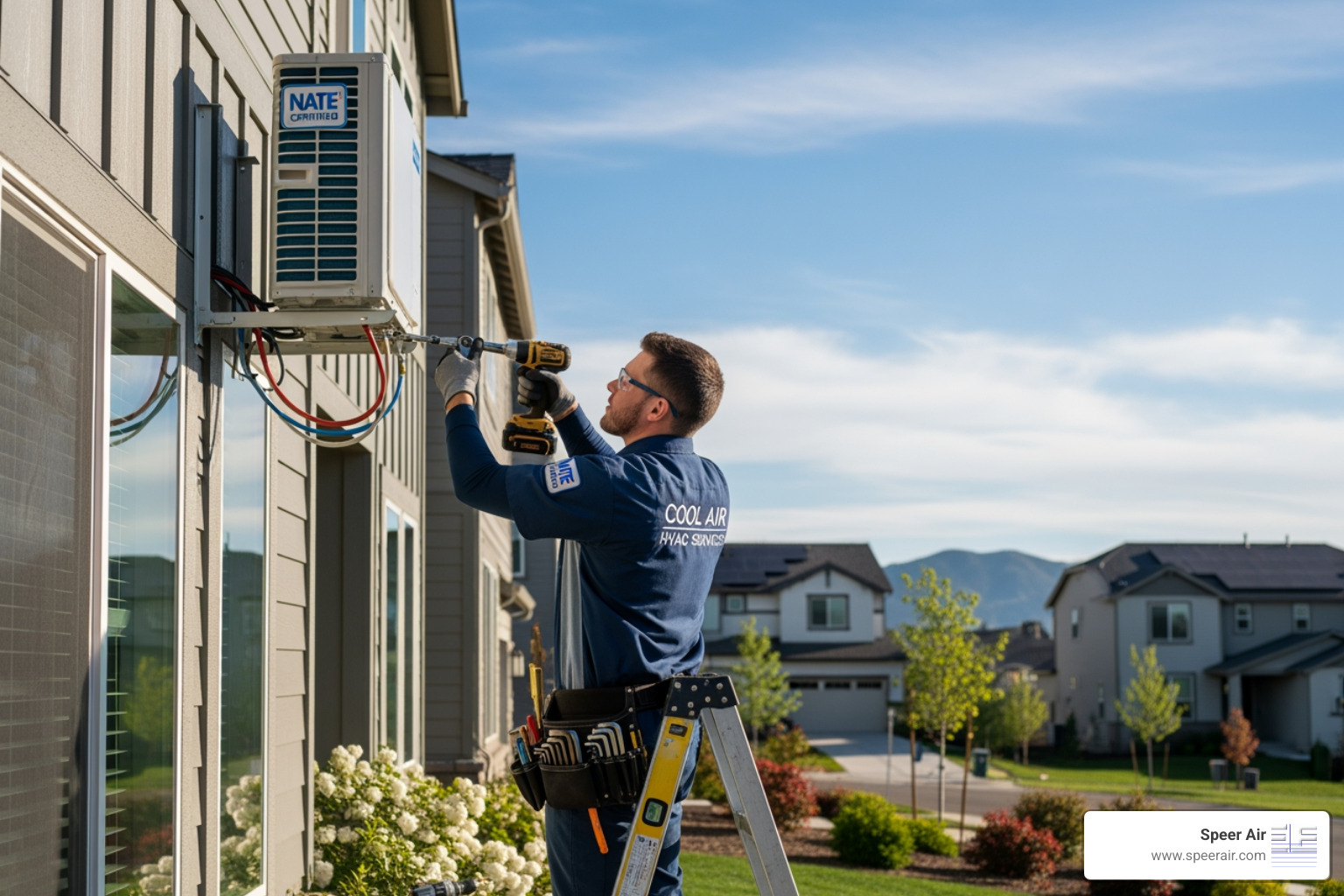
Here’s why professional installation is worth it:
- Protect Your Warranty: Most manufacturers will void your warranty if the system isn’t installed by a certified professional, leaving you to pay for any future repairs.
- Safe Refrigerant Handling: Mini-split systems use refrigerants that require certified professionals with specific training and tools to handle safely.
- Electrical Safety First: Connecting a mini-split involves high-voltage electrical work that must be done correctly and according to local codes to prevent hazards.
- Perfect Sizing and Placement: Our NATE-certified technicians have the expertise to perform the crucial Manual J calculation and determine optimal unit placement for peak efficiency.
- The Right Tools and Knowledge: Professionals use specialized vacuum pumps, torque wrenches, and leak detectors to ensure the system is installed correctly for efficient, long-term operation.
Using NATE-certified technicians is a big deal because it means they adhere to the highest industry standards. With Speer Air’s 120+ years of experience, we ensure your mini split installation Denville is done right the first time.
The Professional Mini Split Installation Denville Process
When you choose us for your mini split installation Denville, we handle everything from start to finish, making the process as smooth and stress-free as possible. Most homeowners are pleasantly surprised by how quick and minimally disruptive the installation actually is.
Before we arrive, we’ll ask you to clear a path to the areas where we’ll be working—both inside where the indoor unit will mount and outside where the compressor will sit. Moving a few pieces of furniture or taking down some wall art helps us work efficiently and protects your belongings.
Once we’re on-site, our NATE-certified technicians begin by precisely mounting the indoor unit’s bracket to your wall. Getting this level is crucial because proper drainage depends on it. After the bracket is secure, we attach the sleek indoor air handler.
Next comes one of the most important steps: drilling a small hole through your exterior wall. This opening, typically about three inches in diameter, is where the conduit will pass through. The conduit is essentially a neat bundle that contains your refrigerant lines, electrical wiring, and condensate drain tubing all together. We angle this hole slightly downward toward the outside—this simple detail ensures water drains away from your home and never back inside.
Running the line set requires careful attention. Our technicians thread the refrigerant lines, electrical wiring, and condensate drain through that small wall opening and connect everything to your indoor unit. We’re meticulous about avoiding sharp bends or kinks in the lines, which could restrict refrigerant flow. Proper insulation around the refrigerant lines prevents energy loss and condensation issues.
Outside, we mount the outdoor compressor on its sturdy pad, making sure it’s perfectly level with adequate clearance on all sides. Good airflow around this unit is essential for efficient operation and makes future maintenance much easier.
Connecting the indoor and outdoor units comes next. This is where professional training really matters. Our technicians carefully attach the refrigerant lines and make all electrical connections according to manufacturer specifications and local safety codes. Every connection is torqued to exact specifications—too loose and you risk leaks, too tight and you can damage fittings.
Here’s where DIY installations often fail: the system vacuum and charging process. We use professional vacuum pumps to remove every bit of air and moisture from inside the refrigerant lines. Even tiny amounts of moisture can freeze and damage your system or reduce efficiency dramatically. Once the lines are properly evacuated, we charge the system with the precise amount of refrigerant it needs to operate at peak performance.
Finally, we conduct thorough testing before we consider the job complete. We check for refrigerant leaks using specialized detectors, verify all pressure readings, test electrical connections, and measure airflow and temperature differentials to confirm everything is working exactly as it should. We’ll also walk you through your new system’s controls and features, making sure you’re completely comfortable operating it.
For most single-zone mini split installation Denville projects, we complete everything in a single day—typically between four and eight hours. Multi-zone systems or installations requiring electrical panel upgrades might extend to one or two days, but we always work efficiently to minimize disruption to your household routine.
Caring For Your New Ductless System
Your new ductless mini-split system is a significant investment in your home’s comfort, and with a little regular attention, it will reward you with reliable performance for years to come. When professionally installed and properly maintained, these systems typically last 15 to 20 years—that’s a lot of comfortable summers and cozy winters.

The good news? Caring for your ductless system is remarkably simple compared to traditional HVAC equipment. There’s no complicated ductwork to worry about, and most of the routine maintenance you can handle yourself takes just minutes.
Cleaning your air filters is the single most important task you can do as a homeowner. Most indoor units have reusable filters that slide out easily—no tools required. We recommend checking them monthly, especially during peak heating or cooling seasons when your system works hardest. Simply remove the filters, rinse them gently with warm, soapy water, let them dry completely (this is important—never put damp filters back in), and slide them back into place. Clean filters mean better air quality, improved efficiency, and lower energy bills.
Beyond filters, wiping down your indoor units occasionally keeps dust from building up on the exterior. A soft, damp cloth is all you need. This simple step helps maintain proper airflow and keeps your units looking great.
Don’t forget about your outdoor unit either. Keeping the area around your outdoor compressor clear is essential for optimal performance. Make sure there’s at least two feet of clearance on all sides. Remove any leaves, grass clippings, or debris that accumulate around the unit, and in winter, gently brush off any snow buildup. Your outdoor unit needs room to breathe—literally.
While these homeowner tasks are straightforward, your system also benefits tremendously from professional maintenance. We recommend scheduling annual tune-ups with our NATE-certified technicians, ideally before the heating or cooling season begins. Think of it like taking your car in for an oil change—it’s preventive care that catches small issues before they become big problems.
During these visits, we thoroughly inspect your system, checking refrigerant levels, cleaning coils that you can’t easily access, verifying electrical connections, and testing overall performance. This professional attention helps your system maintain peak efficiency, extends its lifespan, and keeps your manufacturer’s warranty valid. Many homeowners don’t realize that skipping professional maintenance can actually void warranty coverage, leaving you unprotected if something goes wrong.
The combination of simple homeowner care and annual professional service is the recipe for getting the full 15 to 20 years—or more—from your mini split installation Denville investment.
Common Issues and When to Call for Repair
Ductless mini-split systems are remarkably reliable, but like any mechanical equipment, they can occasionally develop issues. The key is recognizing the warning signs early so we can address problems before they escalate into costly repairs or system failures.
Inadequate cooling or heating is often the first sign something’s amiss. If your system is running but not delivering the comfort you expect—blowing warm air in summer or cool air in winter—it’s time to give us a call. This could indicate anything from low refrigerant levels to a failing compressor.
Water leakage around your indoor unit is never normal. If you notice water pooling beneath the unit or dripping from it, this typically means the condensate drain is clogged or improperly positioned. Left unaddressed, water leakage can damage your walls, floors, and even the unit itself.
Strange noises or odors deserve immediate attention. While mini-splits are known for their quiet operation, unusual sounds like grinding, clanking, hissing, or high-pitched squealing indicate mechanical problems. Similarly, musty or dusty smells might mean dirty filters or mold growth, while burning or electrical odors are serious safety concerns. If you smell anything like melting plastic or burning wires, shut off your system immediately at the breaker and call us right away—don’t wait.
Rising utility bills without any change in how you’re using your system suggest declining efficiency. Your mini-split might be working harder than it should to maintain comfortable temperatures, often due to refrigerant leaks, dirty coils, or failing components.
Finally, if your system won’t turn on at all, professional diagnosis is needed. While it could be something simple like a tripped breaker or dead remote batteries, it might also indicate electrical issues or control board problems that require expert attention.
The importance of prompt repair cannot be overstated. What starts as a minor issue—a small refrigerant leak, for instance—can quickly spiral into complete system failure if ignored. Early intervention is almost always less expensive and less disruptive than emergency repairs or full system replacement.
Our NATE-certified technicians have the expertise and diagnostic tools to quickly identify issues and get your system back to peak performance. With our 120+ years of experience serving Northern New Jersey families, we’ve seen it all—and we’re here to help whenever you need us.
Frequently Asked Questions About Mini-Splits
How long does a ductless mini-split system last?
When you invest in a mini split installation Denville, you’re making a long-term commitment to your home’s comfort. The good news? With proper professional installation and regular maintenance, a high-quality ductless system can provide reliable comfort for 15 to 20 years. We’ve seen some well-maintained systems even exceed this range, continuing to operate efficiently well into their third decade.
The longevity of your system really comes down to a few key factors. First and foremost is the quality of your initial installation—this is where working with NATE-certified technicians makes all the difference. A system that’s correctly sized, properly installed, and thoroughly commissioned from the start has a much better chance of reaching that 20-year mark.
Second is consistent annual professional maintenance. Think of it like oil changes for your car—those yearly tune-ups catch small issues before they become big problems and keep everything running smoothly. Finally, your usage patterns play a role too. A system that’s constantly cycling between extreme temperature demands will naturally experience more wear than one that’s used more moderately.
Can a ductless system provide heat in a cold New Jersey winter?
This is one of the most common questions we hear from Denville homeowners, and the answer is an enthusiastic yes! Modern ductless heat pumps are nothing short of remarkable when it comes to cold-weather heating. Thanks to advanced inverter technology, today’s systems can efficiently heat homes in temperatures as low as -13°F, making them a viable and energy-efficient year-round solution for our Northern New Jersey climate.
Here’s the fascinating part: these systems work by extracting heat from the outside air—even when it feels bitterly cold to us—and transferring it indoors. While that might sound like magic, it’s actually sophisticated engineering. The heat pump technology can be up to three times more efficient than traditional electric heating methods, which means you stay warm while using significantly less energy. No more worrying about those brutal January cold snaps—your ductless system has you covered.
Is professional installation really necessary for a mini-split?
We understand the appeal of DIY projects, but when it comes to mini split installation Denville, professional installation by certified technicians isn’t just recommended—it’s absolutely crucial. Here’s why this is one project you’ll want to leave to the pros.
First, and perhaps most importantly, attempting a DIY installation voids your manufacturer’s warranty entirely. That means if anything goes wrong—even something completely unrelated to your installation work—you’d be on your own for repairs or replacement. That’s a risk that could cost you thousands of dollars down the line.
Beyond warranty concerns, the installation process involves handling refrigerants and working with high-voltage electrical wiring. These aren’t tasks for weekend warriors—they require specialized training, precise instruments, and proper certification. Refrigerant handling must meet EPA regulations, and electrical work must comply with local codes. One mistake can lead to dangerous leaks, fire hazards, or system failure.
There’s also the matter of getting it right. Our NATE-certified technicians bring proven expertise to every installation, from performing accurate load calculations to ensuring proper placement, from correctly evacuating and charging the system to programming controls for optimal performance. With Speer Air’s 120+ years of family-owned experience, you’re not just getting an installation—you’re getting peace of mind that your system will operate safely, efficiently, and reliably for years to come. That’s protection for both your investment and your family’s well-being that no DIY kit can provide.
Your Partner for Year-Round Comfort in Denville
If you’ve been searching for a better way to heat and cool your Denville or Rockaway home, ductless mini-splits offer something truly special: efficient year-round comfort that adapts to your lifestyle. No more heating empty rooms or battling with a thermostat that never seems to please everyone. With customized zone control, impressive energy savings, and cleaner indoor air, these systems represent a smart investment in your home’s comfort and your family’s well-being.
At Speer Air, we’ve been helping Northern New Jersey families stay comfortable since 1900. Yes, you read that right—over 120 years of family-owned service right here in our community. That kind of longevity doesn’t happen by accident. It comes from treating every home like it’s our own and every customer like family.
Our NATE-certified technicians bring both cutting-edge expertise and old-fashioned care to every mini split installation Denville project. We stay current on the latest technologies, including advanced Hyper-Heating INVERTER systems that keep you warm even when winter temperatures plummet. As a Carrier Factory Authorized Dealer, we’ve proven our commitment to technical excellence and customer satisfaction through rigorous training and consistently meeting the highest industry standards.
From your first consultation through precise sizing, expert placement, meticulous installation, and ongoing maintenance, we’re with you every step of the way. We don’t just install equipment—we create comfort solutions custom to your home’s unique needs and your family’s lifestyle.
Ready to experience the difference that professional mini split installation Denville can make? We’d love to hear from you. Contact us for expert ductless HVAC services in Rockaway, NJ and let’s start a conversation about bringing year-round comfort to your home.