

Is Your AC Ready for Spring? What Northern NJ Homeowners Need to Do After Winter
Spring AC preparation after winter is something every Northern New Jersey homeowner should tackle before the first hot day arrives — and the checklist is shorter than you might think.
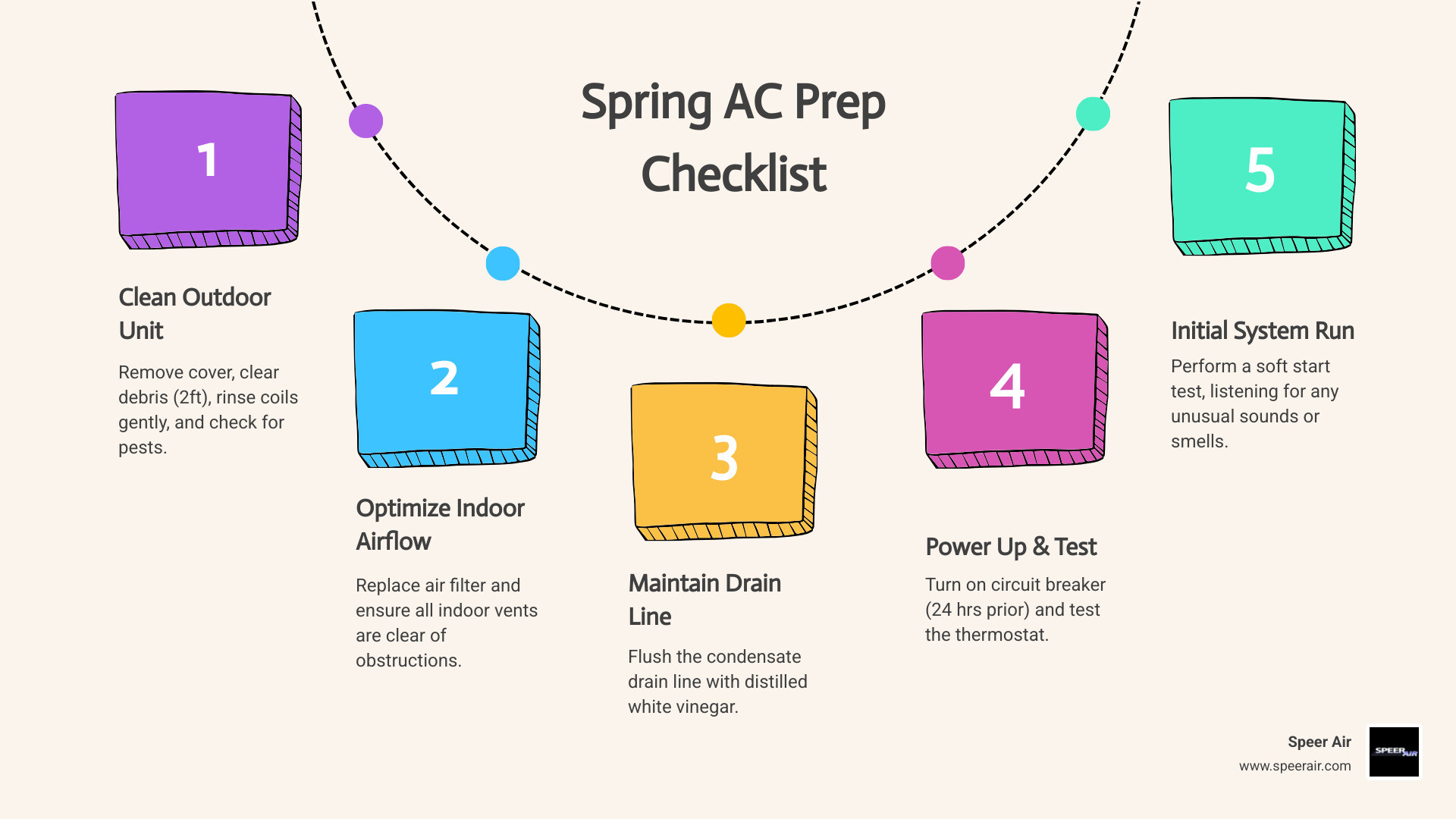
Here’s a quick overview of the core steps:
- Turn on the circuit breaker at least 24 hours before running the system
- Remove any winter cover from the outdoor unit
- Clear debris from around the condenser (maintain at least 2 feet of clearance)
- Rinse the condenser coils gently with a garden hose
- Check for pest nests inside or around the outdoor unit
- Replace the air filter before running the system
- Clear all indoor vents and registers of obstructions
- Flush the condensate drain line with distilled white vinegar
- Test the thermostat in cooling mode and check the batteries
- Run a soft start test and listen for unusual sounds or smells
That’s the short version. But each of these steps matters more than it might look at first glance — especially after a harsh Northern New Jersey winter.
When an AC system sits dormant for months, things change inside it. Dust and moisture build up. Pests find shelter in warm, enclosed spaces. Debris collects around the outdoor unit. And the refrigerant oil in the compressor can thicken from the cold. None of that is obvious from the outside, but all of it affects how well — and how safely — your system runs when you flip it back on.
The good news is that a little attention in spring goes a long way. Routine maintenance can reduce cooling costs by 5% to 15% and add years to the life of your equipment, according to the U.S. Department of Energy. This guide walks you through exactly what to do, step by step.
Why Spring AC Preparation After Winter is Essential
In April 2026, as the cherry blossoms begin to pop across Morris and Essex Counties, it’s easy to forget that your air conditioner has been sitting in a “deep sleep” for nearly six months. Jumping straight into a 90-degree day without a proper transition is like asking a marathon runner to sprint a race the moment they wake up from a long nap—it’s a recipe for a pulled muscle or, in this case, a blown compressor.
The primary reason to prioritize spring ac preparation after winter is system efficiency. When your unit is clean and well-calibrated, it doesn’t have to work nearly as hard to move heat out of your home. This translates directly to Regular AC Maintenance for Your Home Comfort, ensuring that when the humidity hits, your system is ready to handle the load. According to the Department of Energy, simply changing a dirty filter can decrease energy consumption by 5% to 15%. Over a long Jersey summer, those savings add up to significant utility bill reductions.
Beyond the wallet, there’s the matter of Indoor Air Quality Rockaway NJ. During winter dormancy, dust, pollen, and even mold can settle within your ductwork or on the evaporator coils. Starting the system without a check-up can blast these allergens throughout your living space. Furthermore, proactive prep ensures equipment longevity. Most AC breakdowns occur during the first major heatwave when systems are stressed; catching a small issue in April prevents an emergency repair in July. Finally, many manufacturer warranties require proof of annual professional maintenance to remain valid. Skipping your spring service could leave you unprotected if a major component fails later.
Step-by-Step DIY Outdoor Unit Maintenance
The outdoor portion of your system, known as the condenser, bears the brunt of our North Jersey and Eastern PA winters. Before you touch anything, safety is paramount. Ensure the power is off at the unit’s local disconnect box or the main circuit breaker.
1. Remove Covers and Clear Debris
If you used a winter cover or a piece of plywood to protect the unit from falling ice, remove it now. Running an AC with a cover on is a common cause for immediate system failure because the heat has nowhere to go. Next, follow the “Two-Foot Rule.” Clear away any leaves, twigs, or mulch that have piled up against the base. You need at least two feet of open space around the entire unit for proper airflow. This is a core part of AC Maintenance Rockaway NJ that any homeowner can handle.
2. Rinse the Coils
Dust and pollen act as an unwanted blanket on your condenser coils, trapping heat inside. Use a standard garden hose with a gentle spray to rinse the fins from the top down. Never use a pressure washer, as the high-pressure stream can easily bend the delicate aluminum fins, permanently restricting airflow.
3. Inspect Insulation and Lines
Look at the two copper lines running from the unit into your house. The larger one should be covered in thick, black foam insulation. If the foam is rotting or has been chewed away by critters, it needs to be replaced to prevent energy loss. While you’re there, look for oily residue on the connections, which could indicate AC Refrigerant Leak Issues in Your Home.
4. Pest Prevention
Rodents cause roughly $1 billion in property damage annually in the U.S., and they love nesting in the quiet, sheltered cabinets of idle AC units. Look for chewed wires, nests made of dried grass, or droppings. If a mouse has chewed through a control wire, do not restore power; call us to handle the repair safely.
Indoor Tasks for Spring AC Preparation
Once the outside is ship-shape, it’s time to head indoors. Your indoor unit (often located in the attic, basement, or a closet) needs just as much love.
Air Filter Management
This is the single most important DIY task. If your filter looks gray or you can’t see light through it, it’s time for a change. For most homes in our area, a pleated filter with a MERV rating between 8 and 13 is the sweet spot—it catches allergens without suffocating your blower motor. We have a full guide on Air Filter Selection for Your Rockaway HVAC if you aren’t sure which one to buy.
Vent and Register Check
Walk through every room. During the winter, we often move furniture or rugs over vents to keep the heat in, or we might have closed registers in unused rooms. For the cooling season, ensure all supply and return vents are wide open and unobstructed. Blocking vents doesn’t save money; it actually increases pressure in the ducts, leading to Troubleshooting Poor Airflow From HVAC Vents and potential blower failure.
The Condensate Drain Line
Your AC doesn’t just cool the air; it removes humidity. That water drips into a pan and flows out through a PVC pipe. Over the winter, algae or mold can grow in the stagnant water left in the trap, leading to a clog. To prevent a flood, find the access port (usually a T-shaped pipe) and pour a cup of distilled white vinegar down the line. This simple Solutions for AC Drain Line Clogs at Home step kills growth and keeps the water flowing freely.
Ductwork Inspection
If you have visible ducts in your basement or attic, look for gaps or disconnected sections. The EPA estimates that the average home loses 20% to 30% of conditioned air through duct leaks. If you’re paying to cool your attic instead of your bedroom, your utility bills will reflect it.
Testing Your System and Troubleshooting Common Issues
Now comes the moment of truth: the first run.
The 24-Hour Rule
Before you flip the switch, ensure the circuit breaker has been on for at least 24 hours. Most modern compressors have a small internal heater that warms the refrigerant oil. If the oil is cold and thick, the compressor has to strain to start, which can lead to premature failure.
Testing the Thermostat
Check your thermostat display. If it’s blank or fading, replace the batteries. Switch the mode to “Cool” and set the temperature a few degrees below the current room temperature. This “soft start test” allows you to observe the system’s initial reaction. If you have an older model, spring is the perfect time to explore Smart Thermostats and Their Benefits, as they can learn your schedule and save you up to 10% annually on cooling.
What to Listen and Smell For
- Unusual Noises: A brief click or hum is normal. However, if you hear grinding, squealing, or loud rattling, shut it off immediately. We’ve detailed the reasons Why AC Compressor Might Be Making Loud Noises to help you identify the culprit.
- Musty Odors: A “dusty” smell for the first few minutes is common as the coils warm up. However, a persistent “dirty sock” smell suggests mold on the coils. Learn How to Eliminate Bad Odors Coming From AC to keep your home smelling fresh.
- Short-Cycling: If the system turns on and then shuts off after only a minute or two, it’s “short-cycling.” This is often a sign of a frozen coil or an electrical issue. Check out Why AC Might Be Short-Cycling and How to Fix It for more info, or use our HVAC Troubleshooter tool.
The Value of Professional Spring AC Preparation After Winter
While DIY steps are fantastic for maintenance, they don’t replace a professional eyes-on inspection. At Speer Air, our NATE-certified technicians go deep into the “guts” of the system that homeowners shouldn’t touch.
A Professional AC Maintenance in Rockaway visit includes:
- Refrigerant Level Verification: We check for the exact “charge” of refrigerant. If it’s low, it almost always means there is a leak that needs to be sealed.
- Electrical Tightening: We inspect capacitors (the most common summer failure point) and tighten all electrical connections that may have loosened due to temperature-induced expansion and contraction.
- Deep Coil Cleaning: We clean the evaporator coils inside your home. If these are dirty, they can lead to Solutions Frozen Evaporator Coils in AC System, which stops cooling entirely.
- System Performance Audit: We measure airflow and temperature “split” to ensure your system is actually delivering the BTUs it promises.
Our precision AC Service Rockaway NJ is designed to give you peace of mind before the first 85-degree day hits Bergen or Somerset County.
Frequently Asked Questions About Spring AC Preparation
When is the ideal time for spring AC preparation after winter?
The best time is mid-to-late March or early April. You want to beat the “May Rush” when every HVAC company in New Jersey is flooded with emergency calls. Ideally, perform your checks when outdoor temperatures are consistently above 60°F, as running a full cooling test in freezing weather can actually damage the compressor. We offer specific AC Maintenance Tips for Maplewood Residents to help you time your service perfectly.
What are the risks of skipping spring AC preparation after winter?
Neglect leads to a “domino effect.” A dirty filter causes the blower to work harder, which generates heat, which can cause the control board to fail. Or, a clogged drain line can back up and ruin your ceiling. You might also face What to Do When HVAC Freezes in Maplewood if airflow is restricted. Skipping prep leads to Quick and Reliable AC Repair Services in Rockaway becoming a necessity rather than an option.
How can maintenance save money on utility bills?
Efficiency is the name of the game. When your system is tuned, you can comfortably set your thermostat to 78°F when home—the Department of Energy’s recommended setting—and see up to 10% annual savings. When the system doesn’t have to fight friction, dirt, or leaks, it uses less electricity to achieve the same comfort level. Using Smart Thermostats Enhance Comfort and Efficiency further automates these savings.
Conclusion
Preparing your home for the change of seasons is a hallmark of responsible homeownership in Northern New Jersey and Eastern Pennsylvania. From the historic homes of Morris County to the modern offices of Hudson County, a little foresight in April ensures a cool, stress-free July.
At Speer Air, we’ve been serving this community since 1900. Whether you need a simple tune-up, a complex repair, or a full system replacement, our NATE-certified team is ready to help. We are a Carrier Factory Authorized Dealer and a Generac® Dealer, bringing over a century of expertise to every job.
Don’t wait for the first heatwave to find out your system has a problem. Schedule HVAC Service with us today and visit our HVAC Learning Center for more tips on keeping your home comfortable all year long.