

What Actually Happens During an Emergency HVAC Repair Visit
Emergency HVAC repair what to expect can feel overwhelming when your system fails at the worst possible moment — a freezing night in January, a sweltering July afternoon, or a holiday weekend when everything seems harder to fix.
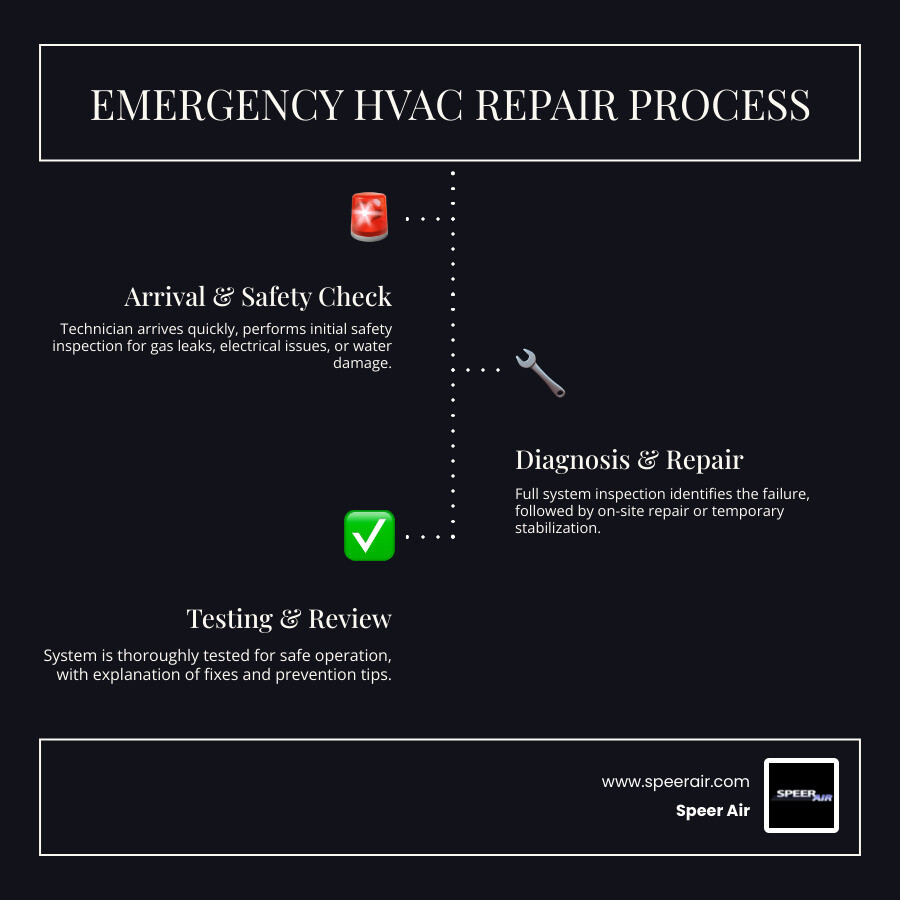
Here is a quick overview of what the process looks like:
- You call for service – A dispatcher takes your information, assesses the urgency, and sends the nearest available technician
- Technician arrives – Typically within a few hours, depending on demand and your location
- Initial safety check – The tech identifies any immediate hazards like gas leaks, electrical issues, or water damage first
- Diagnosis – A full inspection of your system pinpoints the exact failure point
- Repair or stabilization – The technician either completes the fix on the spot or stabilizes your system while ordering parts
- System test – Your system is tested before the technician leaves to confirm it is running safely
- Post-repair review – You receive a clear explanation of what failed, what was done, and how to prevent it happening again
The entire process can take anywhere from 30 minutes for a simple fix to several hours for a complex repair. Knowing what to expect at each stage helps you stay calm, prepare your home, and communicate clearly with your technician.
According to industry data, 70% of homeowners experience an HVAC breakdown during peak seasons — exactly when the system is needed most. A failed furnace in freezing temperatures can lead to burst pipes and thousands of dollars in water damage. An AC failure during a heat wave can push indoor temperatures above 100°F within hours. Acting fast and knowing the process matters.
This guide walks you through every step — from identifying a true emergency to what happens after the repair is done.
Identifying a True HVAC Emergency
Not every rattle or lukewarm vent requires a midnight service call, but knowing when to pick up the phone is essential for your family’s safety. In Northern New Jersey and Eastern Pennsylvania, our weather swings can turn a minor inconvenience into a hazardous situation very quickly.
Safety Hazards You Can’t Ignore
The most critical emergencies involve immediate threats to your life or property. If you smell “rotten eggs,” that is mercaptan—a harmless chemical added to natural gas so you can detect a leak. If you smell this, or if your carbon monoxide detector is sounding, leave the house immediately and call for help from outside.
Electrical smells are another red flag. A sharp, ozone-like burning odor or visible smoke from your vents indicates that a motor is burning out or wiring is short-circuiting. These are fire hazards that require you to shut off the system at the breaker and call for an emergency visit.
Extreme Temperature Risks
When is a breakdown a “true” emergency based on the weather? Generally, if the indoor temperature is likely to drop below 50°F in the winter or rise above 95°F in the summer, it is an emergency. This is especially true if you have vulnerable occupants in the home, such as infants, seniors, or family members with chronic health conditions. In sub-freezing weather, a home without heat risks frozen and burst pipes, which can result in $5,000 to $50,000 in water damage.
System-Specific Warnings
Sometimes the system is still “running” but is in a state of emergency. For instance, if your outdoor AC unit is encased in a block of ice, you have frozen evaporator coils. Continuing to run the system in this state can destroy the compressor, which is one of the most expensive components to replace. Similarly, if you notice heavy water pooling around your indoor furnace or air handler, a clogged condensate drain could be overflowing. While a drain clearing is a straightforward fix, the resulting water damage to your ceilings and floors can cost thousands if left unaddressed.
To help you decide whether to call now or wait until Monday morning, look for these Signs You Need HVAC Repair in Rockaway.
| Scenario | Emergency? | Why? |
|---|---|---|
| Smell of Gas / Sulfur | YES | Explosion/Fire Risk; Evacuate immediately. |
| No Heat (Temp < 32°F) | YES | Risk of hypothermia and burst pipes. |
| No AC (Temp > 90°F) | YES | Health risk for elderly/children; Heat stroke. |
| Screeching/Banging Noise | YES | Mechanical failure; Can cause total system loss. |
| Water Leaking (Heavy) | YES | Structural damage to floors and ceilings. |
| Slightly Higher Energy Bill | NO | Efficiency issue; Schedule routine maintenance. |
| Dirty Air Filter | NO | Maintenance issue; Replace it yourself. |
Emergency HVAC repair: what to expect during the service call
When you realize you need help, the clock starts ticking. Understanding the workflow of a professional HVAC Repair visit can lower your stress levels.
Dispatch and Communication
Once you contact a 24/7 service provider, a dispatcher will ask several questions to prioritize your call. They will want to know if there are high-risk individuals in the home, what symptoms you are seeing (noises, smells, or total failure), and if you have tried basic troubleshooting like checking the circuit breaker. This helps the technician arrive prepared with the right tools and potential parts.
The Initial Assessment and Diagnosis
Upon arrival, the technician’s first priority is safety. They will check for gas leaks or electrical faults before diving into the mechanical issues. Using specialized diagnostic tools, they will inspect the thermostat, electrical connections, refrigerant levels, and airflow.
About 40% of HVAC emergencies actually start with thermostat malfunctions. If the problem is more complex, like a failed capacitor or a cracked ignitor (which typically lasts 5-7 years), the technician will explain the failure and provide a plan of action.
Repair vs. Stabilization
In a perfect world, the technician has the part on their truck and fixes the system immediately. However, if a specialized part is needed, the goal shifts to “stabilization.” This might mean bypasses or temporary fixes to get the air moving again while the permanent part is ordered.
For those in our service area, you can see How Our Experts Handle AC Repair in Maplewood for a deeper look at our professional standards and diagnostic precision.
Final Testing
We never just “fix and fly.” After the repair is complete, the technician will run the system through a full cycle. They will verify that the temperature differential is correct, the safety switches are functional, and no new noises have appeared. You should receive a full report of what was fixed and any recommendations for future service to avoid a repeat performance.
Immediate Safety and Home Preparation Steps
While you wait for the technician to arrive, there are several things you can do to ensure the visit goes smoothly and safely.
Prioritize Safety
If you suspect an electrical issue or a refrigerant leak, turn the system off at the thermostat and the circuit breaker. If you have a gas furnace and smell gas, do not touch any switches—just leave. If the system is leaking water, place buckets to catch the drips and use towels to soak up standing water to protect your flooring.
Prepare the Workspace
Technicians need clear access to both your indoor unit (usually in a basement, attic, or closet) and your outdoor condenser.
- Clear the Area: Move boxes, laundry, or stored items away from the furnace or air handler.
- Secure Pets: HVAC repairs often involve loud noises and open doors. Keep your pets in a secure room so they don’t get spooked or escape.
- Provide Access: Ensure gates are unlocked and paths to the outdoor unit are clear of snow, brush, or debris.
Gather Information
You can speed up the diagnostic process by having your system’s “medical history” ready.
- Model Numbers: If possible, snap a photo of the data plate on your unit.
- Symptoms: Note exactly when the problem started. Did it make a sound? Was there a specific smell?
- Documentation: Have your warranty information or previous service records handy.
Taking these steps is a key part of How We Handle HVAC Repair in Rockaway. It allows our team to get straight to work the moment we step through your door. For more tips on getting your home ready, check out our guide on Quick and Reliable AC Repair Services in Rockaway.
Long-Term Prevention and Maintenance Strategies
The best emergency is the one that never happens. Statistics show that homeowners who invest in regular maintenance are 50% less likely to experience a total system breakdown. In fact, members of maintenance programs often see 73% fewer emergency calls than those who skip service entirely.
The Power of the Tune-Up
A well-maintained system can last 15-20 years, whereas a neglected one may fail in as little as 8-10 years. During a seasonal tune-up, a NATE-certified technician will:
- Tighten Electrical Connections: This prevents the “burning smell” emergencies caused by loose wires.
- Clean the Condensate Drain: A simple vinegar flush can prevent a $2,000 water damage bill.
- Monitor Refrigerant Levels: Low refrigerant causes coils to freeze, which can lead to compressor failure.
- Calibrate the Thermostat: Ensuring your “brain” of the system is accurate prevents short-cycling.
Homeowner Maintenance
You play a role in prevention, too. The simplest task—changing your air filter—is the most important. A clogged filter restricts airflow, forcing the system to work harder and eventually overheat. We recommend checking your filter every 30 to 90 days, especially if you have pets.
For residents in our local communities, staying ahead of the weather is easier with professional HVAC Repair Rockaway NJ services. Whether it’s a spring AC check or a fall furnace inspection, proactive care is the key to year-round comfort. You can learn more about seasonal prep at AC Repair Rockaway NJ.
Frequently Asked Questions
What qualifies as an emergency hvac repair and what to expect?
An emergency is any situation that threatens your safety, your health, or the structural integrity of your property. This includes gas leaks, electrical sparking, total system failure during extreme heat (above 95°F) or cold (below freezing), and major water leaks. When you call, you should expect a prioritized response, a thorough safety inspection, and a professional diagnosis of the failure.
Emergency hvac repair what to expect regarding the repair timeline?
Most emergency repairs are resolved within 2 to 4 hours of the technician’s arrival. Simple issues like a blown fuse, a failed capacitor, or a clogged drain line can often be fixed on the spot. However, if your system requires a specialized part that isn’t stocked on the service truck, the technician will focus on stabilizing the system and may need to return the following day to complete the permanent fix.
What temporary measures keep a home comfortable while waiting?
If your AC is out, close all blinds and curtains on the sunny side of the house, use ceiling fans to create a wind-chill effect, and stay hydrated. Avoid using heat-producing appliances like the oven or dryer. In the winter, pick one “warm room” to congregate in, use space heaters safely (keep them 3 feet away from curtains or furniture), and wear layers. If the temperature becomes truly dangerous, consider staying with a neighbor or at a local cooling/warming center.
Conclusion
Facing a system failure is never easy, but knowing the emergency hvac repair what to expect can turn a crisis into a manageable situation. At Speer Air, we have been serving Northern New Jersey and Eastern Pennsylvania since 1900. Our deep roots in the community and our commitment to excellence—backed by our NATE certification and status as a Carrier Factory Authorized Dealer—mean we understand exactly what your home needs during a peak-season breakdown.
Whether you are in Morris, Essex, or Sussex County in NJ, or near Easton and Stroudsburg in PA, our team is ready to restore your comfort and safety. Don’t let a small warning sign become a midnight disaster. If your system is acting up, contact us for professional HVAC Repair today. From residential furnaces to commercial rooftop units and Generac® backup generators, we have the expertise to keep your environment perfect, no matter what the weather brings.