

What AC Making Strange Noises What They Mean Says About Your System’s Health
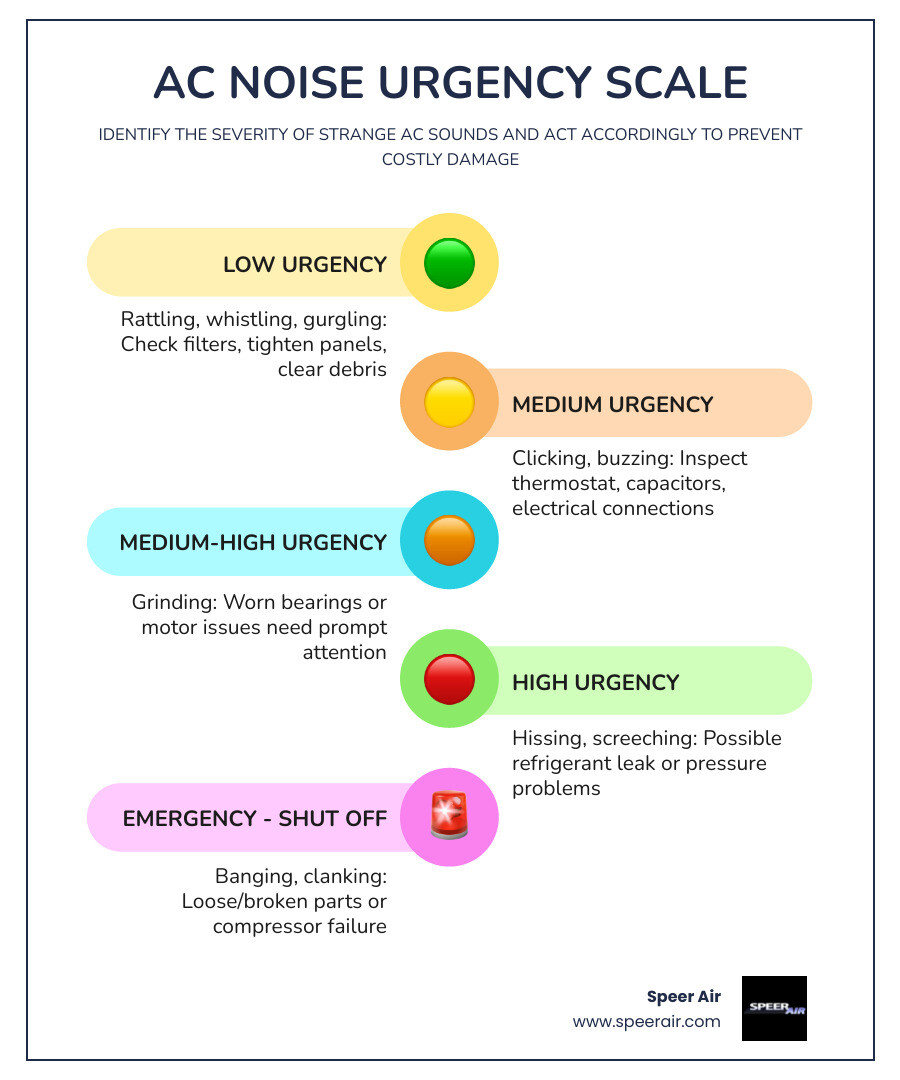
AC making strange noises what they mean is often your system’s way of sending an early warning before a small problem turns into a costly breakdown. If your air conditioner has suddenly started buzzing, banging, hissing, or screeching, here is a quick reference before we dig deeper:
| AC Noise | Most Likely Cause | Urgency |
|---|---|---|
| Banging / Clanking | Loose or broken internal part, compressor issue | High – shut off immediately |
| Hissing / Screeching | Refrigerant leak or high compressor pressure | High – shut off immediately |
| Grinding | Worn motor bearings | Medium-High – call soon |
| Buzzing | Electrical issue, frozen coils, failing capacitor | Medium-High |
| Clicking (repeated) | Faulty thermostat, failing capacitor, relay issue | Medium |
| Rattling | Loose panels, debris, loose screws | Low-Medium |
| Gurgling / Bubbling | Clogged condensate drain or refrigerant line air | Low-Medium |
| Whistling | Dirty filter, duct leak, restricted airflow | Low – check filter first |
| Soft hum / whoosh | Normal motor and airflow operation | None – this is normal |
A healthy AC unit running in 2026 typically operates somewhere between 25 and 55 decibels — about as loud as a quiet conversation. Some modern variable-speed units run as quietly as 19 decibels indoors. So when your system suddenly sounds like it is rattling dishes or screaming at you, something has changed, and that change almost always means a component is under stress or failing.
For homeowners and business owners in Northern New Jersey, this matters even more during peak summer heat. Your AC is working harder, and that added strain can push a worn part right over the edge. Ignoring an unusual sound for even a few weeks can turn a simple repair into a full system replacement.
The good news is that most AC noises follow recognizable patterns. Once you know what to listen for, you can act fast, protect your equipment, and stay cool.
Decoding AC Making Strange Noises What They Mean
When we talk about ac making strange noises what they mean, we first have to establish what “normal” sounds like. Every air conditioner has a baseline “symphony” of operation. You should expect a gentle whirring from the indoor blower, a steady hum from the outdoor condenser, and the rhythmic “whoosh” of air moving through your vents. You might even hear a single, solid click when the system cycles on or off—this is just the relay engaging or disengaging power.
However, when the decibel levels spike or the pitch changes, your system is using “audio clues” to tell you something is wrong. In our experience serving properties from Morris County to Bergen County, we find that the location of the noise is just as important as the sound itself.
Indoor vs. Outdoor: Where is the Noise?
- Indoor Air Handler: Noises here often involve the blower motor, fan blades, or the evaporator coil. If you hear whistling or “thwapping” (like a playing card in bicycle spokes), the issue is likely inside your home.
- Outdoor Condenser: This unit houses the compressor—the heart of your system—and the large condenser fan. Sounds like heavy banging or high-pitched screaming usually originate here.
Understanding Strange HVAC Noises in Your Rockaway Property is the first step toward a quiet home. Many modern systems are engineered for near-silence, so any new sound that interrupts your sleep or daily life is a signal of component wear. Whether it’s a loose bolt vibrating against a metal panel or a motor bearing reaching the end of its life, these sounds are your system’s way of asking for a check-up.
High-Urgency Sounds: When to Shut Down Your System
Some noises are “red flags” that require immediate action. If you hear any of the following, we recommend turning your thermostat to “Off” at once to prevent catastrophic failure or even safety hazards like electrical fires.
Banging and Clanking
A loud banging or clanking sound usually indicates that a part has come loose or broken entirely inside the sealed compressor. It could be a connecting rod, a piston pin, or a crankshaft hitting the internal casing. Because the compressor is a sealed unit, a banging noise often means the entire component needs to be replaced. If the sound is coming from the indoor unit, it might be a loose blower fan hitting its housing. Either way, continuing to run the unit is like driving a car with a broken engine rod—it will only lead to more destruction.
Screeching and Hissing
A high-pitched screeching or “screaming” noise is often a sign of high internal pressure within the compressor. Most modern units have safety sensors to shut the system down if pressure reaches dangerous levels, but if those sensors fail, the sound can be deafening.
Hissing, on the other hand, is the classic calling card of a refrigerant leak. Because refrigerant is kept under high pressure, it makes a distinct “hiss” as it escapes through small cracks in the coils or lines. This isn’t just a performance issue; it’s a health and environmental concern. Refrigerant leaks can cause headaches, nausea, or respiratory issues for residents, and they significantly increase your energy bills as the system struggles to cool. To learn more, check out Why AC Compressor Might Be Making Loud Noises for a deeper dive into these critical components.
Common Mechanical and Electrical Audio Clues
Not every noise means your system is about to explode, but even “medium-urgency” sounds can lead to a “domino effect” where one failing part damages several others.
Buzzing and Humming
Buzzing is one of the most common complaints we hear. It can stem from several sources:
- Electrical Issues: A failing capacitor, a bad contactor relay, or loose wiring can create a distinct electrical buzz. This can be a fire hazard and should be inspected by a NATE-certified technician.
- Frozen Coils: If your evaporator coils are encased in ice (often due to a dirty filter), the system may buzz as it struggles to move air.
- Isolation Feet: The small rubber feet that the compressor sits on can wear out over time, causing the entire unit to vibrate against its base.
Clicking
While a startup click is normal, repeated clicking is a sign of trouble. It often points to a failing thermostat, a dying capacitor, or a relay switch that is “chattering” because it can’t maintain a solid electrical connection. If you’re using a heat pump, you might also need to Resolve Unusual Heat Pump Sounds related to the reversing valve.
Grinding and Rattling
Grinding is almost always a sign of metal-on-metal friction. This usually happens when the bearings in your fan motor or blower motor have dried out or worn down. If caught early, a technician can often lubricate or replace the bearings; if ignored, the motor will eventually seize up.
Rattling is often the “least scary” noise, usually caused by loose panels, screws, or debris (like twigs or pebbles) that fell into the outdoor unit. However, persistent rattling can also indicate that the fan blades are out of balance. If your AC is also producing strange smells along with these sounds, you may need to learn How to Eliminate Bad Odors Coming from AC to ensure your indoor air quality remains high.
Troubleshooting and Preventing AC Making Strange Noises What They Mean
While many AC issues require a professional touch, there are several steps you can take to keep your system quiet and efficient. Prevention is always cheaper than a midnight emergency call.
The Power of the Air Filter
A dirty air filter is the root of many HVAC evils. When a filter is clogged, the system has to work twice as hard to pull in air. This can cause whistling (as air is sucked through tiny gaps), thumping (as the motor overworks), and even buzzing from frozen coils. We recommend checking your filter every month and replacing it at least every 90 days—more often if you have pets or allergies.
DIY Exterior Maintenance
You can safely perform a few checks on your outdoor unit:
- Clear Debris: Ensure there is at least two feet of clearance around your outdoor condenser. Remove leaves, grass clippings, and twigs that might get caught in the fan blades.
- Tighten Loose Screws: With the power off, check the metal panels on your outdoor unit. If they feel loose, a simple turn of a screwdriver can often stop a “mystery” rattling noise.
- Inspect Vents: Make sure your indoor supply and return vents aren’t blocked by furniture or curtains, which can cause pressure imbalances and whistling.
The Importance of Professional Tune-Ups
Most strange noises can be prevented with regular maintenance. During a professional tune-up, we provide AC Repair Rockaway NJ services that include:
- Lubrication: Oiling motor bearings to prevent grinding.
- Coil Cleaning: Ensuring the evaporator and condenser coils are free of dirt to prevent freezing and buzzing.
- Electrical Inspection: Tightening connections and testing capacitors before they fail and cause clicking or buzzing.
Frequently Asked Questions about AC Making Strange Noises What They Mean
We know that hearing a weird sound from your utility closet or backyard can be stressful. Here are the answers to the most common questions our customers in Northern New Jersey ask us.
Is it safe to continue running my AC if it is making a strange noise?
It depends on the noise, but generally, the answer is no. If you hear “red flag” noises like banging, screeching, or hissing, turn the system off immediately. Running the unit with these sounds can cause permanent damage to the compressor or lead to an electrical fire. For lighter sounds like a soft rattle, you might be safe for a day or two, but you should still schedule an inspection to prevent the problem from escalating. If you are unsure, it is always better to be safe and seek HVAC Repair Rockaway NJ before the system fails completely.
Which specific AC noises are considered a cooling emergency?
Any sound that suggests a safety risk or imminent mechanical failure is an emergency. This includes:
- High-pitched screaming: Indicating dangerous pressure levels.
- Loud, heavy banging: Suggesting broken internal parts.
- Persistent electrical buzzing: Which could mean arcing wires.
- Hissing: Which indicates a pressurized refrigerant leak. If you experience these during a heatwave in Essex or Union County, treat it as an emergency to protect your home and your health.
Can a dirty air filter cause my air conditioner to make loud noises?
Yes, absolutely! A clogged filter restricts airflow, which can lead to several different sounds. You might hear a high-pitched whistling as air tries to squeeze through the dirt, or a thumping sound as the blower motor struggles against the resistance. Most importantly, restricted airflow can cause the evaporator coil to freeze into a block of ice, which often leads to a loud buzzing or vibrating sound. Changing your filter is the simplest and most effective way to keep your AC quiet.
Conclusion
Your air conditioner is one of the most hardworking appliances in your home, especially during our humid New Jersey summers. When it starts making strange noises, it isn’t trying to annoy you—it’s trying to protect itself by giving you a heads-up. By understanding ac making strange noises what they mean, you can catch minor issues like loose screws or dirty filters before they turn into major headaches like compressor failure.
At Speer Air, we have been a part of the Northern New Jersey community since 1900. With over a century of experience, our NATE-certified technicians have heard every sound an AC can make. As a Carrier Factory Authorized Dealer and a Generac® Dealer, we bring a high level of expertise to every residential and commercial service call. Whether you are in Bergen, Morris, or Sussex County, we are here to restore the peace and quiet to your home.
Don’t let a small noise turn into a big problem. Schedule Professional AC Repair with Speer Air today and get back to the cool, quiet comfort you deserve.