

When an HVAC Failure Is a True Emergency — and When It’s Not
When an HVAC failure is a true emergency depends on one simple question: does the problem put your health, your family’s safety, or your home at risk right now?
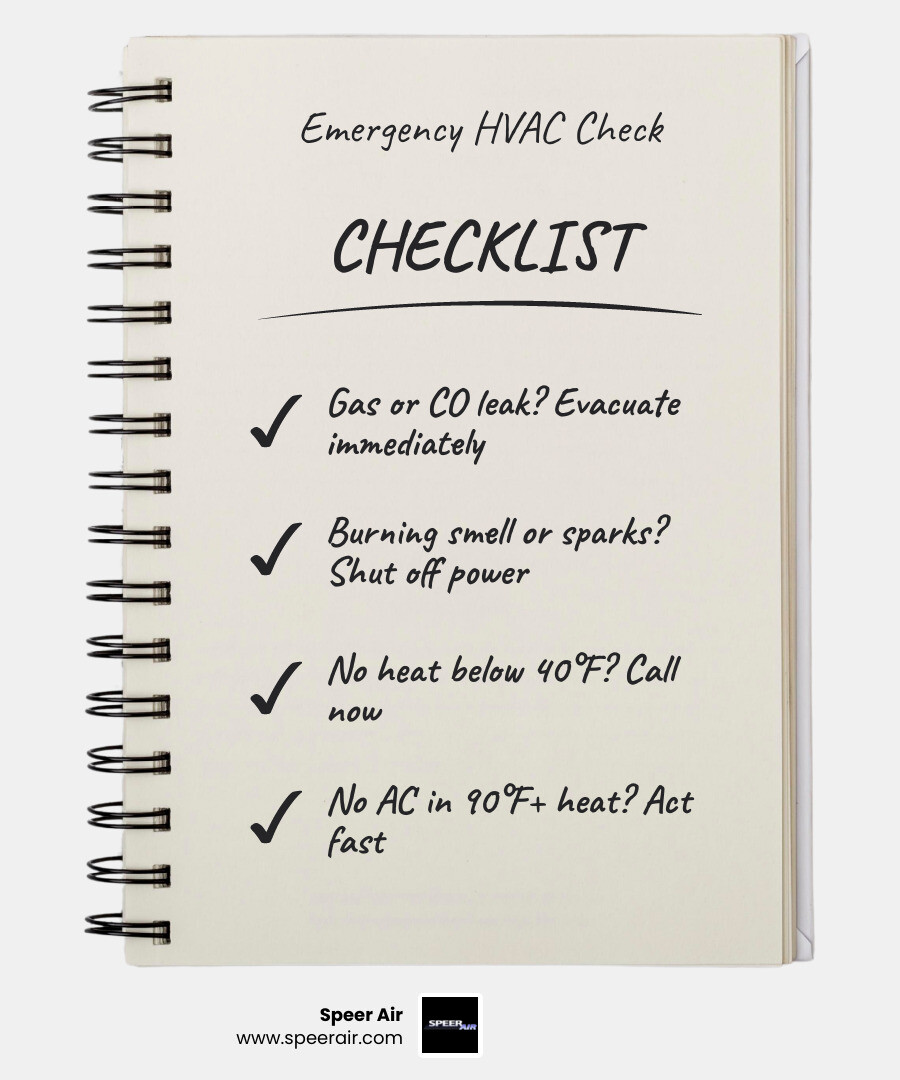
Here are the situations that qualify as a genuine emergency:
- Gas or carbon monoxide leak — evacuate immediately
- Burning smells or visible sparks — shut down the system and call for help
- No heat when outdoor temps are at or below 40°F — risk of frozen pipes and dangerous indoor conditions
- No cooling during a heatwave (90°F+) — serious health risk, especially for children, elderly, or anyone with a medical condition
- Major water leak from your HVAC unit — risk of structural damage and mold
- Refrigerant leak (hissing sounds) — toxic exposure and compressor damage
These situations that can typically wait until regular business hours:
- Slightly uneven temperatures between rooms
- A minor rattle or hum with no other symptoms
- AC blowing slightly less cool air in mild weather
- A thermostat that needs new batteries
Most homeowners assume any HVAC problem is an emergency — and that stress is understandable. It’s the middle of a New Jersey winter, your heat just stopped, and you don’t know what to do next. But not every HVAC issue needs a midnight service call. Knowing the difference can protect both your household and your wallet.
This guide walks you through exactly which HVAC failures demand immediate action, which ones can wait, and what to do in either case.
Defining when an HVAC failure is a true emergency
When we talk about HVAC issues in Northern New Jersey or Eastern Pennsylvania, we have to consider our local climate. It is April 2026, and as we move through the spring, we know that a sudden cold snap or an early heatwave can change the “emergency” status of a repair in minutes.
At Speer Air, we define a true emergency as any situation that threatens your health, your safety, or the structural integrity of your home. If your system fails and the indoor temperature is rapidly becoming uninhabitable, or if there is a risk of fire or toxic gas, that is not a “wait until Monday” situation.
To help you decide, we recommend using our HVAC Troubleshooter to rule out simple fixes. However, if you find yourself facing any of the symptoms in the “Emergency” column below, give us a call immediately.
Emergency vs. Routine Maintenance: A Quick Comparison
| Symptom | Status | Why? |
|---|---|---|
| Rotten egg smell | EMERGENCY | Potential natural gas leak; explosion risk. |
| No heat (Outside < 40°F) | EMERGENCY | Risk of frozen pipes and hypothermia. |
| Sparking or ozone smell | EMERGENCY | Immediate fire hazard. |
| Water pooling (large amount) | EMERGENCY | Risk of ceiling collapse or electrical short. |
| Slight rattling noise | Routine | Likely a loose screw or debris. |
| High energy bills | Routine | System is inefficient but safe. |
| Thermostat screen is blank | Routine/Urgent | Usually just needs new batteries. |
Critical signs of an immediate HVAC system crisis
Identifying when an HVAC failure is a true emergency often comes down to your five senses. Your HVAC system is designed to run quietly and safely in the background. When it starts “acting out” with strange smells or sights, it’s usually trying to tell you something critical is wrong.
One of the most common reasons we get emergency calls involves electrical malfunctions. If your system keeps shutting down, it might be a safety feature kicking in. Understanding Why AC might be tripping your circuit breaker is vital; if you reset the breaker and it trips again immediately, stop. Forcing it to stay on can lead to a fire.
Similarly, noises can be a major red flag. While a little hum is normal, certain sounds indicate that a component is about to fail catastrophically. We often explain to our neighbors in Morris and Essex County Why AC compressor might be making loud noises—screeching or grinding usually means metal-on-metal contact, which can destroy the unit if not addressed instantly.
Identifying when an HVAC failure is a true emergency due to safety risks
Safety risks are non-negotiable. If you suspect any of the following, do not wait.
- Carbon Monoxide (CO): This is the “silent killer.” Since CO is colorless and odorless, you must rely on your detectors. According to CDC data, unintentional carbon monoxide poisoning sends over 100,000 Americans to emergency departments each year. If your alarm goes off, get everyone out of the house and call us from the sidewalk.
- Natural Gas Leaks: Utilities add “mercaptan” to natural gas to make it smell like rotten eggs. If you catch that scent near your furnace or boiler, evacuate immediately. Do not flip any light switches or use your phone inside, as a tiny spark could ignite the gas.
- Fire and Smoke: If you see smoke coming from your vents or smell burning plastic (ozone), your system’s wiring may be melting. This is a primary fire hazard.
- Strange Noises: If you hear Strange HVAC noises in your Rockaway property, like loud banging or hissing, it could indicate a cracked heat exchanger or a high-pressure refrigerant leak.
Assessing when an HVAC failure is a true emergency based on temperature
Sometimes the “emergency” isn’t a smell or a sound, but the temperature itself. In our service areas like Sussex County, NJ, or Easton, PA, winter temperatures can drop well below freezing.
- The Freezing Threshold: We generally consider a loss of heat an emergency when outdoor temperatures are 40°F or lower. Why 40°F? Because while water freezes at 32°F, the uninsulated areas of your home (like crawlspaces where pipes live) can reach freezing temperatures much faster. Frozen pipes can burst, causing thousands of dollars in water damage.
- The Heatwave Risk: Conversely, if it’s 90°F or higher outside and your AC fails, the indoor temperature can quickly climb to dangerous levels. This is a true emergency for vulnerable populations, including infants, the elderly, and those with chronic respiratory or heart conditions.
- Humidity Concerns: If your indoor humidity stays above 70% during a failure, you aren’t just uncomfortable; you are inviting mold growth. If you notice What to do when HVAC freezes in Maplewood, it usually means airflow is blocked or refrigerant is low—both of which need a pro to prevent the compressor from burning out.
HVAC problems that can typically wait for regular hours
We know it’s frustrating when the AC isn’t perfect, but some issues don’t require the “emergency” rate. If the weather is mild (between 60°F and 75°F) and everyone in the house is healthy, most comfort issues can wait 24 to 48 hours.
Common non-emergencies include:
- Minor Rattling: If the unit is making a small noise but still heating or cooling effectively, it can usually wait for a scheduled appointment.
- Sluggish Cooling: If your home is 74°F but you want it 70°F and it just won’t quite get there, check your air filter first. You might be wondering Why is my AC not cooling my Rockaway home; often, a simple filter change or cleaning the outdoor unit of debris solves the problem.
- Short Cycling: If the unit turns on and off frequently, it’s annoying and inefficient, but as long as it isn’t sparking or smelling, you can read up on Why AC might be short cycling and how to fix it and call us during normal business hours.
- Thermostat Issues: About 40% of HVAC emergencies actually begin with thermostat malfunctions. If your screen is blank, try changing the batteries before calling for emergency service. It’s a five-minute fix that saves you a lot of stress!
Immediate steps to take during a heating or cooling failure
If you’ve determined that you are in the middle of an emergency, don’t panic. Follow these steps to protect your home and family while you wait for a Speer Air technician to arrive.
- Shut Down the System: If you smell burning, hear loud grinding, or see water leaking, turn the system off at the thermostat. If necessary, flip the circuit breaker to the “off” position to cut power entirely.
- Check the Basics: If it isn’t a safety issue (like gas or fire), do a quick check of your air filter and the outdoor unit. Is the outdoor unit buried in snow or clogged with leaves? Clearing this can sometimes restore function.
- Evacuate if Necessary: If you smell gas or your CO detector is alarming, get everyone out. Do not stop to open windows or grab belongings. Call the gas company and Speer Air from outside.
- Protect Your Pipes: If you lose heat in the winter, open cabinet doors under sinks to allow warmer air to reach the plumbing. You can also let faucets drip slightly to prevent pressure buildup in the pipes.
- Seek Temporary Comfort: In extreme heat, use fans to circulate air and stay hydrated. In extreme cold, gather the family in one room and use safe, supervised space heaters if available.
If you are struggling with a furnace that won’t kick on, our guide on How to fix a furnace that won’t start in your home can help you troubleshoot the most common culprits. For those with older homes in places like Somerset or Union County, you might find 7 reasons your boiler is not working particularly useful for diagnosing steam or hot water system failures.
Proactive measures to prevent future HVAC emergencies
The best way to handle an HVAC emergency is to make sure it never happens in the first place. Statistics show that homeowners who invest in regular maintenance are 50% less likely to experience a total system breakdown.
We’ve been serving Northern New Jersey and Pennsylvania since 1900, and if there is one thing we’ve learned, it’s that a little prevention goes a long way. Here is our recommended proactive checklist:
- Seasonal Tune-ups: Schedule a professional inspection twice a year—once in the spring for your AC and once in the fall for your furnace or boiler. This allows us to catch worn-out capacitors, refrigerant leaks, or cracked heat exchangers before they leave you stranded in the dark.
- Change Your Filters: This is the easiest DIY task. Change your filters every 1–3 months. A clogged filter restricts airflow, which is the #1 cause of system overheating and component failure.
- Clear the Area: Keep at least two feet of clear space around your outdoor condenser. Remove weeds, leaves, and debris that can choke the system.
- Listen for Changes: Don’t ignore small sounds. If you notice early Signs you need HVAC repair in Rockaway, addressing them during a regular service call is much easier (and often more cost-effective) than waiting for a total failure.
For our neighbors in Morris County, we offer specialized HVAC Repair Rockaway NJ services to keep local systems running at peak efficiency year-round.
Frequently Asked Questions about HVAC Emergencies
What outdoor temperature makes a furnace failure an emergency?
In our region, including Bergen and Passaic counties, we consider any temperature at or below 40°F to be the start of the emergency zone. While the house won’t freeze instantly, the lack of heat puts your pipes at risk and can lead to hypothermia for vulnerable residents within a few hours.
If you are in this situation, don’t wait for the sun to come up. Contact us for HVAC Repair immediately.
Is a leaking AC unit always considered an emergency?
It depends on the type of leak.
- Water Leaks: If your AC is dripping into a pan or out a drain line, it’s usually a clog. However, if water is pooling on your floor or leaking through a ceiling, it is an emergency because of the risk of structural damage and mold.
- Refrigerant Leaks: If you hear a hissing sound or smell a faintly sweet, ether-like odor, that is an emergency. Refrigerant is toxic, and running a system low on “freon” will quickly destroy the expensive compressor. You will likely need AC Repair to seal the leak and recharge the system.
How can I tell if my furnace is leaking carbon monoxide?
You cannot see, smell, or taste carbon monoxide. However, there are physical “red flags” to watch for:
- The Pilot Light: If your furnace has a yellow or flickering flame instead of a steady blue one, it isn’t burning fuel cleanly.
- Soot: Look for brownish-yellow sooty stains around the furnace.
- Physical Symptoms: If everyone in the house suddenly feels dizzy, nauseated, or develops a headache that goes away when you step outside, leave the house immediately.
- Detector: The most reliable way is a working CO detector. We recommend testing yours every month!
Conclusion
When an HVAC failure is a true emergency, time is of the essence. Whether it’s a frigid night in Stroudsburg, PA, or a sweltering afternoon in Hudson County, NJ, Speer Air is here to help.
As a Carrier Factory Authorized Dealer and a Generac® Dealer with over 125 years of experience, we bring NATE-certified expertise to every call. We understand the specific needs of Northern New Jersey and Eastern Pennsylvania homeowners because we are your neighbors. We’ve seen every type of emergency since 1900, and we have the tools and training to get your home back to a safe, comfortable temperature quickly.
Don’t let a minor issue turn into a major catastrophe. If you suspect your system is failing, or if you simply want to schedule the maintenance that prevents these headaches, contact us today for reliable HVAC Repair. We are ready to ensure your family stays safe and comfortable, no matter what the weather does outside.