

Hvac system replacement: Smart 2025 Guide
Why HVAC System Replacement Matters for Your Home Comfort
HVAC system replacement is a significant investment for homeowners in Northern New Jersey and Eastern Pennsylvania, and knowing when and how to tackle this project can dramatically improve your home’s comfort and efficiency. If you’re dealing with an aging system, skyrocketing energy bills, or constant repair calls, you’re likely facing a choice between patching things up one more time or making the leap to a new, efficient system. The good news is that modern HVAC technology has come a long way, offering better energy efficiency, improved air quality, and smarter controls that make your home more comfortable year-round.
Quick Answer: Key Steps in HVAC System Replacement
- Assess your current system – Check age (10-20 years typically signals replacement time), repair frequency, and rising energy costs
- Get a professional evaluation – Including a Manual J load calculation to properly size your new system
- Choose the right system type – Heat pump, furnace, central AC, or ductless based on your home and climate
- Verify energy efficiency ratings – Look for high SEER2 and HSPF2 ratings and ENERGY STAR certification
- Schedule installation – Expect 1-2 days for standard replacement, 3-5 days if ductwork needs updating
- Plan for maintenance – Regular filter changes and annual tune-ups protect your investment
Looking to upgrade your home’s comfort system? Learn more about HVAC installation services in Rockaway or get expert guidance on your replacement project.
Most HVAC systems last between 10 and 20 years, but their efficiency drops significantly in their final years. You might notice some rooms are too hot while others are too cold, strange noises coming from your vents, or energy bills that keep climbing despite no change in usage. These are all telltale signs that your system is struggling, and replacement can be a more effective long-term solution than continuing to patch an aging unit.
The replacement process itself is more straightforward than many homeowners expect. A qualified contractor will start with a thorough assessment of your home, including insulation, windows, and existing ductwork. They’ll perform what’s called a Manual J calculation to determine exactly what size system your home needs – not just based on square footage, but considering all the factors that affect your heating and cooling needs. This precision matters because a system that’s too large or too small will waste energy and fail to keep you comfortable.
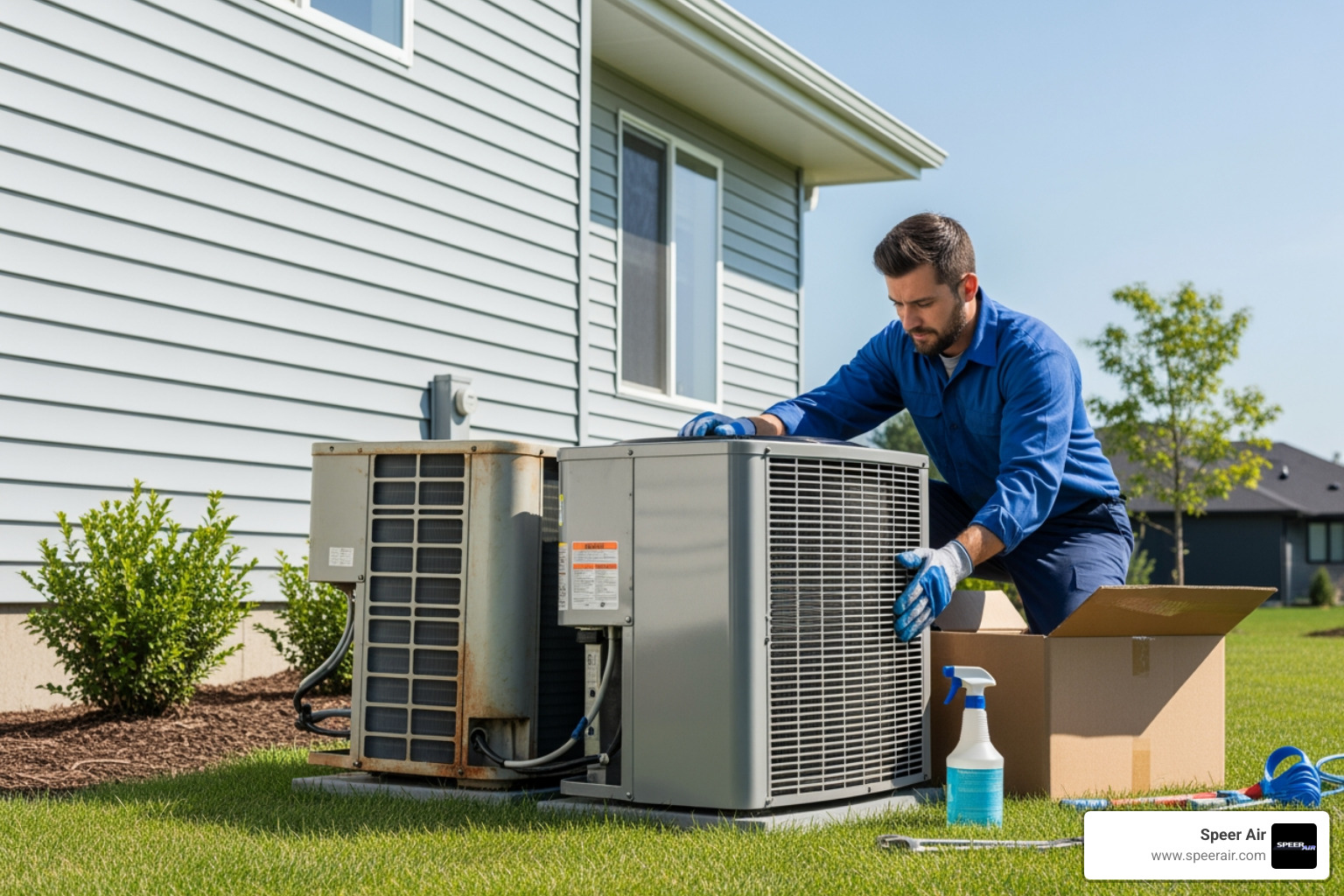
Important hvac system replacement terms:
Speer Air has been helping families and businesses stay comfortable since 1900, providing HVAC installation, replacement, and service throughout Northern New Jersey and Eastern Pennsylvania. That local experience means your system replacement can be custom to the specific homes, building styles, and weather patterns in this region.
Is It Time for an Upgrade? Key Signs Your HVAC System Needs Replacing
Deciding when to undertake an hvac system replacement can feel like a big puzzle. While no one wants to replace a major home appliance unnecessarily, ignoring the warning signs can lead to discomfort, higher bills, and even safety risks. We help homeowners in Northern New Jersey and Eastern Pennsylvania identify the key indicators that it’s time to consider an upgrade.
-
System Age: This is often the first and most obvious sign. Most HVAC systems have a lifespan of 10-20 years. ENERGY STAR recommends that homeowners consider replacing HVAC systems every 10 to 15 years. Specifically, if your heat pump or air conditioner is more than 10 years old, or your furnace or boiler is over 15 years old, it’s worth a closer look. Older units simply aren’t as efficient as newer models. You can learn more about these indicators at Signs HVAC System Is Ready for an Upgrade and When Should You Replace Your Furnace or Boiler.
-
Rising Energy Bills: Are your heating and cooling costs mysteriously creeping up, even when your usage habits haven’t changed? An aging system often loses efficiency, working harder to achieve the same results. This extra effort translates directly to higher utility bills. Upgrading from an older, less efficient system to a modern, high-efficiency unit can lead to a noticeable improvement in energy performance.
-
Frequent Repairs: If your system seems to be on a first-name basis with our service technicians, it’s a strong sign that replacement might be more cost-effective. If you find yourself frequently scheduling service calls for an old system, replacement may be a more reliable and sensible solution.
-
Uneven Temperatures: Do you have hot spots in some rooms and cold spots in others? This “Goldilocks problem” (some rooms too hot, some too cold, none just right) can indicate improper equipment operation, issues with your ductwork, or inadequate insulation. A new, properly sized system can distribute conditioned air more effectively throughout your home.
-
Strange Noises: Your HVAC system shouldn’t sound like a haunted house. Grinding, squealing, banging, or persistent rattling noises often point to mechanical problems. Sometimes, an undersized duct system or an issue with the indoor coil can also cause excessive noise.
-
Poor Air Quality: If you notice excessive dust accumulation, persistent odors, or a general stuffiness in your home, your HVAC system could be contributing. Leaky ducts can pull in dust and particles from attics or crawl spaces, distributing them throughout your living areas. You might also detect mold smells if there’s moisture buildup in your ductwork.
-
Humidity Issues: Is your home too humid in the summer or too dry in the winter, even when your system is running? Poor equipment operation, an inadequately sized system, or leaky ductwork can all lead to uncomfortable humidity levels, which can also foster mold growth.
If these signs sound familiar, it’s time to consider a professional evaluation. You can also get a general sense of your home’s energy use with the Home Energy Yardstick, which can highlight if your energy consumption is above average, suggesting potential for savings through an HVAC upgrade.
Choosing the Right System: Factors to Consider
Once you’ve determined that an hvac system replacement is on the horizon, the next step is choosing the right system for your home in Northern New Jersey or Eastern Pennsylvania. This isn’t a one-size-fits-all decision; several factors will influence the best choice for your comfort and budget.
When we consult with homeowners, we consider:
- Home Size and Layout: Not just square footage, but also ceiling heights, number of windows, and orientation.
- Local Climate: The varying seasons in our region mean you need a system that can handle both chilly winters and warm, humid summers effectively.
- Ductwork Condition: Existing ductwork needs to be inspected. If it’s old, damaged, or poorly sized, it might need to be replaced or modified, which can add to the project.
- Home Insulation and Window Types: These significantly impact your home’s heating and cooling load. A well-insulated home with modern, energy-efficient windows will require a different system size than an older, less insulated home.
- Energy Efficiency Goals: Are you looking to maximize energy savings, reduce your carbon footprint, or both? We’ll discuss the long-term benefits of higher efficiency systems.
- Budget and Financial Incentives: While we don’t discuss specific costs here, it’s important to be aware that there are often tax credits and other incentives available for energy-efficient systems that can make upgrading more accessible.
For a deeper dive into selecting the right system, you can explore our guide on Choosing the Right AC System Factors to Consider.
Understanding Different HVAC System Types
The world of HVAC systems offers a variety of options, each with its own advantages:
- Central Air Conditioners & Furnaces: This traditional split system pairs a central air conditioner for cooling with a furnace (gas or electric) for heating. Furnaces are a popular choice in our colder climate zones for their robust heating capabilities.
- Heat Pumps: These versatile systems provide both heating and cooling by transferring heat, rather than generating it. They are highly efficient, especially in moderate temperatures, but may be paired with a supplemental furnace (dual-fuel system) for very cold days. Learn more about our Heat Pump Services Rockaway NJ.
- Ductless Mini-Splits: Ideal for homes without existing ductwork, additions, or for zoned comfort, these systems provide heating and cooling to individual rooms or areas. They are highly efficient and offer precise control. Find more about Understanding Ductless Mini Split Systems.
- Boilers: For homes with radiant heating, a boiler circulates hot water or steam through pipes and radiators. If you have a boiler, replacement options would focus on modern, efficient boiler systems. We also offer Boiler Replacement services.
Pros and Cons: Heat Pumps vs. Traditional Furnace/AC Combos
- Heat Pumps:
- Pros: Highly energy-efficient for both heating and cooling, can offer significant improvements in utility usage, environmentally friendly.
- Cons: Heating efficiency can decrease in extremely cold temperatures (below freezing), may require a supplemental heat source in colder climates like ours.
- Traditional Furnace/AC Combos:
- Pros: Furnaces provide powerful, consistent heat even in the coldest weather, widely understood technology.
- Cons: Separate systems for heating and cooling can sometimes be less efficient overall than a heat pump, relies on fossil fuels (for gas furnaces).
Key Factors in Your HVAC System Replacement Decision
When making your decision, understanding energy efficiency ratings is paramount. These ratings help you compare systems and project long-term performance:
- SEER2 (Seasonal Energy Efficiency Ratio 2): This rating measures an air conditioner’s cooling efficiency over an entire cooling season. A higher SEER2 number indicates greater efficiency.
- EER2 (Energy Efficiency Ratio 2): This measures an air conditioner’s cooling efficiency at a specific outdoor temperature (95°F), which is particularly relevant during peak summer heat.
- HSPF2 (Heating Seasonal Performance Factor 2): This rating is specific to heat pumps and measures their heating efficiency over a typical heating season. A higher HSPF2 means more efficient heating.
You can use our SEER Calculator to get an idea of potential efficiency gains. Upgrading from an older system to a modern, high-SEER2 unit in a typical home can lead to a substantial improvement in cooling efficiency.
Crucially, the correct sizing of your new system is vital. This is where a Manual J calculation comes in. A professional will perform this detailed load calculation which considers not just your home’s square footage, but also its insulation levels, window types, local climate, ceiling height, and even the number of occupants. An improperly sized system – whether too big or too small – will struggle to maintain comfort and waste energy. A system that’s too large will “short-cycle,” turning on and off too frequently, leading to uneven temperatures and premature wear. A system that’s too small will run constantly, unable to keep up with demand.
Always look for ENERGY STAR-certified models. These systems meet strict energy efficiency guidelines set by the EPA and can provide significant long-term improvements in energy usage over their lifespan.
The HVAC System Replacement Process: What to Expect
Starting on an hvac system replacement journey can seem daunting, but with a professional team like ours, the process is streamlined and efficient. Here’s what you can expect from initial consultation to final testing:
-
Initial Consultation and Home Assessment: Our process begins with a thorough discussion of your current system’s issues, your comfort goals, and your energy efficiency preferences. We’ll then conduct a comprehensive assessment of your home in Northern New Jersey or Eastern Pennsylvania. This includes evaluating your existing HVAC setup, ductwork, insulation, windows, and overall structural characteristics. This is where we perform the crucial Manual J load calculation to ensure your new system is perfectly sized.
-
System Selection: Based on the assessment, we’ll present you with custom options for different HVAC system types and efficiency levels. We’ll explain the benefits of each, helping you make an informed decision that aligns with your needs and budget.
-
Preparation for Installation: Once you’ve made your choice, we’ll schedule the installation at your convenience. We’ll also help you understand how to Prepare Home for New HVAC System Setup, ensuring a smooth process.
-
Old Equipment Removal: On installation day, our technicians will carefully remove your old, inefficient HVAC unit. We ensure proper disposal of old refrigerants and components, adhering to environmental regulations.
-
New System Installation: Our NATE-certified technicians will carefully install your new system, connecting all components, including indoor and outdoor units, thermostats, and any necessary ductwork modifications. A standard HVAC installation can typically be completed within 1 to 2 days, assuming your home has existing ductwork in good condition. However, if your home needs new ductwork installed or significant modifications to existing ductwork, the project could extend to 3 to 5 days.
-
System Testing and Calibration: After installation, we don’t just flip a switch. We rigorously test and calibrate the entire system to ensure it’s operating at peak performance and efficiency. This includes checking refrigerant levels, airflow, electrical connections, and thermostat functionality.
-
Final Walkthrough and Education: Before we leave, we’ll conduct a final walkthrough with you. We’ll explain how your new system works, demonstrate how to use your new thermostat, and provide essential maintenance tips to ensure its longevity and optimal performance. We want you to be completely comfortable and confident with your new system. We aim to ensure you know What to Expect Heating Installation in Rockaway and beyond.
Maximizing Your New System’s Performance and Lifespan
Congratulations on your new hvac system replacement! Now that you have a state-of-the-art system, maximize its performance and ensure it lasts for years to come.
One of the best ways to improve efficiency and comfort is through modern controls. Smart thermostats and programmable thermostats offer incredible benefits. They allow you to set schedules, control your system remotely, and even learn your preferences to optimize temperature settings. This intelligent control can improve energy efficiency by ensuring your system isn’t heating or cooling an empty house. Explore the advantages of Smart Thermostats and Their Benefits.
For ultimate comfort and efficiency, consider a zoning system. This allows you to divide your home into different temperature zones, so you can avoid heating or cooling unused rooms.
However, the single most critical factor in system longevity and optimal performance is regular maintenance. Just like your car, your HVAC system needs routine check-ups to run smoothly. Speer Air offers comprehensive plans like our HVAC Maintenance Plan Rockaway NJ to keep your system in top shape.
A simple, yet impactful, maintenance task is regular filter changes. Generally, HVAC filters should be replaced anywhere from every 30 days to every six months, depending on the type of filter, the air quality where you live, if you have pets, and the size of your home. You can find replacement filters at most home improvement stores or through online suppliers. Skipping this step can restrict airflow, reduce efficiency, and put unnecessary strain on your system.
Post-Installation Care for Your HVAC System Replacement
After your new HVAC system is installed, a little proactive care goes a long way:
- Annual Tune-ups: Schedule professional tune-ups at least once a year. Ideally, one in the spring for your cooling system and one in the fall for your heating system. This ensures optimal performance and catches minor issues before they become major problems. Our Professional AC Maintenance in Rockaway services are designed to keep your system running perfectly.
- Ductwork Inspection: Periodically check your ductwork for any visible damage like cracks or loose connections. Leaky ducts can significantly reduce your system’s efficiency.
- Clearing Debris: Keep the area around your outdoor unit clear of leaves, grass clippings, and other debris. This ensures proper airflow and prevents the unit from overworking.
- Warranty Requirements: Many manufacturer warranties require proof of annual professional maintenance. Ensure you keep up with scheduled service to protect your investment. Consistent Regular AC Maintenance for Your Home Comfort is key.
By pairing your new equipment with ongoing care from Speer Air’s experienced team, you help ensure reliable comfort in every season across Northern New Jersey and Eastern Pennsylvania.
Frequently Asked Questions about HVAC Replacement
Should I repair or replace my HVAC system?
This is a common dilemma for homeowners. The decision between repairing and replacing an HVAC system often boils down to several factors:
- System Age: If your system is approaching or past its typical lifespan (10-15 years for AC/heat pumps, 15-20 years for furnaces/boilers), replacement is often the more sensible long-term investment.
- Repair Frequency & Severity: If your system requires frequent or major repairs, it might be time to replace. When deciding, consider the frequency and extent of the repairs needed versus the benefits of a new, reliable system.
- Energy Efficiency: Older systems are simply less efficient. A new, high-efficiency system can significantly improve your home’s energy performance, providing improved comfort and efficiency over time.
- Long-term Investment: If you plan to stay in your home for many years, investing in a new, efficient system will provide greater comfort and efficiency. If you’re considering HVAC Repair Rockaway NJ, consult with us to weigh your options.
How do I find a qualified HVAC contractor?
Choosing the right contractor for your hvac system replacement is as important as choosing the right equipment. Here’s what to look for:
- Licensing and Insurance: Ensure the contractor is fully licensed and insured in Northern New Jersey or Eastern Pennsylvania. This protects you in case of accidents or issues during the installation.
- NATE Certification: Look for technicians who are NATE (North American Technician Excellence) certified. This indicates a high level of training and expertise in HVAC installation and service. Our technicians are NATE-certified, ensuring top-quality work.
- Local Reviews and Reputation: Check online reviews and ask for local references. A contractor with a strong local reputation is a good sign.
- Written Estimates: Always get detailed, written estimates that clearly outline the scope of work, equipment, and associated services.
- Factory Authorizations: Companies like ours, who are Carrier Factory Authorized Dealers, have met rigorous standards for technical expertise, customer service, and business practices. This indicates a commitment to quality.
- For more guidance, refer to our page on Choosing Your HVAC Contractor.
What are the risks of a faulty HVAC system?
Beyond discomfort and high energy bills, a malfunctioning HVAC system can pose serious risks to your home and family:
- Carbon Monoxide Leaks: Faulty gas furnaces can produce carbon monoxide, an odorless, colorless, and deadly gas. Regular maintenance helps prevent this.
- Fire Hazards: Overloaded electrical components or malfunctioning heating units can lead to electrical fires.
- Electrical Issues: An aging or faulty system can draw too much power, tripping circuit breakers or even damaging your home’s electrical system.
- Poor Indoor Air Quality: As mentioned, leaky ducts can pull in dust, allergens, and even mold spores, distributing them throughout your home. Unaddressed mold smells are a clear warning sign.
- Refrigerant Leaks: Leaking refrigerants are harmful to the environment and can reduce your system’s cooling capacity, leading to inefficiency and potential health risks.
A properly functioning, well-maintained HVAC system is essential for both comfort and safety in your home.
Conclusion
Undertaking an hvac system replacement is a significant decision, but it’s one that can lead to improved home comfort, substantial energy savings, and improved system reliability for years to come. By understanding the signs that indicate it’s time for an upgrade, carefully considering your system options, and knowing what to expect during the replacement process, you can make an informed decision with confidence.
We pride ourselves on providing professional installation and service across Northern New Jersey and Eastern Pennsylvania. Our NATE-certified technicians ensure that your new system is perfectly sized, expertly installed, and carefully tested for optimal performance. When you choose us for your HVAC needs, you’re investing in peace of mind and long-term home comfort.
Ready to explore your hvac system replacement options and bring unparalleled comfort and efficiency to your home? Contact us today to schedule a consultation. Learn more about our HVAC installation services and how we can help you breathe easier and live more comfortably.