

hvac system upgrade denville nj: 7 Smart Signs
Introduction: Boost Comfort and Efficiency in Your Denville Home
HVAC system upgrade denville nj homeowners need to know starts with understanding when and why to replace aging equipment. Older heating and cooling systems waste energy, drive up utility bills, and struggle to maintain consistent comfort throughout your home. If your system is over 10 years old, requires frequent repairs, or leaves some rooms too hot while others are too cold, an upgrade can transform your home’s comfort while cutting energy costs by up to 40%.
If you’re ready to explore a full system replacement, learn more about professional HVAC installation services in Rockaway, or contact Speer Air today for a free consultation on upgrading your Denville home.
Quick Guide: Is It Time to Upgrade Your HVAC System?
Replace your system if:
- Your heat pump or air conditioner is more than 10 years old
- Your furnace or boiler is more than 15 years old
- Energy bills have increased 25% or more recently
- Repair costs exceed 50% of a new system’s cost
- You experience frequent breakdowns or uneven temperatures
- Your system uses R-22 refrigerant (now phased out)
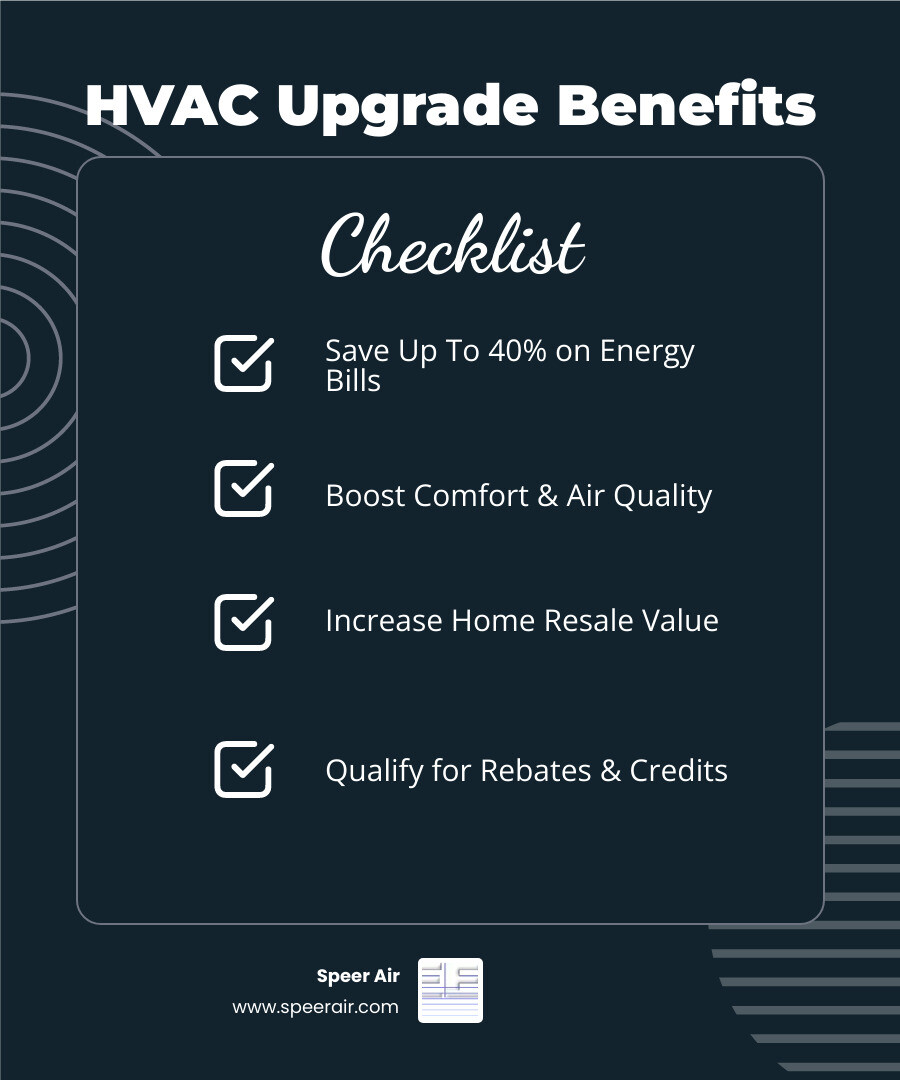
Benefits of upgrading:
- Save up to 40% on monthly utility bills
- Improve indoor air quality and comfort
- Increase home resale value by up to 85% buyer preference
- Qualify for JCP&L rebates up to $1,500 and federal tax credits
- Enjoy 15-20 years of reliable operation with modern systems
New high-efficiency systems operate at over 90% efficiency compared to older units running at just 65%, meaning they use one-third less fuel while delivering better comfort control and quieter operation throughout your Denville home.
Simple guide to hvac system upgrade denville nj terms:
7 Telltale Signs It’s Time for an HVAC System Upgrade
Your HVAC system works hard every day to keep your Denville home comfortable, but like all mechanical equipment, it won’t last forever. The good news? Your system usually gives you plenty of warning signs before it fails completely. Recognizing these signals early can save you from an emergency breakdown during the hottest summer day or coldest winter night—and help you plan for an hvac system upgrade denville nj on your terms.
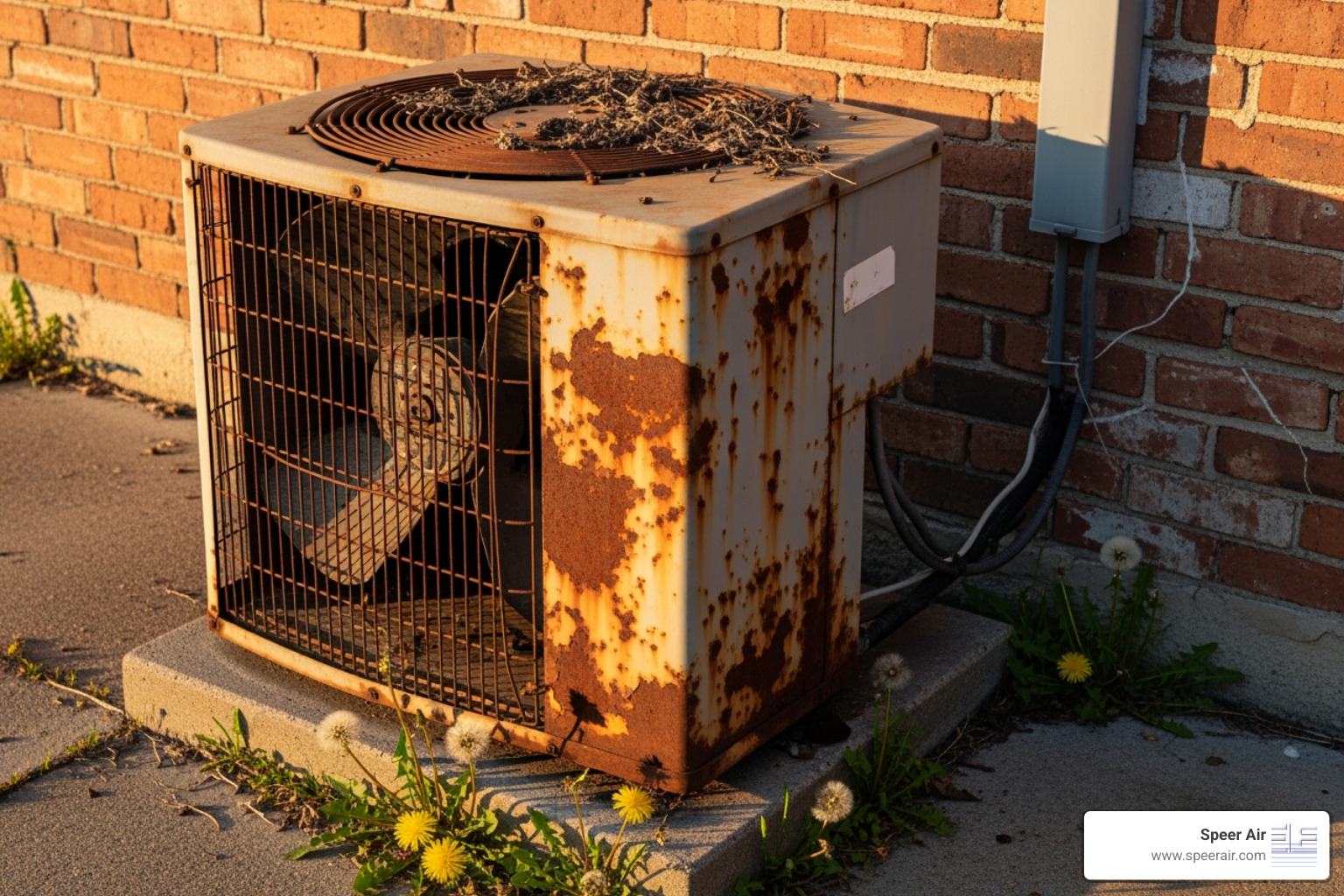
System age is the first thing to check. If your air conditioner or heat pump has been keeping you cool for more than 10 years, or your furnace has been warming your home for over 15 years, you’re living on borrowed time. These older systems typically operate at around 65% efficiency, which means they’re wasting more than a third of the energy you’re paying for. Modern high-efficiency models can reach over 90% efficiency, and upgrading an ENERGY STAR certified central air conditioning unit that’s more than 12 years old could slash your cooling costs by 30%.
Frequent repairs are another telltale sign your system is ready for retirement. When you’re calling for service every few months, those bills add up fast. Here’s a good rule of thumb: if a repair costs more than 50% of what a new system would cost, it’s time to start shopping for a replacement. Think of it like an old car that’s always in the shop—at some point, you’re just throwing good money after bad.
Nothing gets a homeowner’s attention quite like rising energy bills. If you’ve noticed your utility costs creeping up by 25% or more, your aging HVAC system is probably the culprit. As systems age, they work harder and harder to maintain the same comfort level, gobbling up energy in the process. An hvac system upgrade denville nj to a high-efficiency model can reduce monthly utility bills by up to 40%, potentially paying for itself through energy savings and avoided repairs within 5-8 years.
Uneven temperatures throughout your home mean something’s not right. When your living room feels like a sauna while your bedroom is an icebox, your HVAC system is struggling to distribute conditioned air effectively. This could point to an undersized system, worn-out components, or simply an aging unit that can’t keep up anymore. A properly sized modern system delivers consistent comfort in every room.
Strange noises deserve immediate attention. Your HVAC system should hum along quietly in the background—it shouldn’t sound like it’s hosting a percussion concert. Grinding, squealing, or banging noises often indicate worn-out parts that are on their last legs. And if you’re noticing persistent musty odors from your vents, that’s equally concerning and could signal mold growth or electrical issues that affect both performance and indoor air quality.
Speaking of air quality, poor indoor air quality shows up in ways you might not expect. Excessive dust settling on your furniture, humidity problems that leave your home feeling clammy or bone-dry, and increased allergy symptoms among family members all point to an HVAC system that’s no longer doing its job properly. Modern systems come with advanced filtration and humidity control features that can dramatically improve the air you breathe, which matters especially during Denville’s humid summers and dry winters.
Finally, there’s the R-22 refrigerant phase-out to consider. If your air conditioner was installed before 2010, it almost certainly uses R-22 refrigerant, which has been phased out due to environmental concerns. This ozone-depleting substance is now scarce and expensive, so if your older system springs a leak, you could face astronomical repair costs for an outdated refrigerant. Upgrading to a system using environmentally friendly R-410A makes both financial and environmental sense.
Each of these signs tells you something important about your system’s health. One or two might be manageable, but if you’re experiencing several of these issues, your HVAC system is probably telling you it’s ready to retire. The question isn’t whether to upgrade, but when—and doing it on your schedule is always better than waiting for an emergency.
Choosing the Right System: Modern HVAC Options for Denville Homes
When you’re ready for an hvac system upgrade denville nj, you’re not just swapping out old equipment—you’re opening the door to a more comfortable, energy-efficient home that works better for your family. The perfect system for your Denville home depends on your home’s layout, whether you have existing ductwork, and what you want to achieve with your energy bills.
Think of it this way: choosing an HVAC system is like finding the right pair of shoes. What works perfectly for your neighbor might not be the best fit for your home. Let’s walk through your options so you can make an informed choice.
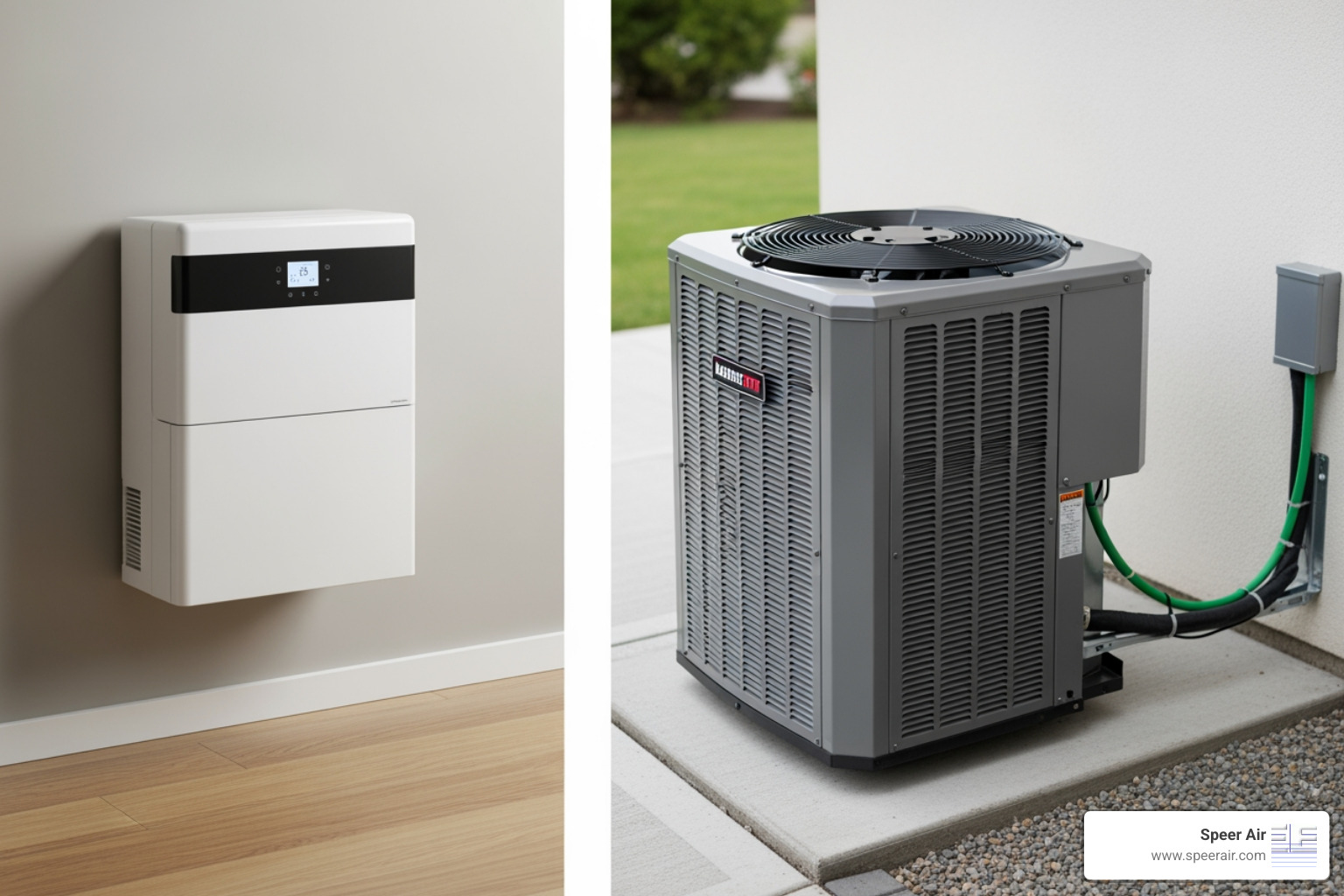
Common HVAC System Types
Central air conditioners remain a favorite for Denville homeowners who want whole-home cooling. These systems work hand-in-hand with your furnace, pushing cool air through your existing ducts to every room. If you already have ductwork in place, a modern ENERGY STAR certified central AC unit can be a smart, straightforward upgrade that cuts cooling costs significantly compared to older models.
Furnaces are the workhorses of heating in our area, especially during those bitter New Jersey winters. Whether powered by natural gas, oil, or electricity, today’s high-efficiency furnaces operate at AFUE ratings above 90%. That means more than 90 cents of every dollar you spend on fuel actually heats your home, compared to older systems that might waste 35 cents on the dollar.
Heat pumps are gaining popularity because they’re the multitaskers of the HVAC world. These clever systems provide both heating and cooling by moving heat rather than creating it from scratch. In summer, they pull heat out of your home. In winter, they extract heat from outdoor air—yes, even cold air contains heat energy—and bring it inside. ENERGY STAR certified air-source heat pumps use about 5% less energy than conventional new models, making them an efficient choice for year-round comfort.
Ductless mini-splits solve a problem many Denville homeowners face: what do you do when you don’t have ductwork, or you want to heat and cool a new addition without extending your ducts? These systems connect one outdoor unit to one or more indoor units mounted on your walls, giving you precise control over individual rooms or zones. They’re perfect for older homes, additions, or creating separate comfort zones for different family members. ENERGY STAR certified ductless mini-split systems can dramatically cut cooling costs compared to conventional room air conditioners.
Geothermal systems represent the pinnacle of energy efficiency. These systems tap into the earth’s stable underground temperatures to heat and cool your home with remarkable efficiency. While they require a higher initial investment, the operational savings are substantial over time, and they’re incredibly gentle on the environment.
Boiler systems are common in older Denville homes, using hot water distributed through radiators or radiant floor systems to create comfortable, consistent heat. Modern boilers are highly efficient and reliable, with some combination models providing both space heating and domestic hot water from a single unit.
Understanding Energy Efficiency Ratings for your hvac system upgrade denville nj
Shopping for a new HVAC system means encountering a handful of acronyms that tell you how efficiently a system operates. Don’t let the technical terms intimidate you—they’re actually straightforward once you understand what they measure.
SEER and SEER2 (Seasonal Energy Efficiency Ratio) measure how efficiently air conditioners and heat pumps cool your home over an entire cooling season. Think of it like miles per gallon for your car—the higher the number, the more cooling you get for each unit of electricity. Older systems might limp along at SEER ratings below 10, while modern high-efficiency units reach 20 or even 30 SEER. That difference translates directly into lower utility bills month after month.
AFUE (Annual Fuel Utilization Efficiency) tells you how well furnaces and boilers convert fuel into usable heat. An AFUE of 90% means 90 cents of every dollar spent on fuel actually warms your home, with only 10 cents escaping through the chimney or other losses. If your current system operates at 65% AFUE, you’re essentially throwing away 35 cents of every heating dollar—money that could stay in your pocket with a modern system.
HSPF and HSPF2 (Heating Seasonal Performance Factor) specifically measure how efficiently heat pumps warm your home. Like SEER, higher numbers mean better efficiency and lower heating costs throughout the winter.
ENERGY STAR certification takes the guesswork out of choosing efficient equipment. When you see that blue label, you know the system meets strict energy efficiency guidelines set by the EPA. It’s a reliable shortcut to finding equipment that will genuinely reduce your utility bills and environmental impact. According to the Department of Energy, energy costs in many buildings can be reduced by 20 percent or more through strategic upgrades.
Here’s the bottom line: high-efficiency systems typically cost more upfront, but they consistently reduce monthly utility bills by up to 40%. Most systems pay for themselves through energy savings and avoided repairs within 5-8 years, and then continue saving you money for the rest of their 15-20 year lifespan. That’s not just a smart investment in comfort—it’s a smart financial decision for your Denville home.
The Smart Upgrade Path: Rebates, Financing, and Finding a Pro in Denville
Let’s be honest—an hvac system upgrade denville nj is a significant investment. But here’s the good news: you don’t have to shoulder the full cost alone. Between generous rebates, federal tax credits, and flexible financing options, upgrading to a high-efficiency system is more affordable than most homeowners realize. Pair these financial incentives with the right professional installation, and you’ve got a smart, stress-free path to year-round comfort.

Maximizing Your Savings on an HVAC Upgrade
We know that upfront costs can feel overwhelming, but there’s real money available to help Denville homeowners make the switch to efficient heating and cooling. The key is knowing where to look and how to stack these savings.
JCP&L offers some of the most substantial rebates for upgrading to ENERGY STAR certified equipment. If you’re installing a qualifying air source heat pump, you could receive up to $1,000 back. Central air conditioners that meet specific SEER2 and EER2 ratings qualify for up to $200. Thinking about going ductless? Ductless mini-split heat pumps come with a $750 rebate. Even smaller upgrades matter—adding an electronically commutated motor (ECM) to your furnace fan earns you $100 while helping the fan adjust throughout heating and cooling cycles to save energy.
For homeowners ready to make a bigger leap, replacing an old electric forced air furnace and central air conditioner with a geothermal system qualifies for an impressive $1,500 rebate. Whether you heat with gas or electricity, there are rebates available for both types of HVAC equipment. You’ll find all the details and application forms on the JCP&L HVAC Equipment Rebates page.
Federal tax credits add another layer of savings. The federal government regularly offers tax credits for homeowners who install high-efficiency HVAC systems. These credits can be claimed when you file your annual taxes, putting even more money back in your pocket. We stay on top of which systems qualify so we can point you in the right direction.
The NJ Clean Energy Program provides additional statewide incentives to encourage energy efficiency throughout New Jersey. These programs can sometimes be combined with federal and utility rebates, multiplying your savings even further.
Once you’ve maximized your rebates, flexible financing options can help bridge any remaining gap. Many homeowners qualify for financing on their high-efficiency heating and cooling systems, with options that include promotional 0% interest periods, low-rate loans, or extended payment terms. This means you can start enjoying lower energy bills and better comfort immediately while managing payments over time.
One important note: the JCP&L rebate application period typically runs from January 1, 2025, to June 30, 2027, and applications must be submitted within 120 days of your equipment purchase. We’re happy to guide you through the paperwork to make sure you receive every dollar you’re entitled to.
How to Choose the Right Contractor for your hvac system upgrade denville nj
Here’s something we’ve learned after more than a century in this business: the quality of your installation matters just as much as the equipment itself. Even the most efficient system on the market won’t perform properly if it’s installed incorrectly. That’s why choosing the right contractor is absolutely essential to your upgrade’s success.
Start with licensing and certification. Every HVAC contractor in New Jersey should hold a valid NJ Master HVACR License. This isn’t just a formality—it means they’ve met the state’s strict requirements for expertise and safety. At Speer Air, we maintain all necessary state and local licensing because protecting our customers is non-negotiable.
Look for NATE-certified technicians. NATE (North American Technician Excellence) represents the highest standard in our industry. When technicians earn NATE certification, they’ve proven their knowledge in heating, ventilation, air conditioning, and refrigeration through rigorous testing. Our NATE-certified team receives continuous training on the latest technologies and best practices, so you’re always getting current expertise.
Local experience matters more than you might think. A contractor who knows Denville and Morris County inside and out understands our climate patterns, the construction styles common in our neighborhoods, and the specific challenges our area presents. This local knowledge helps us recommend systems perfectly matched to your home’s needs, not just what worked for someone three states away.
Check reviews and reputation carefully. Online reviews and references tell you what it’s really like to work with a contractor. Look for patterns in the feedback—do customers consistently mention professionalism, punctuality, and quality work? We’ve built our reputation over 125 years by treating every customer’s home like our own, and we’re proud of the relationships we’ve created throughout Northern New Jersey.
Insist on a thorough assessment. Any reputable contractor will perform a detailed room-by-room load calculation (called a Manual J calculation) to properly size your new system. They should also inspect your existing ductwork, clearly explain all your options including different efficiency levels, and answer every question without pressuring you. Getting the sizing right is critical—an oversized or undersized system will cost you money and comfort.
Verify insurance and warranties. Make sure your contractor carries full Workers Compensation and General Liability insurance to protect you from any liability during installation. Also ask about manufacturer warranties on the equipment and the contractor’s warranty on labor. At Speer Air, we stand behind our work because we know you’re trusting us with your family’s comfort.
When you choose a qualified, reputable professional for your hvac system upgrade denville nj, you’re not just buying equipment—you’re investing in an installation done right the first time, backed by people who’ll be here when you need them. That peace of mind is worth everything.
Frequently Asked Questions about Denville HVAC Upgrades
We’ve been helping Denville homeowners with HVAC upgrades for over a century, so we’ve heard just about every question you can imagine. Here are the ones that come up most often, along with the honest answers you need to make the best decision for your home.
How long does a typical HVAC installation take?
One of the first things homeowners want to know is how long their household will be disrupted. The good news? Most straightforward installations are completed within one to two days. If we’re replacing your existing central air conditioning and furnace system with a similar setup, our experienced crews can typically have you back to comfortable living before you know it.
That said, every home is different. If your project requires ductwork modifications, the timeline extends a bit. Installing a ductless mini-split system across multiple zones takes careful planning and precision work. And if you’re making the leap to a geothermal system, that’s a more involved process that requires excavation and specialized installation.
Throughout any installation, we focus on minimal disruption to your daily routine. We’ll keep you informed every step of the way, protect your home with floor coverings and drop cloths, and clean up thoroughly when we’re done. Our goal is for you to barely notice we were there—except for the wonderfully comfortable air coming from your new system.
What size HVAC system does my home need?
Here’s where things get technical, but it’s absolutely critical to get this right. The answer isn’t as simple as matching your old system’s size or calculating based on square footage alone. Your Denville home needs a professional load calculation, often called a Manual J calculation, to determine the perfect system size.
This detailed assessment examines your home’s unique characteristics: how much insulation you have in the attic and walls, the type and condition of your windows and doors, your home’s orientation to the sun, ceiling heights, and even how many people typically occupy the space. Denville’s climate—with hot, humid summers and cold winters—also plays a significant role in determining the right capacity.
Why does this matter so much? An oversized system might seem like it would keep you extra comfortable, but it actually creates problems. It cycles on and off too frequently (a problem called short-cycling), never running long enough to properly dehumidify your home in summer or maintain even temperatures. Plus, all that starting and stopping wears out components faster.
An undersized system has the opposite problem—it runs constantly on hot or cold days, struggling to maintain comfort while driving up your energy bills and working itself to death trying to keep up.
Our thorough room-by-room assessment and ductwork inspection ensures your new system is sized precisely for optimal performance, maximum efficiency, and lasting comfort throughout your hvac system upgrade denville nj.
Can I just replace the outdoor unit of my air conditioner?
We understand the appeal of this idea—replacing just the outdoor unit seems simpler and more budget-friendly. But here’s the truth: modern HVAC systems are designed as matched sets, and splitting them up is a recipe for disappointment.
The outdoor condenser unit and the indoor evaporator coil (the part that sits with your furnace) are engineered to work together seamlessly. When you pair a new high-efficiency outdoor unit with an old indoor coil, you’re essentially putting a new engine in a car with worn-out transmission. The efficiency loss is significant—you might pay for a 16 SEER system but only get 12 SEER performance because the components aren’t matched.
There’s also the matter of system compatibility. Newer units use different refrigerants and control systems that don’t communicate properly with older indoor components. This leads to operational headaches, reduced performance, and frustration.
Perhaps most importantly, manufacturer warranties typically become void when you mix and match components. If something goes wrong with your expensive new outdoor unit, you might find yourself without warranty coverage because it wasn’t installed with the matched indoor coil.
The mismatched components also work harder than they should, leading to premature failure and a shorter lifespan for your investment. For all these reasons, we always recommend replacing both the outdoor unit and the indoor coil together when upgrading your air conditioning system. It’s the smart path to maximum efficiency, reliable performance, and valid warranties for your hvac system upgrade denville nj.
Conclusion: Upgrade Your Denville Home’s Comfort Today
If you’ve made it this far, you already know that an hvac system upgrade denville nj isn’t just about replacing old equipment—it’s about changing how you experience home. Picture walking into a home where every room feels just right, where your energy bills drop by up to 40%, and where the air you breathe is cleaner and healthier. That’s what a modern, efficient HVAC system delivers.
We’ve seen how upgrading changes lives for Denville families. No more bundling up in blankets in one room while sweating in another. No more crossing your fingers every time you hear a strange noise from the basement. No more sticker shock when the utility bill arrives. Just reliable, consistent comfort, year after year.
With over a century of experience since our founding in 1900, we at Speer Air understand the unique demands of Northern New Jersey’s climate. Our NATE-certified technicians have helped countless Denville homeowners steer the upgrade process, from selecting the perfect system for their home’s specific needs to securing every available rebate and financing option. As a Carrier Factory Authorized Dealer and Generac® Dealer, we bring manufacturer-backed expertise to every installation.
The best part? You don’t have to wait to start enjoying these benefits. Between JCP&L rebates, federal tax credits, and flexible financing options, upgrading your HVAC system is more accessible than ever. And with modern systems lasting 15-20 years with proper maintenance, you’re making an investment that will pay dividends in comfort and savings for decades to come.
Your home should be your sanctuary—a place where comfort is a given, not a gamble. Whether you’re tired of watching your energy dollars disappear, worried about your aging system failing at the worst possible moment, or simply ready to experience what modern HVAC technology can do, we’re here to help.
Ready to take the next step? Contact Speer Air today for a free consultation, or explore our comprehensive HVAC installation services in Rockaway to see how we can transform your Denville home’s comfort. Let’s make your home the comfortable haven it deserves to be.